

ially as back labor.

Despite how debilitating and disorienting this presentation can be, it frequently remains an afterthought in prenatal discussions. Many women enter delivery rooms wholly unprepared for the sheer severity of posterior pain, often struggling to understand whether what they are enduring is normal or a sign of acute physiological distress.

Writer and mother Marisa Petrarca recalls that throughout her early pregnancy, the term was virtually absent from the literature and casual conversations around her. It was not until her 20th week of pregnancy, over a casual lunch at a small Chinese restaurant, that a friend finally laid bare the unfiltered reality of her own childbirth experience. While her friend recounted the labor in explicit detail, emphasizing that it was the excruciating lower back agony that had utterly caught her off guard, Petrarca admitted to tuning out the most alarming parts. Hoping to preserve a sense of calm, she attempted to manifest an easier, more textbook birth experience for herself.

That self-protective optimism, however, could not alter biology. Seventeen weeks later, Petrarca found herself living through the exact ordeal her friend had described, encountering firsthand the confusion and physical toll of an experience that remains surprisingly sidelined in modern childbirth education.

What is back labor?
To understand why this presentation is so uniquely challenging, clinicians look directly at the interplay between pelvic anatomy and fetal positioning.

“Back labor is a term used to describe intense pain in the lower back during labor,” explains Dr. Brandye Wilson-Manigat, MD, a board-certified obstetrician-gynecologist. “It is thought to occur when the baby’s position places increased pressure on the mother’s sacrum, tailbone and surrounding tissues during contractions, making the pain much more noticeable in the lower back than in the abdomen.”

Unlike traditional abdominal contractions—which typically crest like waves, allowing brief intervals of recovery between surges—back labor often defies expected pacing. The sensation can vary considerably depending on the individual, maternal nerve distribution, and how the baby descends through the birth canal.

“Some women describe it as constant pressure, while others notice sharp pain that worsens with each contraction,” Dr. Wilson-Manigat notes. “Pain is subjective, but many women who experience back labor describe it as significantly more intense or difficult to cope with than traditional labor.”

This lack of relief between contractions can quickly wear down a laboring person’s emotional and physical stamina. While typical uterine contractions involve the muscles of the fundus tightening and relaxing, back labor introduces an unyielding mechanical pressure against sensitive skeletal structures. The nerves running through the sacrum and coccyx are subjected to direct compression, sending persistent pain signals to the brain that can overshadow or entirely mask any sensations in the front of the abdomen.

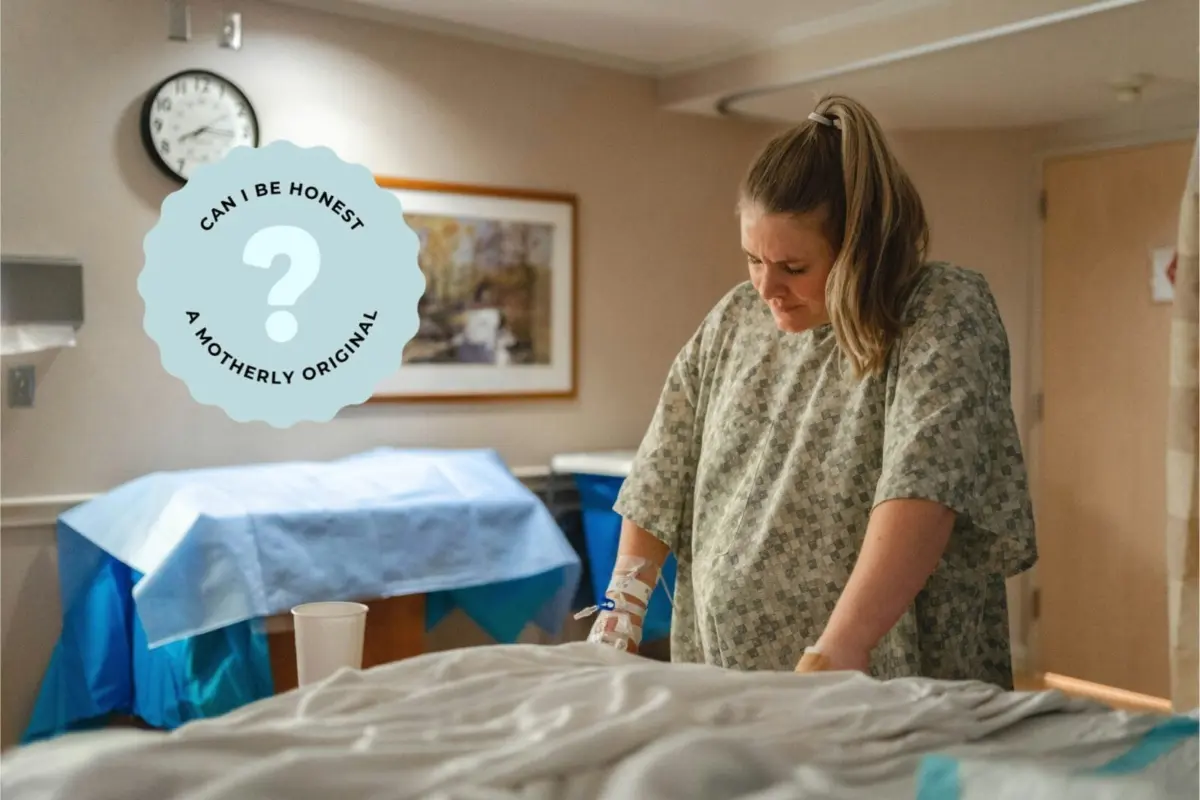
Petrarca’s transition into this reality was sudden and disorienting. At 37 weeks pregnant, she awoke in the middle of the night from a vivid nightmare about back pain, only to discover that the agony was not part of the dream. It was visceral, immediate, and unrelenting. Convinced that labor had commenced and suspecting this was the notorious condition she had tried to ignore months earlier, she arrived at the hospital.

The initial triage, however, underscored the ambiguity that so often clouds the condition. In the grips of pain so intense that the memory of it remains blurred, Petrarca asked her attending nurse whether she was indeed experiencing back labor. The nurse offered an empathetic but noncommittal response: “It could be!”

After assessment, because the baby was in stable condition and the contractions remained irregular, Petrarca was discharged home to rest. Yet rest proved impossible. By the following evening, the lower back pain flared again with renewed violence, accompanied by severe vomiting. The situation prompted an urgent return trip to the hospital, marked by a panicked drive through traffic while writhed in agony across the backseat, drawing startled stares from neighboring motorists.

Upon readmission, the medical team faced a compounding concern: the baby’s heart rate showed signs of distress on the continuous electronic fetal monitor. As the clinical staff tracked the monitors, the screen showed contractions rising and falling in clear mechanical cycles. Yet Petrarca felt none of the abdominal sensations registering on the paper strips. Instead, the back pain occupied her entire consciousness, operating on its own unpredictable cadence until it ceased to feel like a bodily process and began to feel like an all-encompassing physical assault. When the time arrived to push, she could not definitively say what an abdominal contraction had felt like at all, leaving her to question whether she had missed the traditional sensations entirely.

Why do some women have intense back labor?
The medical mechanisms behind why certain individuals suffer from debilitating back labor while others experience standard abdominal sensations remain complex, with physicians acknowledging that a single, definitive cause is rarely identifiable.

A primary suspect is fetal presentation—specifically, the occiput posterior (OP) position, commonly referred to as a "sunny-side up" baby. In an ideal cephalic presentation, the back of the baby’s head (the occiput) faces forward toward the mother’s abdominal wall (occiput anterior), allowing the softer face and forehead to glide smoothly over the maternal spine. In an occiput posterior position, however, the hard, bony skull of the infant is directed backward, grinding directly against the mother’s sacral spine and tailbone with every shift in uterine tension.

Yet, as Dr. Wilson-Manigat emphasizes, the correlation is not absolute. “Back labor can be a clue that the baby’s skull (the occiput) rests against the back (posterior) of the mother’s pelvis, but it is not a definitive sign,” she explains. Some women carrying babies in the occiput posterior position report manageable or conventional labor patterns, while others with an occiput anterior fetus endure severe back discomfort.

A significant portion of the equation lies in immutable anatomical variables that neither the patient nor the obstetrical team can control. Dr. Wilson-Manigat notes that structural determinants such as the unique architecture, shape, or width of the mother’s pelvic inlet play a decisive role. Similarly, maternal-fetal disproportion—where a baby is simply too large relative to the pelvic space provided—can force the descending infant against spinal structures. Furthermore, any underlying musculoskeletal conditions or soft-tissue restrictions that hinder the baby from naturally rotating into an anterior orientation during the descent can lock the labor into a persistent posterior pain pattern.

Given that back labor is a well-documented phenomenon known to cause immense physical strain and clinical disorientation, patients often wonder why it is not addressed more transparently during standard prenatal appointments.

According to Dr. Wilson-Manigat, the reason stems largely from clinical framing and statistics. Because back labor is not the primary experience for the statistical majority of pregnant people, it rarely receives the dedicated spotlight that conventional labor signs do. Moreover, the medical community frequently categorizes back labor within the broader continuum of routine intrapartum discomfort rather than treating it as a distinct medical entity. Because many of the non-pharmacological and pharmacological coping mechanisms—ranging from position changes, counterpressure, and hydrotherapy to epidural analgesia—overlap between both types of labor, healthcare systems tend to view back labor merely as a different way of experiencing the same biological process.

For patients, however, this clinical blending can leave lasting emotional confusion. Experiencing labor that fails to resemble the conventional medical or cultural script often leaves mothers feeling disconnected from their own bodies, unsure of how to narrate or process their deliveries after the fact. Without clear, upfront education, many reflect on their births with lingering uncertainty, wondering why the textbook signs were absent and why their pain took such an unfamiliar form.

While back labor may be an outlier compared to standard presentations, its potential to completely reshape the birth experience makes greater awareness essential. Preparing expectant parents for the full spectrum of labor sensations does not heighten fear; rather, it equips them with the clarity needed to navigate unexpected challenges. As Petrarca concluded from her own journey, having access to these unfiltered realities before labor begins provides essential reassurance: that when the body responds in ways that defy popular expectations, it is still doing the profound work of bringing life into the world, and that the grueling intensity, however isolating it feels in the moment, will eventually come to an end.