By tossing cubed butternut squash in pure maple syrup and olive oil before roasting it to caramelized perfection in the oven, the recipe showcases how simple techniques can transform raw, hardy root vegetables into a sweet and tender side dish. Requiring only five minutes of active preparation time and forty minutes in the oven, this accessible dish offers an efficient solution for busy holiday cooks seeking a nutrient-dense, plant-forward addition to their dinner tables.
Why Simple Oven-Roasted Squash Is a Seasonal Essential
In fall cooking, winter squash recipes often rely on heavy cream, excessive sugars, or complex spice blends that can obscure the natural taste of the produce. This minimalist maple roasted butternut squash recipe takes a different approach by focusing on the natural chemistry of high-heat roasting. The combination of oven heat, healthy fats, and natural sugars draws out the inherent sweetness of the squash while creating crisp, browned edges.
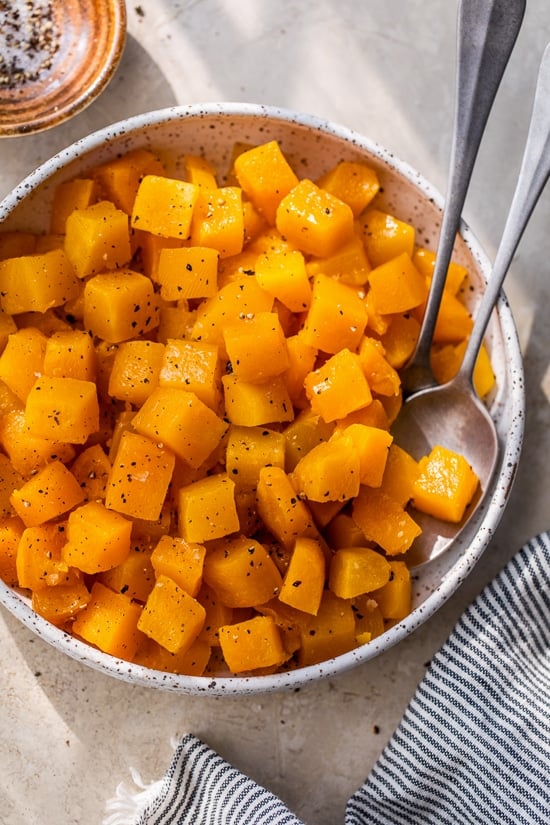
The recipe draws inspiration from similar winter squash preparations, such as roasted honeynut squash, but simplifies the process by streamlining the ingredient list and focusing on larger, readily available butternut squash. By omitting add-ins like chopped pecans or heavy glazes, the dish keeps the focus on the smooth texture and rich flavor of the caramelized vegetable itself.
The primary appeal of this roasting method lies in its combination of convenience, texture, and flavor balance. High-heat roasting breaks down the dense starches inside the butternut squash, transforming the raw, tough flesh into a silky, fork-tender interior. Simultaneously, the exterior surface browns through natural sugar concentration and light caramelization. The result is a versatile side dish that complements savory holiday roast meats, roasted poultry, and alternative plant-based mains without overwhelming the broader meal.
Essential Ingredients and Minimalist Prep
One of the defining features of this autumn recipe is its brief ingredient list. The dish relies on three primary components, supplemented only by basic kitchen pantry staples for seasoning:

- Butternut Squash: Fresh butternut squash serves as the foundation of the dish. While whole, raw squash provides the freshest texture and flavor, pre-peeled and pre-cut squash cubes or frozen squash can also be used as time-saving alternatives.
- Pure Maple Syrup: Grade A pure maple syrup provides natural sweetness and sticky sugar content necessary for external caramelization during oven roasting.
- Olive Oil: Olive oil acts as the primary heat conductor, coating the squash evenly to ensure uniform cooking, prevent sticking, and encourage proper browning.
- Seasoning: A modest pinch of salt and freshly cracked black pepper balances the sweetness of the maple syrup and brings out the earthy undertones of the squash.
By avoiding artificial flavorings or overly complicated glazes, the recipe allows the true character of the autumn produce to shine through, making it suitable for a wide range of dietary preferences and meal plan structures.
How to Safely Peel, Cut, and Prepare Winter Squash
While butternut squash is celebrated for its rich texture and subtle sweetness, its thick outer skin and dense interior present a notorious challenge on the cutting board. Preparing raw winter squash safely requires proper technique and sharp kitchen tools to avoid slipping or uneven cuts.
To cut and peel a raw butternut squash efficiently at home, culinary experts recommend a systematic approach:

- Establish a Stable Base: Slice off a small portion from both the top stem end and the bottom base of the squash using a heavy, sharp chef’s knife. Creating flat surfaces on both ends prevents the vegetable from rolling on the cutting board during subsequent cuts.
- Peel the Outer Skin: Hold the squash firmly against the cutting board and use a sturdy Y-shaped vegetable peeler or a sharp knife to strip away the tough, pale outer skin until the vibrant orange flesh beneath is fully exposed.
- Divide and Deseed: Slice the squash horizontally where the narrow neck meets the bulbous base. Stand both halves upright on their flat ends and cut them down the middle vertically. Use a metal spoon to scoop out the seeds and fibrous pulp from the hollowed bulbous section.
- Cube the Flesh: Slice the prepped squash into uniform vertical planks, cut those planks into long strips, and then cross-cut the strips into even, bite-sized cubes. Uniformity in size is critical, as equal-sized cubes ensure that all pieces roast at the exact same rate in the oven.
For cooks looking to reduce prep time or lower the physical effort required to slice through raw squash, a simple kitchen technique involves using the microwave. By piercing the skin of the whole squash several times with a fork and microwaving it on high for two to four minutes, the outer rind softens just enough to allow a vegetable peeler or knife to glide through easily without cooking the interior flesh. Alternatively, brief blanching in boiling water on the stovetop can yield a similar softening effect.
For maximum convenience during busy weeknight dinner routines or chaotic holiday prep windows, pre-cut fresh squash from the grocery produce aisle or store-bought frozen squash cubes can be substituted. However, home cooks should keep in mind that frozen squash absorbs moisture during freezing and will yield a noticeably softer, less crisp texture once roasted compared to fresh squash.
The Mechanics of Maple Roasting and Cooking Techniques
The entire cooking process for maple roasted butternut squash takes forty-five minutes from start to finish, requiring minimal active intervention once the tray is placed in the oven.
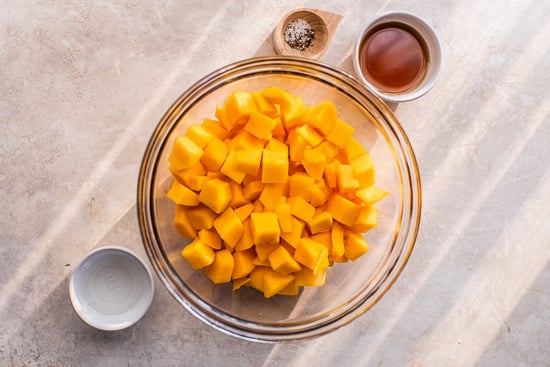
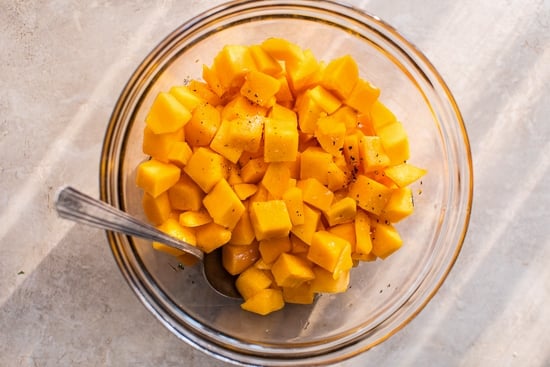
To execute the recipe, the oven is preheated to a high roasting temperature. The cubed squash is placed in a large mixing bowl or directly onto a rimmed baking sheet, where it is drizzled with olive oil and pure maple syrup, then seasoned with salt and black pepper. The cubes are tossed thoroughly until every piece is evenly coated in the liquid mixture, ensuring that the oil and syrup distribute across all surfaces.
The coated squash cubes are then spread across a baking sheet in a single, uncrowded layer. Allowing space between the pieces is essential for proper roasting; if the baking sheet is overcrowded, the vegetable will release steam rather than roast, resulting in a soggy texture rather than caramelized edges.
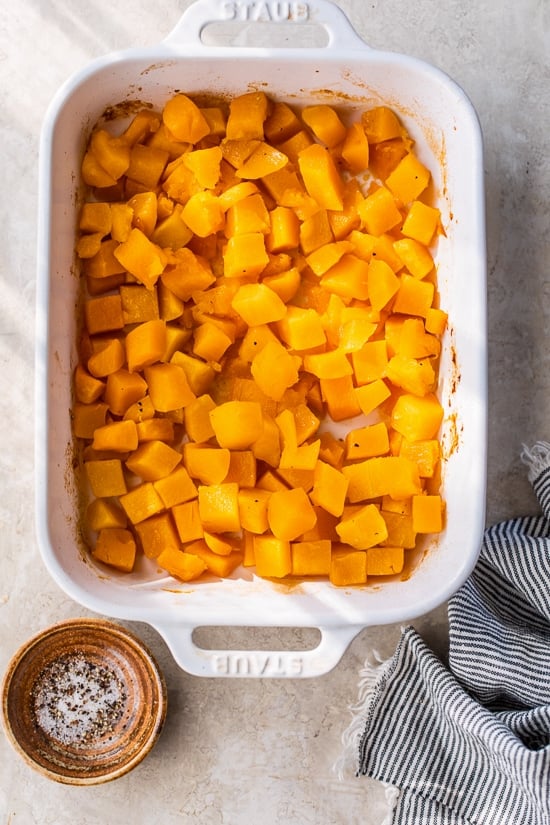
The sheet pan is transferred to the oven to roast for approximately forty minutes. Midway through the cooking cycle, the squash cubes should be gently flipped or stirred with a spatula to promote uniform browning across all sides. The dish is finished when the squash yields effortlessly to the tip of a fork and displays golden brown caramelization along the edges.
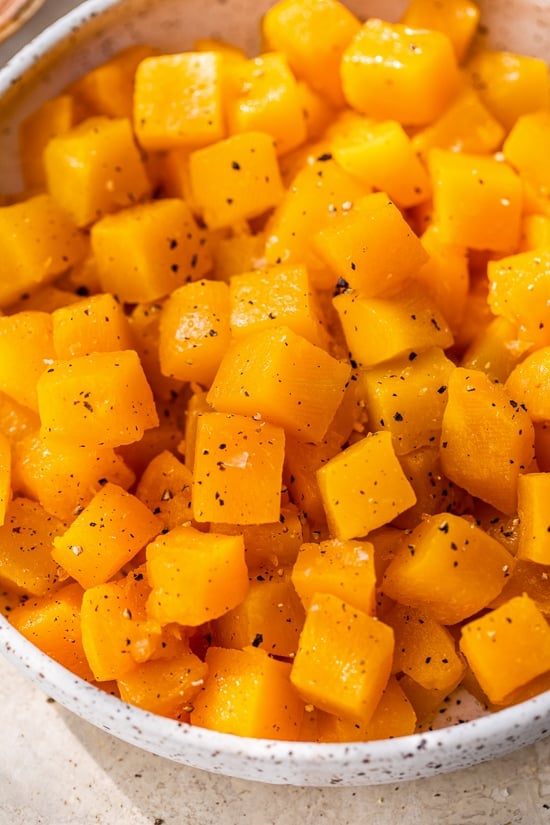
For cooks who prefer modern kitchen appliances or want to clear up valuable oven space during major holiday cooking sessions, this dish adapts readily to air fryer cooking. Utilizing an air fryer circulates hot air rapidly around the oiled and syruped squash cubes, achieving crisp edges and a tender interior in a fraction of the time required by a standard conventional oven.
Nutritional Profile and Dietary Benefits
In addition to its culinary appeal, maple roasted butternut squash offers a strong nutritional profile, fitting comfortably into light, health-conscious eating plans. A standard three-quarter cup serving contains approximately 104 calories, making it a nutrient-dense alternative to traditional holiday sides that rely heavily on butter, cream, or refined flour.
The detailed nutritional breakdown per three-quarter cup serving includes:
- Calories: 104 kcal
- Carbohydrates: 23 g
- Fiber: 4 g
- Protein: 1 g
- Fat: 2 g
- Sugar: 7 g (derived naturally from both the squash and pure maple syrup)
- Sodium: 7 mg
With four grams of dietary fiber per serving and minimal sodium and fat content, the dish provides complex carbohydrates that support digestion and provide sustained energy. The bright orange hue of the squash also highlights a rich concentration of beta-carotene, antioxidants, and essential vitamins, delivering balanced nutrition alongside seasonal flavor.
Culinary Variations and Squash Substitutions
While the foundational recipe relies on pure maple syrup and standard butternut squash, the dish is flexible enough to accommodate adjustments based on dietary needs or pantry availability.
Cooks looking for alternative natural sweeteners can swap the maple syrup for raw honey or light brown sugar in equal measure. Honey introduces a floral, delicate sweetness, while brown sugar adds a deep molasses note that enhances the caramelized crust during roasting.
The underlying roasting technique can also be applied to a variety of other winter squash types:
- Honeynut Squash: A smaller, concentrated relative of butternut squash, honeynut squash features an intensely sweet flavor and vibrant orange flesh that pairs seamlessly with maple syrup.
- Delicata Squash: Known for its thin, edible skin, delicata squash requires no peeling at all. Simply wash, deseed, slice into half-moons, and toss with the syrup and oil before roasting.
- Acorn Squash: Sliced into rings or wedges, acorn squash provides a mild, nutty background that absorbs sweet glazes effectively.
- Pumpkin: Culinary pumpkin varieties, such as sugar pie pumpkins, can be cubed and roasted using the exact same time and temperature structure.
When working with alternative squash varieties, home cooks should monitor the oven closely, as roasting times will fluctuate depending on the moisture content, density, and size of the cut squash.
Seasonal Menu Pairings and Complete Meal Planning
Maple roasted butternut squash serves as a versatile anchor for broader fall dining arrangements. Its balance of subtle sweetness and savory seasoning allows it to bridge the gap between rich main courses and light vegetable sides.

For a well-rounded autumn dinner menu, roasted butternut squash pairs effectively with complementary green vegetables, such as:
- Sautéed Brussels Sprouts: Combining the sweet, soft squash with savory, crispy Brussels sprouts—particularly when prepared with pancetta or bacon—creates an attractive contrast of textures and flavors on the dinner plate.
- Roasted Green Beans: Tender-crisp roasted green beans tossed with caramelized onions bring an earthy balance to the sweetness of the maple-glazed squash.
When building a complete holiday menu, the squash pairs naturally alongside traditional centerpiece proteins like roasted turkey, herb-crusted pork loin, or braised beef. To close out a seasonal fall gathering, meal planners often round out the menu with warm, fruit-centric desserts, such as a fresh pear-cranberry crisp.
Proper Storage and Make-Ahead Recommendations
For home cooks managing busy schedules or preparing for large holiday feasts, maple roasted butternut squash offers convenient storage and make-ahead potential.
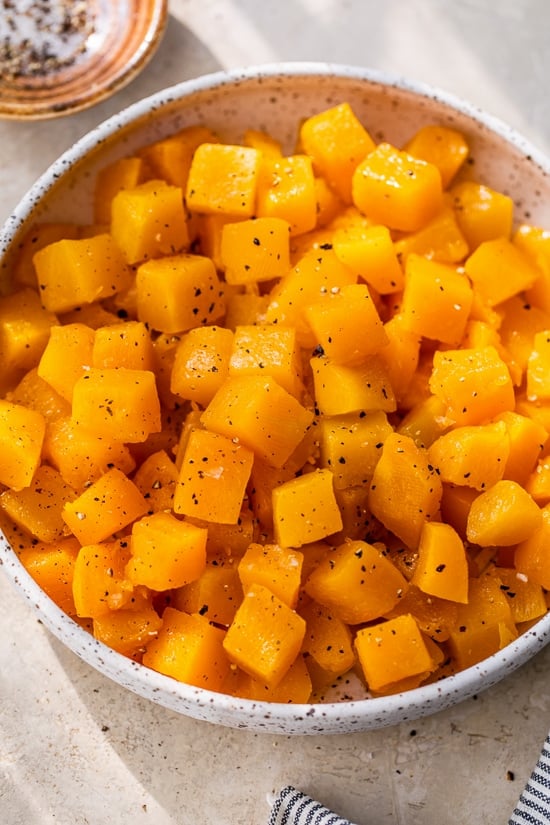
Once roasted, any leftover squash should be allowed to cool completely at room temperature before being transferred into an airtight glass or plastic storage container. Stored properly in the refrigerator, the roasted squash maintains its quality and flavor for up to four to five days.
To reheat leftover squash without losing its texture, place the roasted cubes back onto a baking sheet and heat in a 350°F oven or toaster oven for five to ten minutes until warmed through and re-crisped. While reheating in a microwave is also an option for quick weekday lunches, doing so will soften the exterior caramelization.
Whether prepared as a quick weeknight side or incorporated into a formal holiday spread, this three-ingredient maple roasted butternut squash demonstrates how minimal preparation and simple, wholesome ingredients can deliver classic autumn flavor.