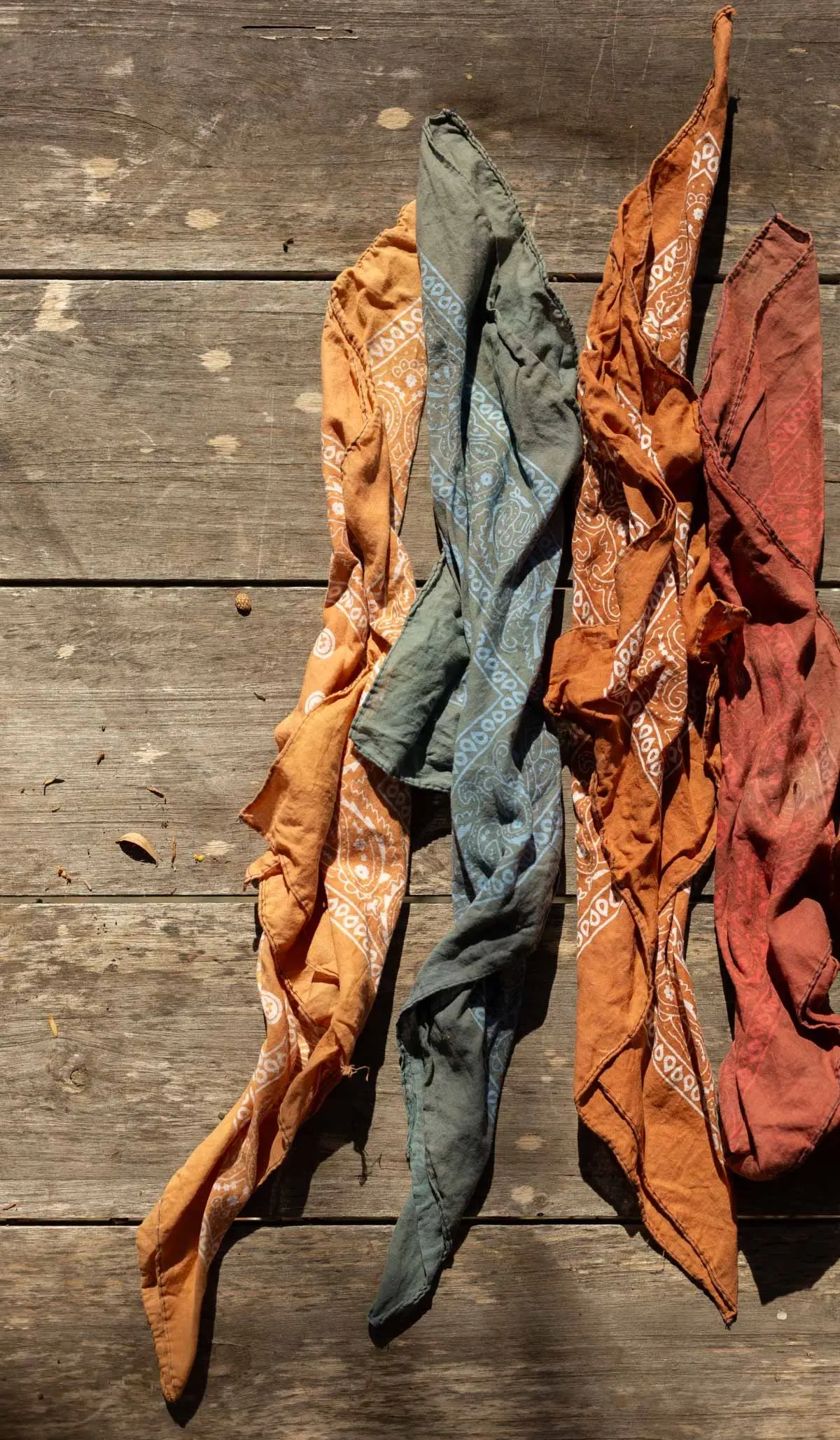
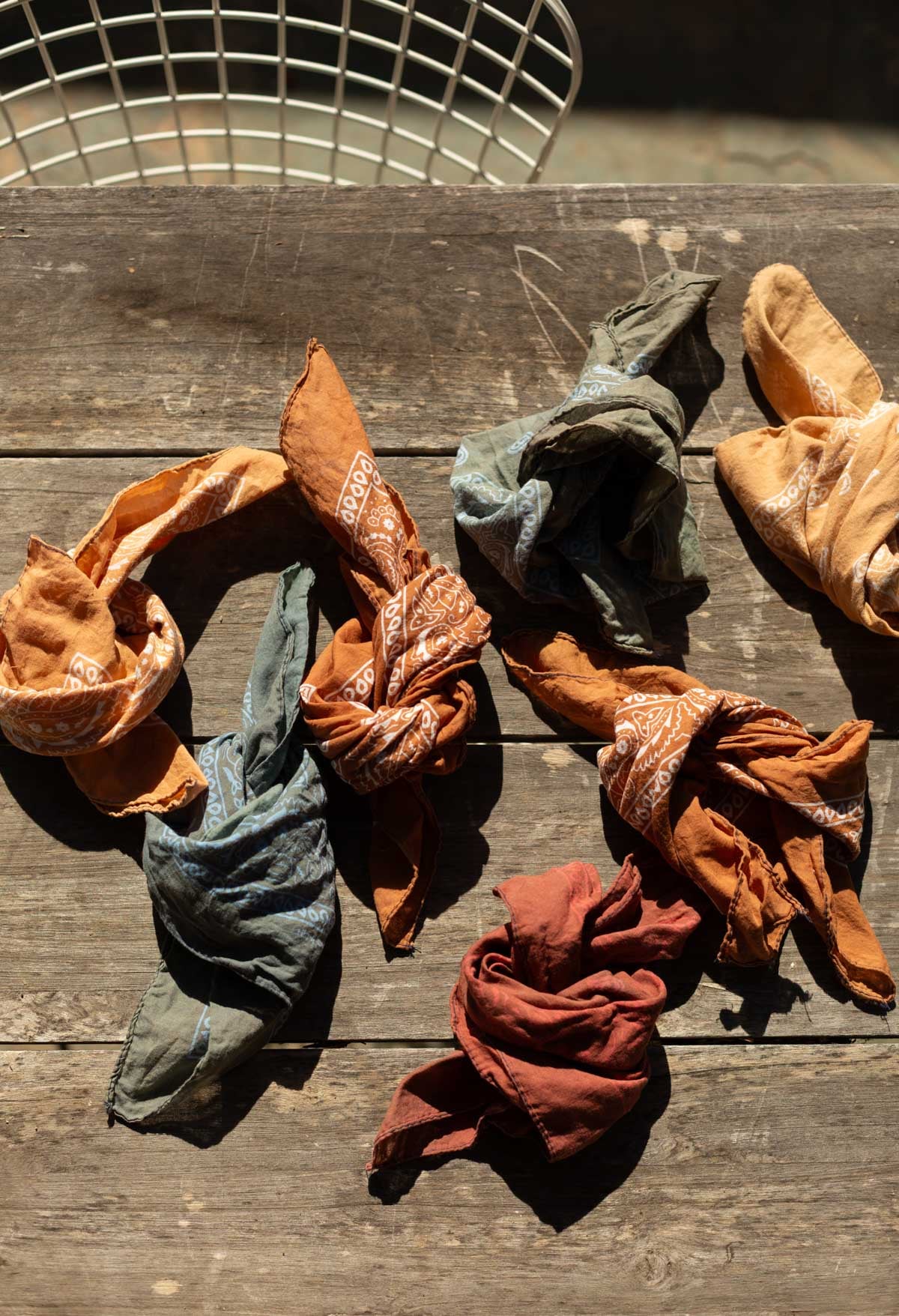
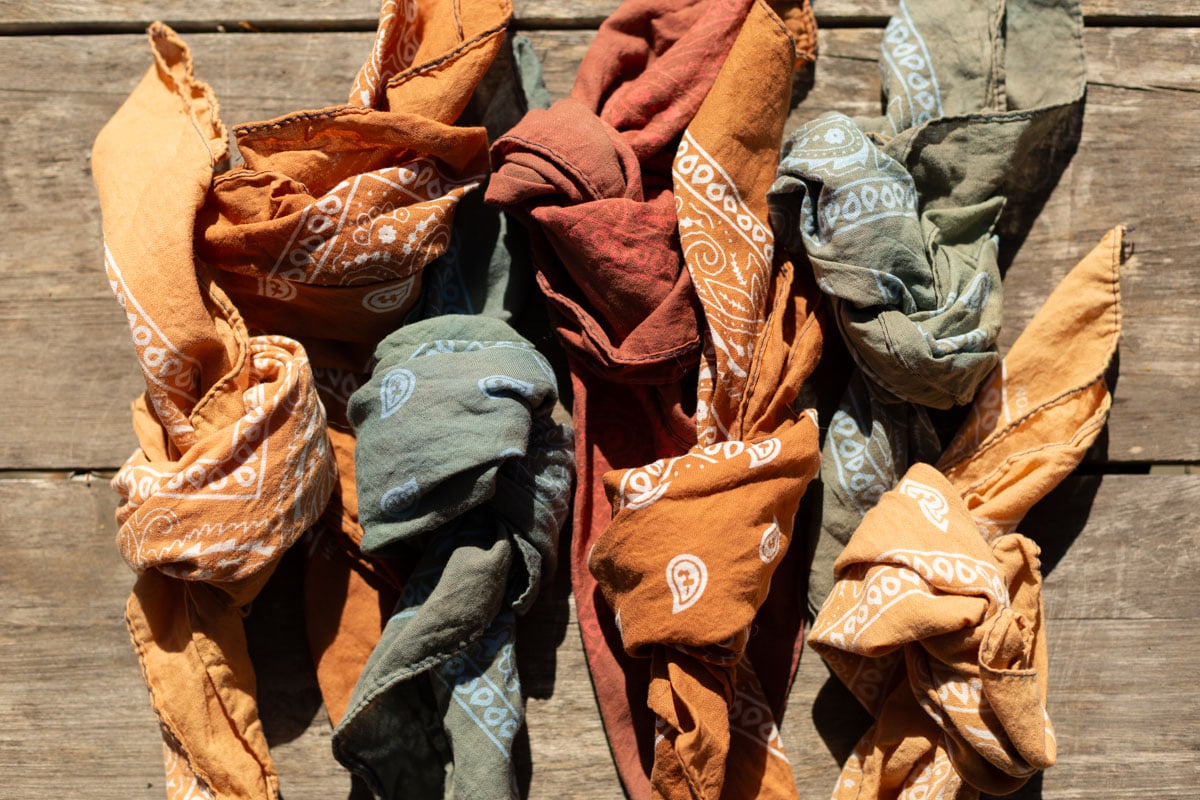
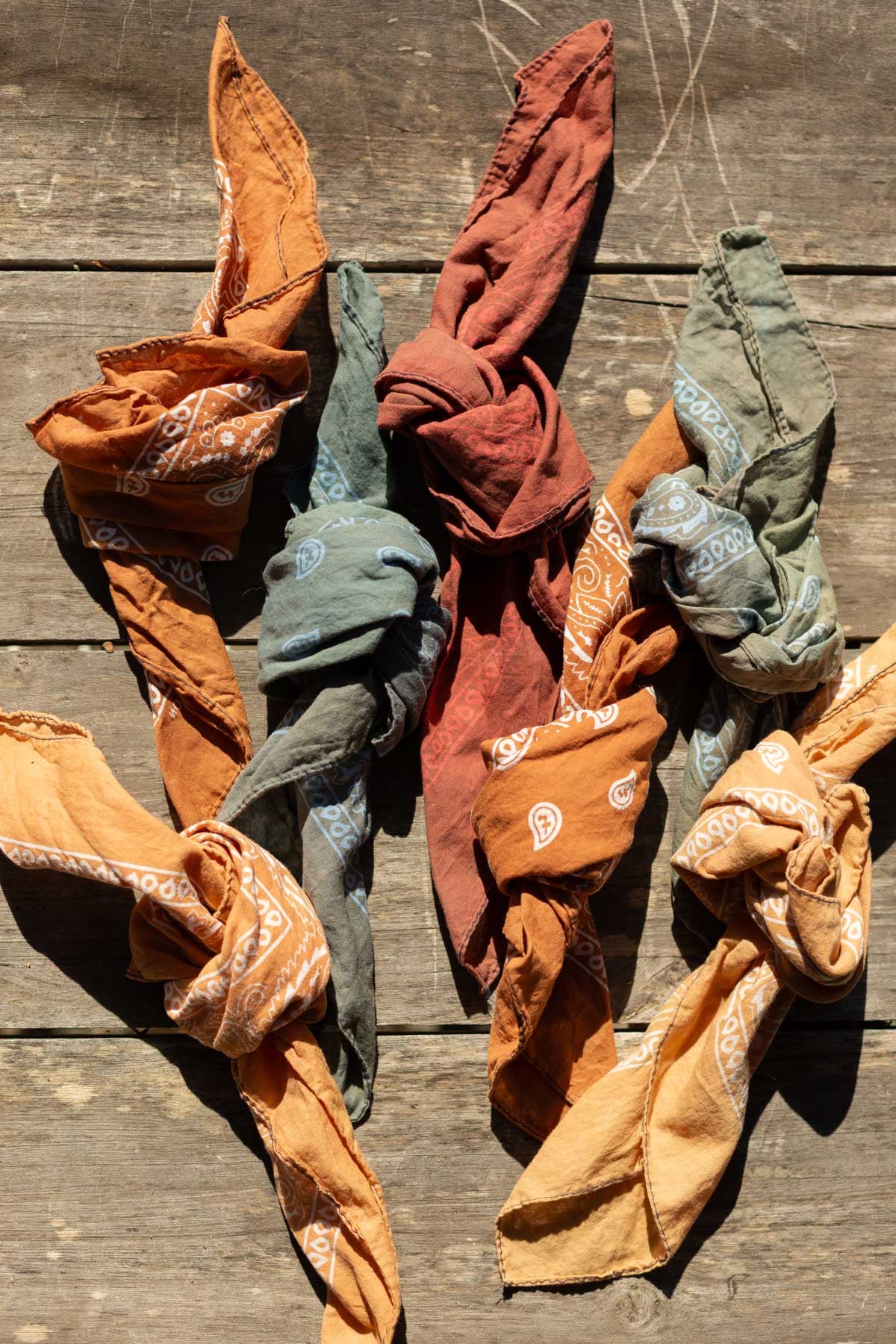
The project began when a friend handed over a batch of leftover black cotton bandanas. Facing a camp-themed party for her son’s school, Brittni sought a way to adapt the stark black fabric into a more natural, outdoor-friendly palette that would fit the rustic aesthetic of the event. Operating under the mindset that the bandanas were free and therefore presented a risk-free opportunity for experimentation, she tested a two-step process involving an initial quick bleach dip followed by traditional fabric dye. The resulting colors proved to be surprisingly organic and muted, steering away from the typical vibrant hues usually associated with standard bandanas and achieving a sophisticated, dusty finish.
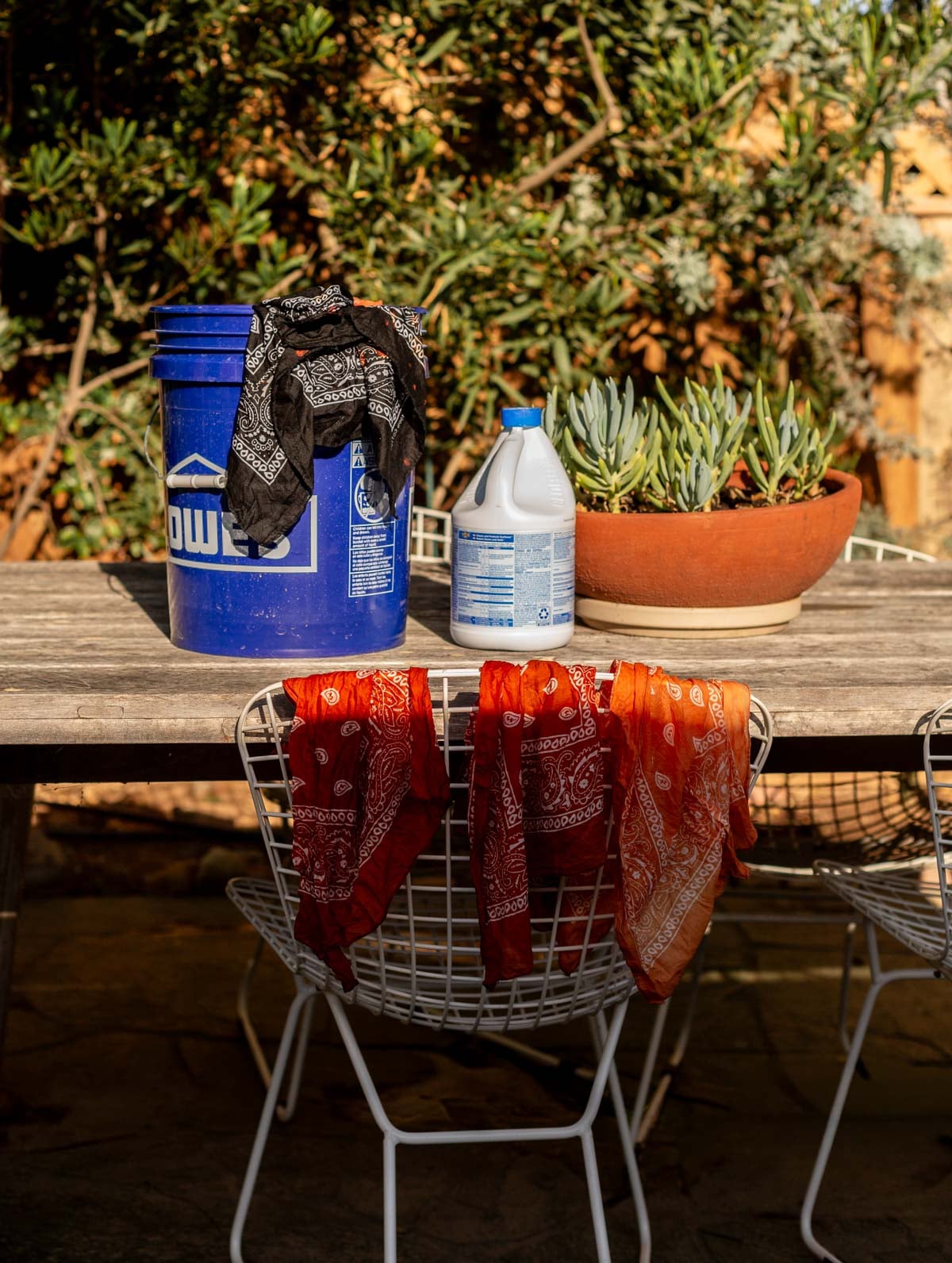
While the blogger had previously experimented with bleach tie-dye techniques to create subdued patterns, this particular endeavor introduced a key methodological shift. Instead of relying solely on bleach to strip the color and create the final look, the process utilized bleach strictly as a preparatory step to lift the original black dye. Once the dark pigment was sufficiently removed and the fabric neutralized, a secondary dye was applied to introduce the desired earth tones. This dual-phase approach allowed for greater control over the final spectrum of neutral colors, opening up potential applications for upcycling a wide range of wardrobe staples and household textiles.
The Bleaching Process and Material Safety
Working with bleach requires careful adherence to safety guidelines, particularly regarding ventilation and personal protection. Because chemical fumes can be harsh and potentially hazardous in enclosed spaces, the entire bleaching phase must be conducted outdoors or in an exceptionally well-ventilated area. Protective gear, such as rubber or latex gloves, is also essential to prevent skin irritation or accidental chemical burns during the handling of the solution.
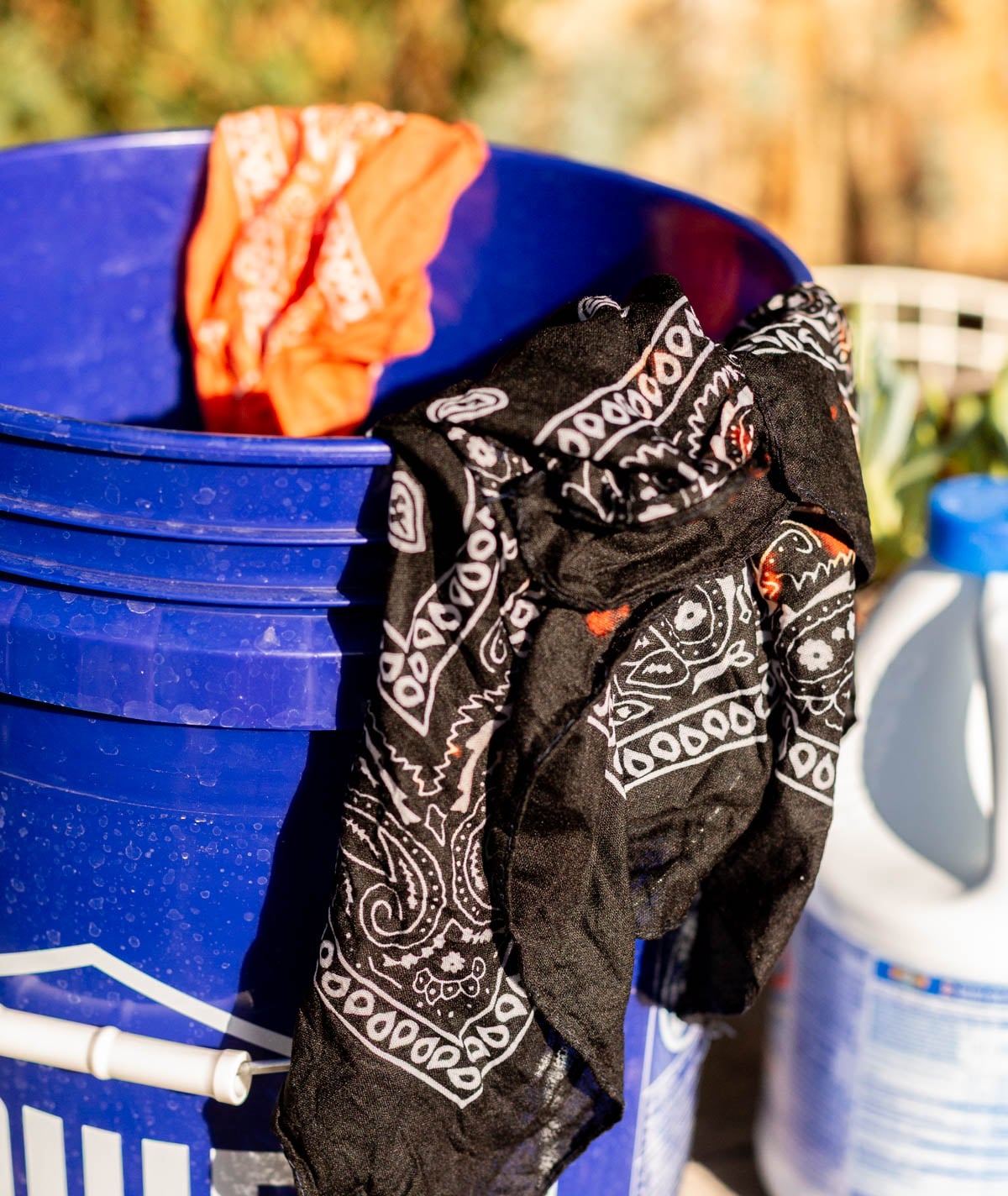
The technique itself requires minimal equipment: a large container or bucket, a supply of standard household bleach, water, and the cotton bandanas. Before introducing the fabric to the chemical solution, the bandanas must be thoroughly dampened with water and the excess wrung out. Pre-wetting the fabric helps ensure that the bleach absorbs evenly, preventing harsh, unintended streaks or blotches when the material makes contact with the liquid.
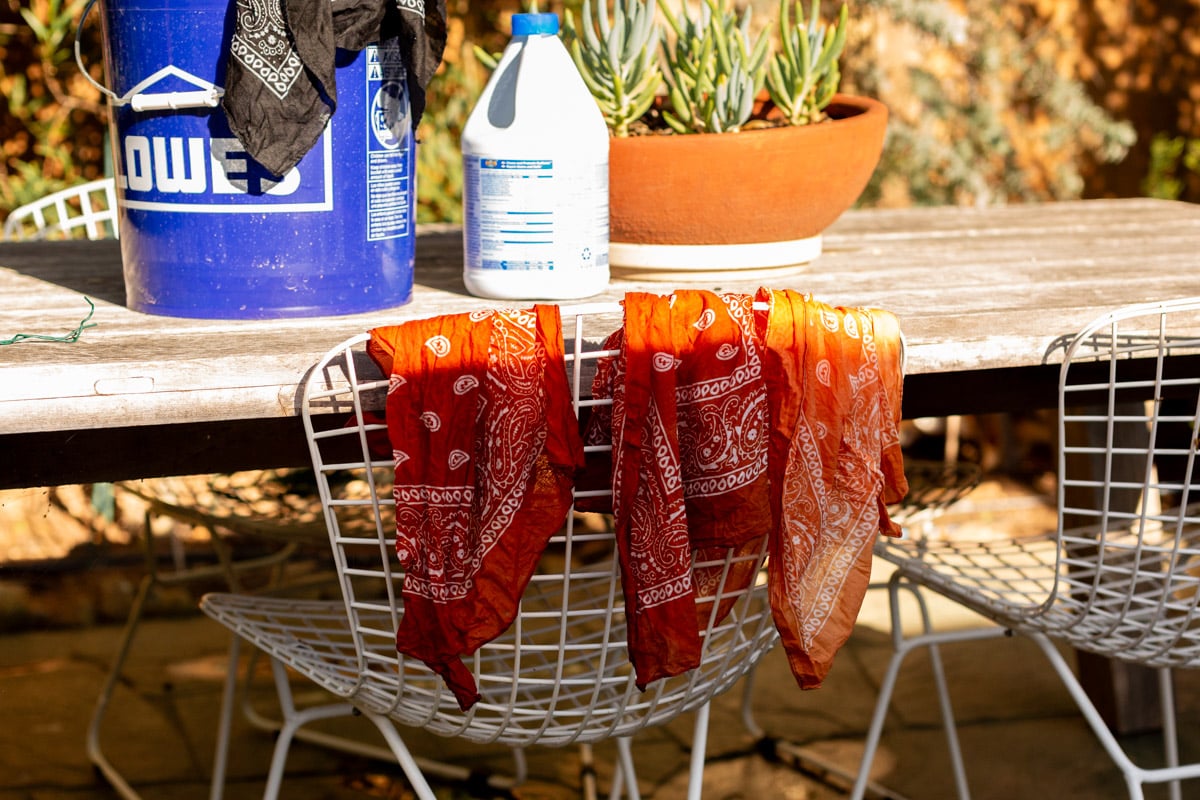
Once the workspace is prepared outdoors and protective gloves are secured, enough bleach is poured into the bucket to fully submerge the fabric. The immersion process is remarkably fast, often requiring no more than thirty seconds to a minute depending on the desired outcome. As the black dye begins to lift and the fabric shifts into lighter variations of brown, rust, and grey, the bandanas must be promptly removed from the solution. Prolonged exposure to bleach can severely weaken cotton fibers, breaking down the integrity of the material and leading to premature wear and tear. Therefore, swift removal is critical for preserving the durability of the textile.
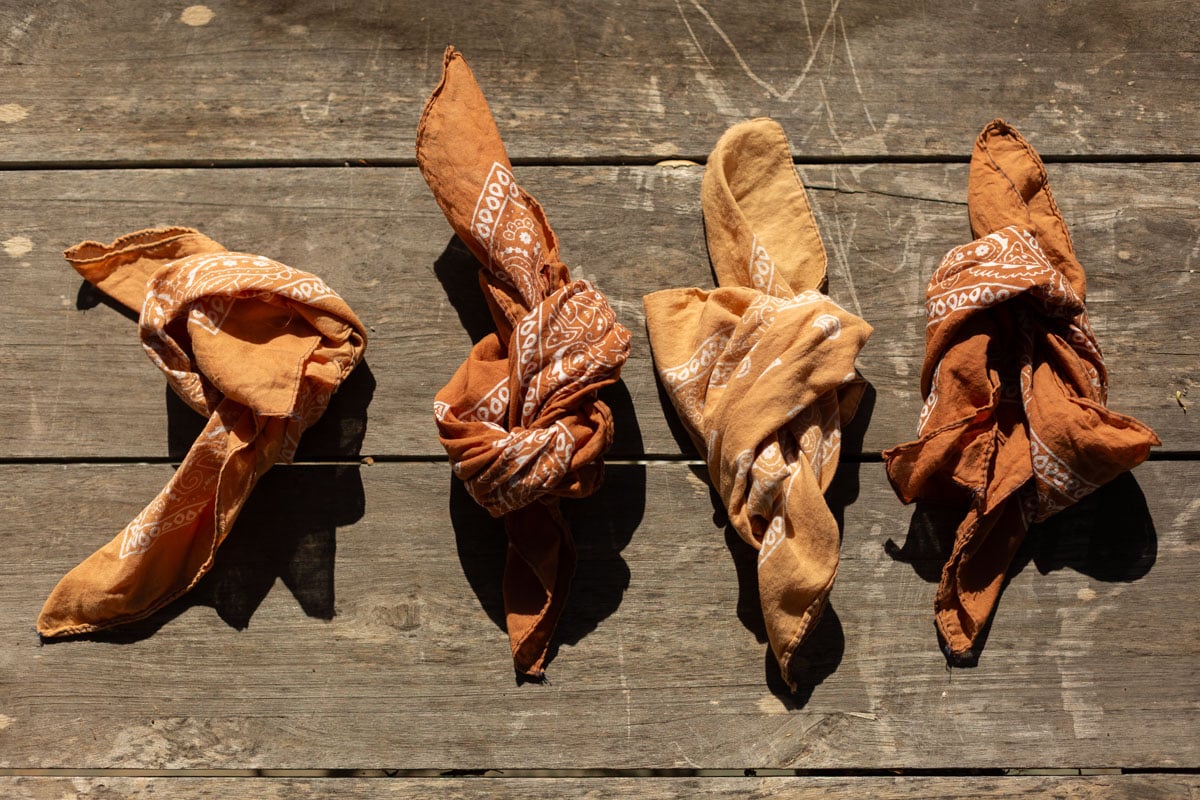
Immediately following the bleach bath, the bandanas must be thoroughly rinsed under cold water for one to two minutes to halt the chemical reaction and eliminate residual bleach. Following the rinse, the items should be run through a standard cycle in a washing machine and dried completely. This crucial interim step ensures that any lingering chemical residue is fully washed away before the secondary dye is introduced, thereby preventing uneven absorption or chemical interference with the new color pigments.

Re-Dyeing for Natural Hues
With the bandanas cleaned, dried, and stripped of their original dark pigment, the fabric is primed for the final transformation. The pre-lightened base allows standard fabric dyes to take on softer, more muted tones than they would if applied directly to stark black or bright white cotton. By following standard fabric dyeing methods, the creator was able to achieve a cohesive set of neutral, earthy shades that suited the rustic theme of the school event.

The versatility of the finished textiles became apparent during the camp-themed school party, where the newly minted bandanas served a dual purpose. Arranged at each child’s place setting, the bandanas functioned primarily as decorative fabric napkins. However, to preserve the craft items and prevent stubborn food stains, organizers also provided standard paper napkins alongside them. Observing the children’s reactions, the organizers noted that the participants readily picked up the earth-tone bandanas to wear as accessories, opting to use the disposable paper napkins for actual cleanup duties.
Expanding Beyond the Party
The success of the project extended well beyond the confines of the school event. Leftover bandanas from the batch provided an opportunity to test the durability and aesthetic appeal of the upcycled fabric in everyday scenarios. One of the remaining pieces was repurposed into a makeshift neck accessory for a family dog. While the animal’s reaction to wearing the textile was somewhat ambivalent, the muted earth tones complemented the pet’s appearance, demonstrating the broad appeal of the subdued color palette.
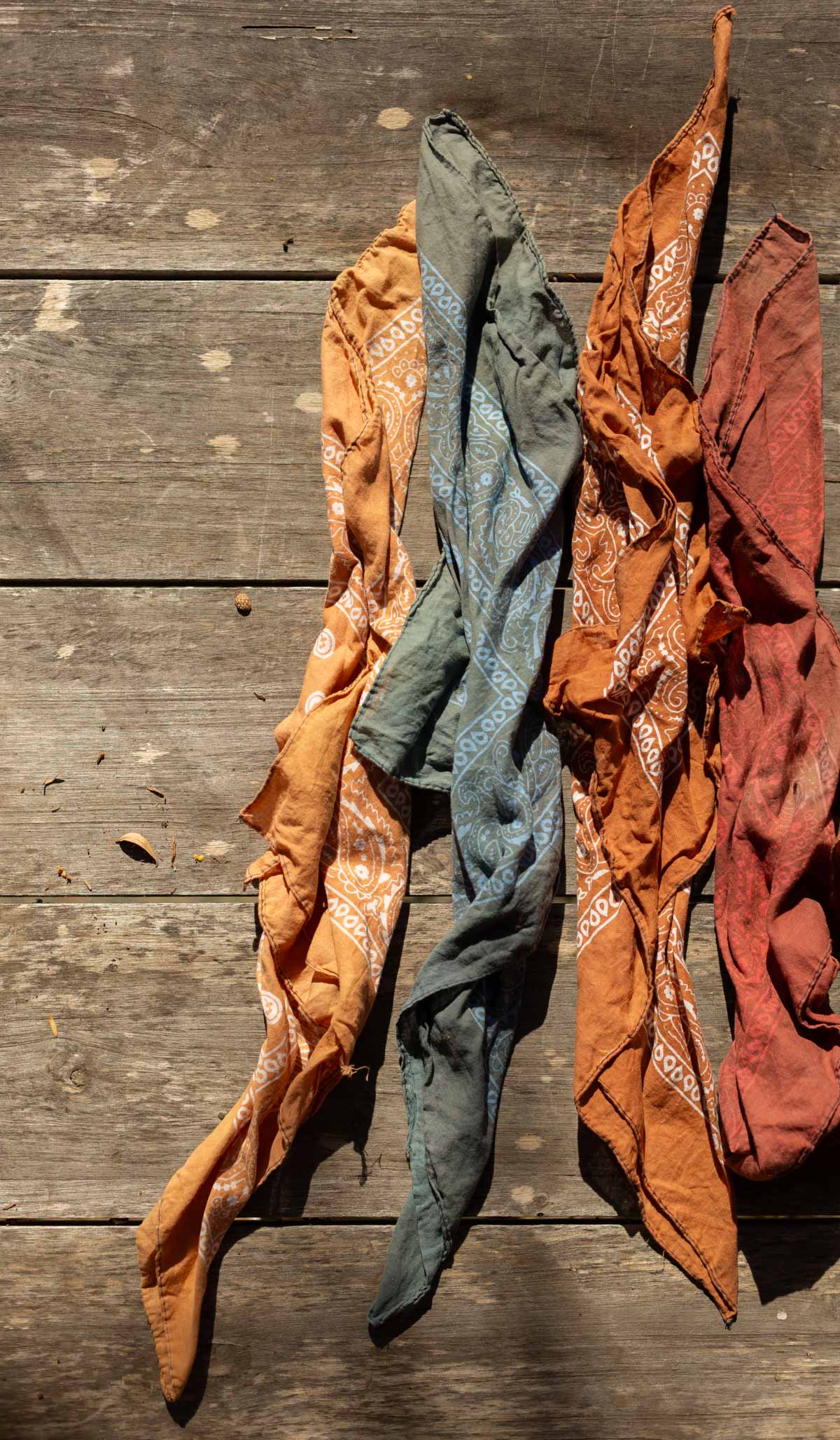
The project underscores a growing interest in practical, low-cost upcycling methods that breathe new life into forgotten items. By combining basic household supplies with straightforward textile processing techniques, crafters can repurpose mass-produced items into customized, sustainable goods. Whether applied to bandanas, older garments, or home decor items, the method offers a scalable approach to textile modification that prioritizes resourcefulness and creative reuse.