
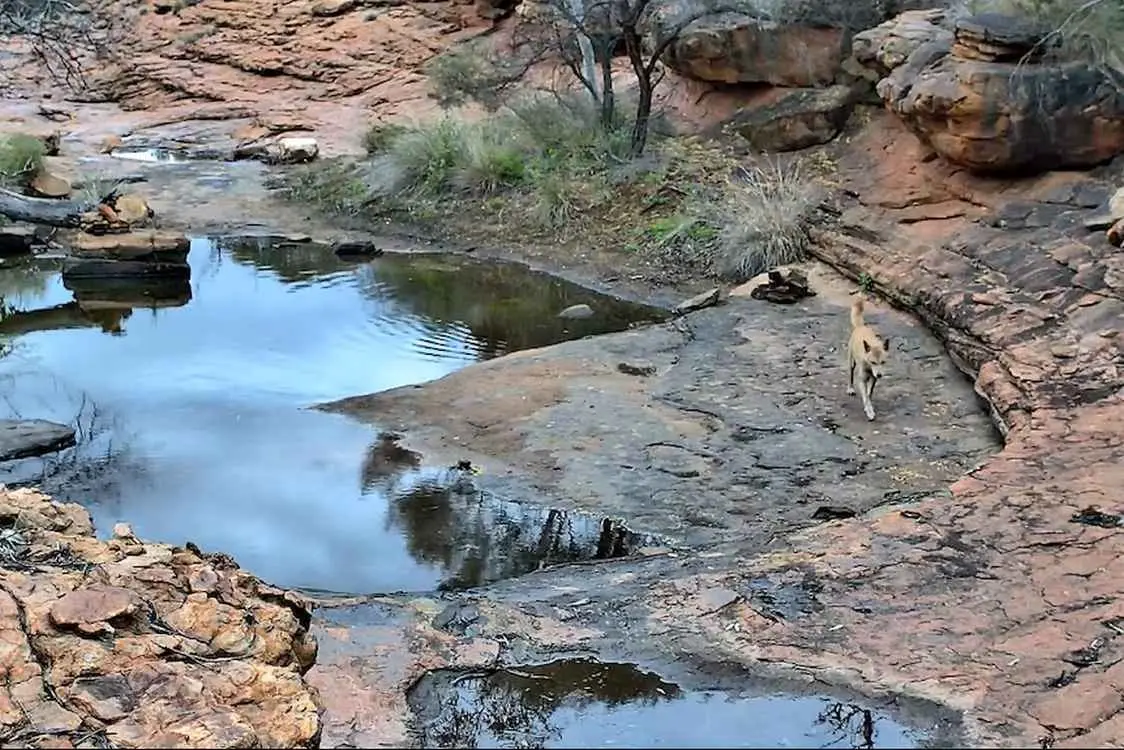
For the dingoes, wallabies, frogs, the occasional wandering feral cat, and even a majestic wedge-tailed eagle that have so far been documented stopping by for a vital drink, life carries on exactly as it always has. They remain completely undisturbed and unaware of the technological lens watching over them, even as thousands of curious viewers—stretching geographically from Sacramento to Samarkand—tune in from their smartphones, tablets, and desktop computers to watch them go about their daily routines.
Located within the boundaries of the breathtaking Watarrka National Park, the innovative waterhole livestream project was successfully organized as a collaborative effort between Northern Territory Parks and Wildlife and Charles Darwin University’s prestigious Research Institute for the Environment and Livelihoods.
The ambitious idea was originally dreamt up by Professor Jennifer Davis, a dedicated freshwater ecologist who had spent years relying on traditional motion-activated trail cameras to snap sporadic photographs or short video clips of passing fauna at remote outback waterholes. While those previous methods provided valuable snapshots of wildlife activity, they offered only a fragmented, delayed look at the ecosystem, leaving researchers longing for a continuous, real-time perspective.
Professor Davis explained in an interview with Australian national broadcaster ABC News that it was only recently that modern technological advancements caught up with her ecological ambitions. The convergence of breakthroughs in high-efficiency solar power systems, reliable satellite internet connectivity, and compact, durable computing hardware finally reached a point where all three elements could be successfully united. Armed with these modern tools and a liberal application of clever camouflage paint, the research team was able to establish a permanent, weather-resistant watch over the secluded desert watering hole.
The resulting livestream serves a dual purpose, acting simultaneously as a captivating window for nature lovers worldwide and a critical scientific instrument for researchers monitoring the health of the outback. As Professor Davis noted during her interview with the Australian network, the continuous feed allows scientists to observe precisely which animals are visiting, the times they arrive, how they interact with one another, and what specific behaviors they exhibit. Crucially, it also enables researchers to monitor how these behavioral patterns might shift and evolve over time as the global climate continues to warm.
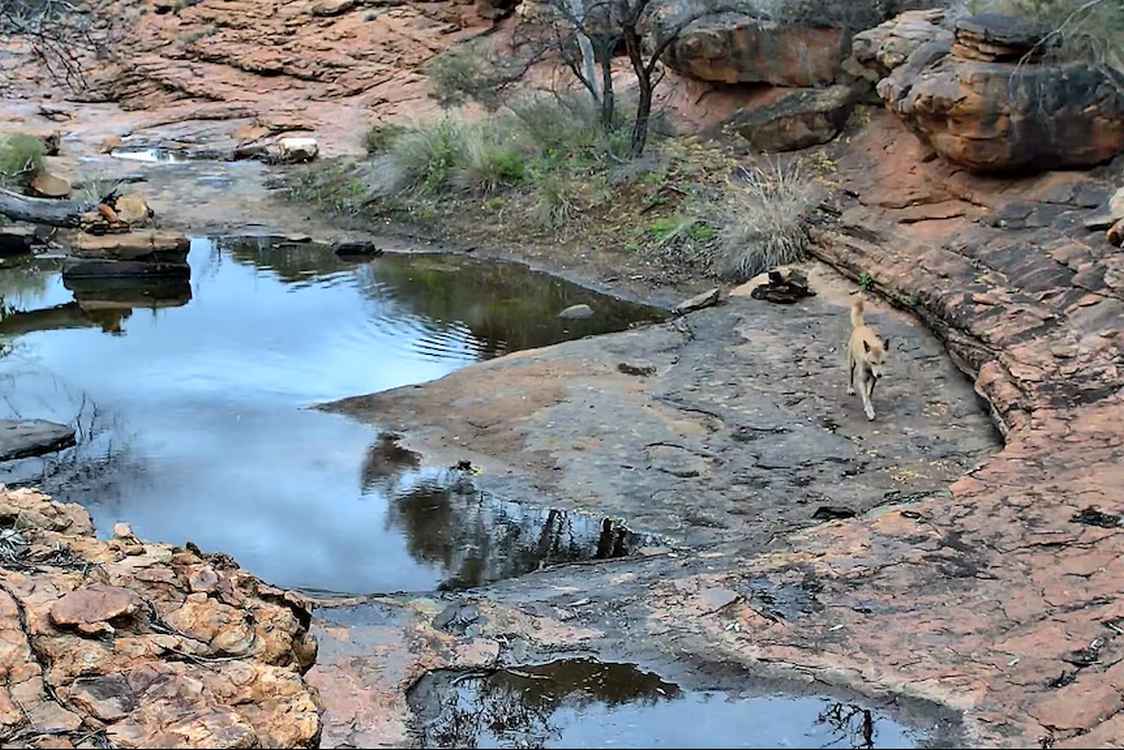
Watarrka National Park itself is an ancient landscape of profound ancestral and cultural importance to the traditional owners of the land, the Matutjara people. Internationally renowned for the dramatic, towering red sandstone walls and sweeping gorges that surround the magnificent Kings Canyon at the park’s heart, the region is a place of staggering natural beauty and immense ecological significance. However, its extreme isolation poses a major barrier to human observation. Situated approximately 818 miles south of Darwin and 201 miles southwest of Alice Springs, it is a remote destination that very few people—including native Australians—will ever manage to visit in person.
Because human foot traffic at this particular waterhole is exceptionally rare, the camera captures animal behavior in its most pristine and authentic state. Among the regular visitors, dingoes are spotted significantly more often than any other creature, frequently pacing gracefully into the frame to quench their thirst or investigate the perimeter of the pool. Agile wallabies are also common visitors, bounding into view during the cooler hours of the day or night.
Because the waterhole is naturally temporary, its very existence is tied to the unpredictable rhythms of outback weather. During prolonged dry spells without significant precipitation, the pool can slowly shrink and eventually vanish altogether. Conversely, when heavy rains finally sweep across the arid landscape, the pool is rapidly replenished. At those moments, frogs quickly arrive and take up refuge in the newly formed water, transforming the silent desert basin into a vibrant aquatic habitat.
Beyond the striking visual imagery, the livestream also brings the rich, immersive acoustic environment of the Australian outback directly into the living rooms and offices of global viewers. The high-fidelity audio feed captures the natural symphony of the desert, broadcasting the echoing croaks of newly arrived frogs, the complex melodies of native birdsong, and the gentle, atmospheric pitter-patter of desert rainfall striking the surface of the water.
For freshwater ecologists like Professor Davis, capturing these acoustic and environmental cues in real time is invaluable. The primary factor influencing the presence and longevity of water at this specific site is rainfall, making it an ideal location to study the broader local impacts of climate change. As Professor Davis emphasized, monitoring when water is present and observing how long it lasts provides direct insight into how shifting climate patterns are altering fragile desert water sources.
Through the quiet operation of a single, camouflaged camera deep within Watarrka National Park, researchers and wildlife enthusiasts alike have been granted an unprecedented bridge across continents. It connects the remote, sun-baked heart of the Australian desert with a global community of observers, all while leaving the resident wildlife completely free to drink, rest, and survive in peace.