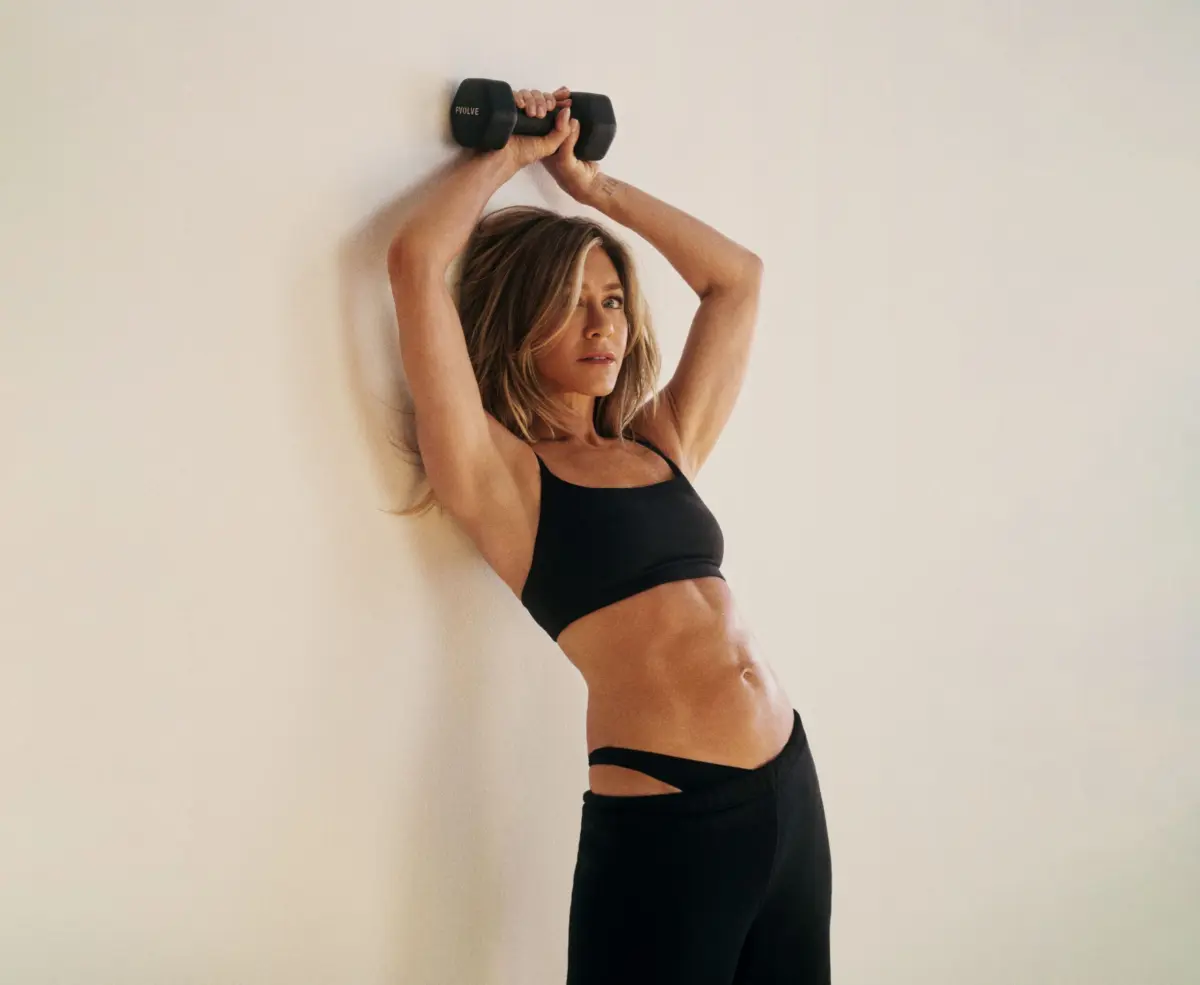
Recently, the actress opened up about her approach to physical well-being, sharing some of her favorite arms and abs movements derived from Pvolve, the innovative functional fitness program she has practiced faithfully for years. Unlike traditional high-intensity regimens that prioritize exhaustion or aggressive impact, this specific workout style centers on controlled resistance, intentional movement, and building functional strength designed to support the demands of everyday life. By focusing on how the body moves through the world, the method aims to enhance longevity and overall vitality.
Dani Coleman, Aniston’s personal trainer and the vice president of training at Pvolve, explains that the core philosophy centers around comprehensive physical development. Upper body and core strength are cultivated through progressive overload, precise resistance, and dynamic movement operating across all three planes of motion. Rather than rushing haphazardly through repetitions or relying on harmful momentum to power through an exercise, the overarching goal of every single movement is to maintain total control from start to finish.
According to Coleman, this hyper-focus on the muscles actively performing the work allows practitioners to develop intentional strength. This kind of functional power not only noticeably improves performance during structured workouts, but it also translates directly into how an individual looks and feels during routine daily activities, whether that means carrying groceries, improving posture at a desk, or simply moving through life with greater ease.
For Aniston herself, shifting toward this emphasis on building a sustainable routine marked a massive mental departure from her former approach to exercise. Like many people navigating the fitness landscape over the years, the actress used to subject herself to grueling workouts dictated by an unforgiving mentality.
Reflecting on her fitness evolution, Aniston admits that she used to view workouts through an intense, "no pain, no gain" lens, believing that suffering was a mandatory prerequisite for results. However, looking back at all the different modalities and trends she has experimented with throughout her life, her primary takeaway has crystallized into something much simpler and far kinder: consistency. She emphasizes the importance of not pushing past safe limits and learning how to truly listen to what the body is trying to communicate.
These days, Aniston notes that the single biggest motivating factor keeping her consistent is remarkably straightforward—she simply pays close attention to the direct, tangible impact that movement has on her daily mood and energy levels. When life gets busy and she finds herself slipping out of her routine, she immediately notices a profound difference in her physical and mental state. She points out that her mood tends to dip, her overall endurance during long days noticeably suffers, and even the way her clothes fit shifts. Ultimately, she realizes that skipping movement is a form of neglecting oneself, noting that you simply do not feel good when you fail to treat your body well.
To combat the inevitable hurdles of a hectic schedule, Aniston’s practical strategy is to keep her workouts manageable, even on days when time feels exceptionally tight. She advocates for a remarkably simple adjustment to the daily routine, suggesting that people can simply wake up fifteen minutes earlier and get the work done. When you simplify the concept of exercise for yourself in that manner, she notes, it becomes far more digestible and much easier to integrate into a realistic lifestyle.
That philosophy of efficiency and accessibility is precisely what underpins the quick arms-and-abs routine that the actress routinely swears by. These carefully selected movements are designed to build comprehensive strength, enhance mobility, and establish foundational stability all at the same time, offering maximum benefit within a compact timeframe.
Elaborating on why she gravitates toward this specific focus, Aniston explains that the routine harks back to what she considers the body’s primary control center. The movements specifically target the arms and abs because that region functions as our center of gravity, while the arms are naturally the parts of the body we see and use constantly throughout the day. Acknowledging her personal preferences, she shares that she simply loves a strong core, viewing core strength as the absolute foundation for everything else she does physically.
To achieve these results, the program incorporates specific tools and targeted movements designed to challenge the body without causing excessive wear and tear. Practitioners utilizing this routine often require basic equipment such as a comfortable yoga mat, a stability ball, and a resistance band to properly execute the prescribed exercises under professional guidance.
Among the standout movements in this targeted regimen is an exercise known as the Curl Over Ball. Coleman explains that this specific movement effectively strengthens the abdominal muscles by taking them through a fuller range of motion while simultaneously utilizing the stability ball to provide essential support for the lower back. This allows individuals to engage their core deeply without compromising lumbar safety.
Another key component of the routine is the Elevated Deadbug, which Coleman describes as a powerful core stability move. This exercise is instrumental in improving overall neuromuscular coordination, effectively teaching the body how to stay completely steady and composed while the arms and legs move in tandem. It challenges the nervous system to maintain control during cross-lateral movements, which are essential for balanced physical function.
The routine also incorporates a dynamic movement known as the Golf Swing. According to Coleman, this is a highly effective dynamic core exercise designed to strengthen the obliques—the muscles lining the sides of the abdomen—while simultaneously activating the outer hips. This dual action works to noticeably improve overall balance and structural stability during movement.
To further test and build deep abdominal endurance, the program utilizes the Stability Ball Plank. Coleman notes that this variation takes the classic, familiar bodyweight plank and takes it up a notch by deliberately introducing instability into the equation. This forces the deep core muscles to work significantly harder to maintain absolute control against the shifting surface beneath them.
Rounding out the core and upper body focus is the Prone Back Extension With Lat Pull. Coleman explains that this movement specifically targets the intricate network of muscles running along the spine to build crucial back strength. By doing so, it actively supports better posture and works to counteract the negative physical effects of long, sedentary hours spent sitting at desks or looking at screens.
Through this balanced, thoughtful approach to physical activity, Aniston continues to demonstrate that maintaining long-term health is less about punishing the body and more about nurturing it with consistency, intelligence, and respect.