
Developed by Gina Homolka of Skinnytaste, this culinary approach transforms basic chicken breasts, prepared salsa, and carefully selected seasonings into a tender, flavorful taco filling with minimal active labor. By requiring only about two minutes of hands-on prep time, the recipe directly addresses the growing consumer demand for efficient, high-protein weeknight meals. Once the raw ingredients are loaded into the appliance, the slow cooker performs the entirety of the thermal processing over several hours, allowing home cooks to set up dinner early in the day and return to a hot, fully cooked meal ready for shredding and serving.
The Appeal of Minimal-Effort Weeknight Meals
The enduring popularity of slow-cooked salsa chicken lies not only in its ease of preparation, but also in its versatility across weekly family meal rotations. Homolka notes that the dish has become a reliable favorite in her own home, frequently requested by her daughter, Madison, alongside other staple family dishes like slow-cooked beef tacos and cod fish tacos. This widespread appeal highlights a broader trend in home cooking toward accessible, crowd-pleased meals that easily bridge the gap between child-friendly flavors and adult dietary priorities.
Nutritiously, the dish delivers a substantial protein boost tailored to health-conscious individuals, fitness enthusiasts, and those managing daily macronutrient targets. A single serving—defined as three fully assembled tacos—contains 474 calories while supplying an impressive 45.5 grams of protein. This high protein density is balanced by 44.5 grams of carbohydrates, 13.5 grams of total fat (with just 2.5 grams of saturated fat), and 9.5 grams of dietary fiber. Additional nutritional parameters per serving include 124.5 milligrams of cholesterol, 470.5 milligrams of sodium, and 4 grams of naturally occurring sugars.
This lean, nutrient-dense profile reflects the broader nutritional philosophy featured in the Skinnytaste High Protein Cookbook, which provides structured meal plans aimed at achieving over 120 grams of protein daily through accessible, real-food ingredients.
Essential Ingredients and Flavor Assembly
The core strength of the dish rests on a minimalist ingredient list that generates rich flavor through low-and-slow simmering. The shredded chicken filling relies on just five fundamental elements: lean boneless chicken breasts, a jar of salsa, and a blend of traditional Mexican-style spices. The salsa functions as both a braising liquid and a primary spice carrier, tenderizing the poultry meat while infusing it with acidity and tomato flavor over the course of the cooking cycle.

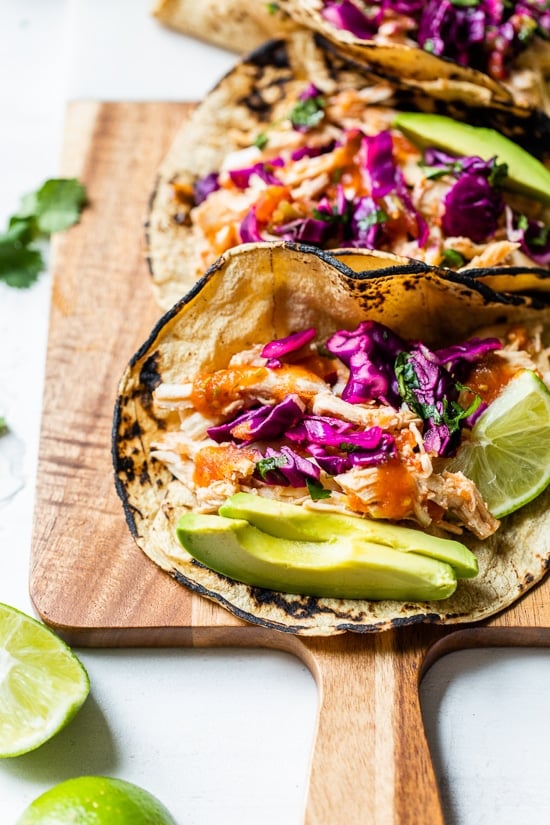
To complete the meal, the warm shredded chicken is paired with a series of fresh, texturally contrasting toppings. The complete taco assembly includes warm corn tortillas, a crisp cabbage slaw seasoned with fresh lime juice, and sliced avocado. The combination creates an engaging balance of temperatures and textures: hot, savory shredded chicken nestled inside soft tortillas, topped with crunchy, acidic cabbage and rich, smooth avocado.
Cooking Dynamics and Temperature Guidelines
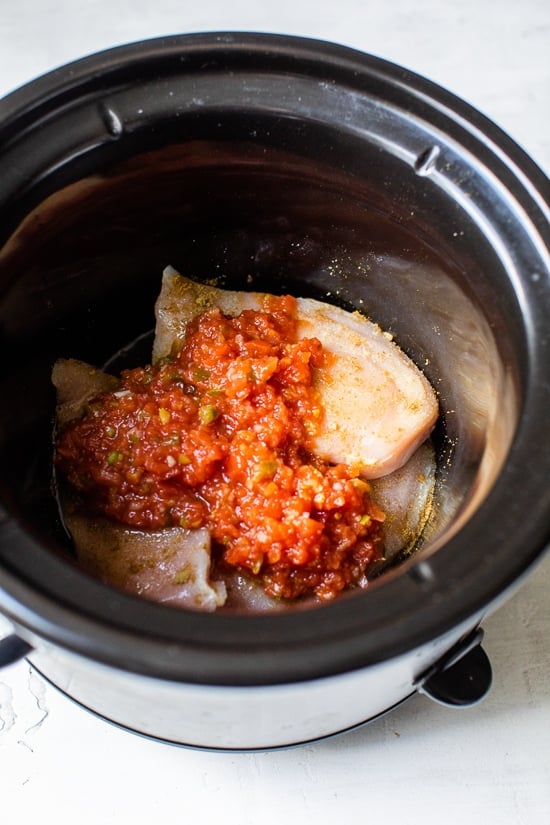
Executing the recipe requires minimal technical intervention, leaning instead on correct timing and temperature selection. The process begins by placing the raw chicken breasts directly into the bottom of the slow cooker insert, followed immediately by the dry seasonings and prepared salsa. No preliminary searing, pre-cooking, or complex layering is required.
The standard recommended cooking parameter is set to low heat for approximately four hours. Under low heat, the connective tissues and muscle fibers in the chicken breasts break down gradually, yielding juicy meat that pulls apart effortlessly with two forks. For households requiring a faster dinner timeline, the cooking process can be adjusted to high heat for approximately two to three hours. However, when using the high heat setting, careful observation is recommended toward the end of the duration to prevent the lean chicken breast meat from drying out.

Food safety standards require that the internal temperature of cooked poultry reach 165°F. Once the chicken achieves this target and shreds easily, it is pulled apart directly inside the crock pot, allowing the shredded meat to reabsorb the concentrated cooking juices and salsa settled at the bottom of the basin.
Serving Suggestions and Accompaniments
Once the chicken is fully cooked and shredded, the focus shifts to warming the tortillas and preparing the fresh garnishes. Heating corn tortillas correctly is an essential step to ensure they remain pliable and do not tear during assembly. Tortillas can be warmed in a dry skillet over medium heat for a few seconds on each side, wrapped in damp paper towels and microwaved briefly, or placed directly over an open gas stove burner for a light char.
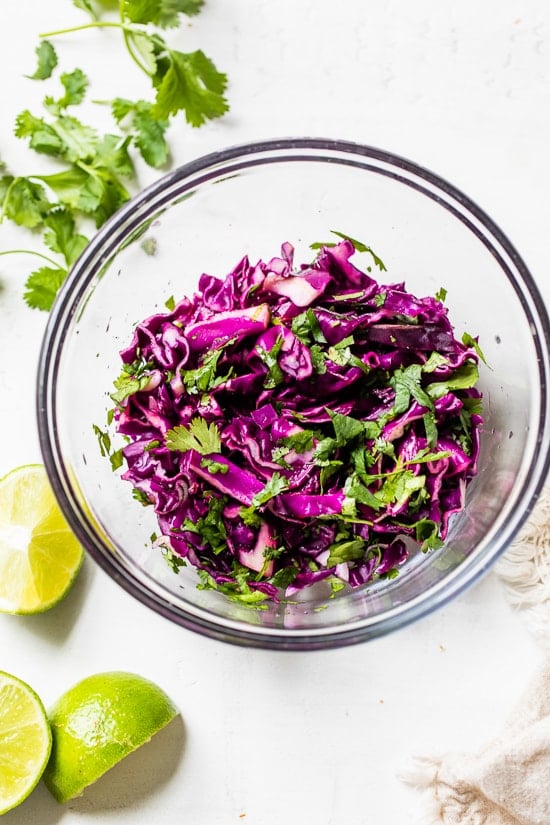
The accompanying quick cabbage slaw provides a bright, citrusy element that cuts through the savory chicken. Finely shredded cabbage tossed with fresh lime juice and a touch of salt supplies necessary crunch and brightness. Layered into warm corn tortillas alongside the shredded salsa chicken and topped with fresh avocado slices, the components form a balanced meal that mirrors traditional street taco styling while remaining quick to produce.
Recipe Variations and Ingredient Substitutions
While the foundational recipe relies on boneless, skinless chicken breasts, the cooking method adapts readily to culinary adjustments based on availability or personal taste. A common alternative is substituting boneless, skinless chicken thighs for the chicken breasts. Chicken thighs contain a higher natural fat content, which breaks down during slow cooking to yield an exceptionally moist and tender taco filling that remains juicy even during extended keep-warm cycles.
Cooks can also easily manipulate the flavor profile and heat level by altering the choice of salsa. Utilizing a mild tomato salsa keeps the dish suitable for young children, while opting for roasted salsa verde, chipotle salsa, or spicy habanero blends elevates the heat and complexity without adding extra preparation steps or altering cooking times.
Meal Prep, Storage, and Freezing Protocols
Because cooked salsa chicken retains its moisture and flavor upon re-heating, it serves as an ideal base for weekly meal preparation and batch cooking. Once cooked and shredded, any leftover chicken should be allowed to cool completely before being transferred to airtight storage containers.
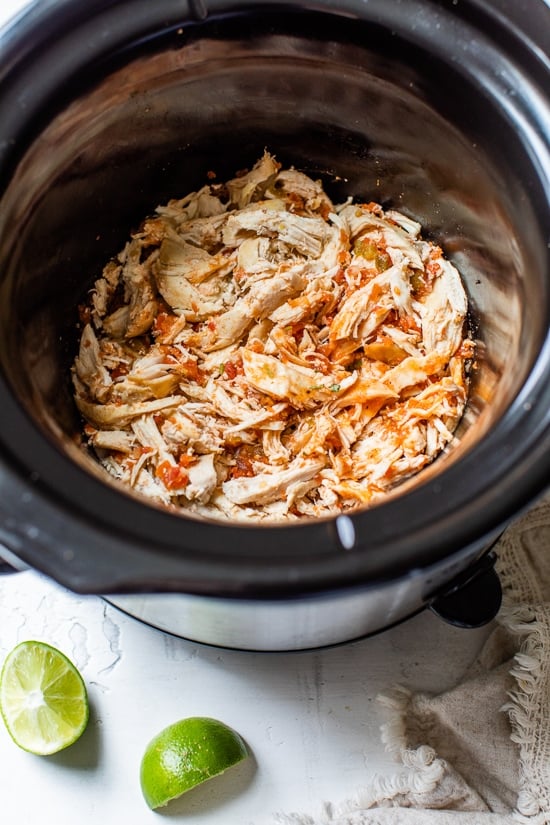
For short-term meal management, refrigerated chicken can be safely stored for up to four days. Reheating individual portions is straight forward: microwave the chicken in 30-second increments, stirring between intervals, until heated thoroughly.
For long-term storage, the cooked chicken filling freezes exceptionally well. Pack the cooled, shredded meat into freezer-safe containers or sealed freezer bags, pressing out excess air to guard against freezer burn. The chicken can remain frozen for up to three months. To serve from frozen, transfer the portion to the refrigerator to thaw overnight before reheating, or heat directly from frozen in the microwave using short 30-second bursts, stirring frequently to ensure uniform heating.
Culinary Safety and Slow Cooker Best Practices
Navigating slow cooker recipes frequently brings up practical questions regarding food safety, temperature handling, and ingredient management.
A central query among home cooks is whether placing raw poultry directly into a slow cooker is safe. Culinary and food safety guidance confirms that placing raw chicken directly into the slow cooker with seasonings and salsa is completely safe, provided the unit functions properly and the meat reaches an internal temperature of 165°F before serving.
However, placing completely frozen chicken directly into a slow cooker is strongly discouraged. Frozen meat delays the time required for the slow cooker to reach safe operational temperatures, potentially allowing the poultry to hover too long within the bacterial "danger zone." Home cooks should thaw frozen chicken thoroughly in the refrigerator prior to adding it to the slow cooker to ensure safe, even cooking.
Finally, while cooking on a high setting for two to three hours is a viable option when time is short, utilizing the low setting for four hours remains the optimal approach for maintaining maximum tenderness in lean poultry breasts.