
The debate between bodyweight training and traditional weightlifting often creates unnecessary friction for beginners. Both methodologies fall under the umbrella of strength training, and fundamentally, both run on the exact same physiological engine: progressive overload. Whether an individual is adding heavy steel plates to a barbell inside a commercial fitness facility or shifting their body mechanics in a carpeted living room to alter their leverage, the underlying biological mechanism remains identical. Muscles are challenged beyond their current capacity, forced to adapt to the stressor, and subsequently grow stronger over time.
Despite this scientific reality, well-meaning advice from friends, family members, and even industry professionals frequently undermines the confidence of newcomers. This phenomenon recently derailed the fitness journey of one reader, highlighting a broader cultural issue within health and wellness communities that gatekeeps what counts as legitimate physical training.
Enter Ant-Man
The situation came to light during a routine consultation with a reader who wished to remain anonymous, adopting the moniker "Ant-Man" to protect his identity. For weeks, Ant-Man had achieved remarkable success with his health goals, diligently tracking his food intake and dialing in his daily nutrition. Yet, when it came to establishing a consistent workout routine, he found himself feeling entirely stuck and hesitant about how to begin.
To bypass the intimidation factor of commercial facilities, his fitness coach recommended starting with a straightforward, progressive bodyweight routine designed to be performed entirely at home. The strategy was accessible, required virtually no financial investment in gear, and offered an immediate entry point into physical conditioning.
However, progress stalled almost immediately after a casual conversation with a friend. Upon sharing his new home-workout strategy, Ant-Man was met with skepticism. To paraphrase the critique, his friend suggested that exercising at home was essentially pointless and that he would eventually be forced to join a commercial gym if he actually wanted to see measurable physical progress or build real strength.
When fitness mentors followed up a month later to check on his progress, Ant-Man made a candid confession about the psychological toll of that single interaction. He admitted that he felt somewhat foolish for letting the comment affect him, explaining that it completely deflated his motivation and paralyzed him to the point where he had not completed a single workout for an entire month.
Fitness professionals note that Ant-Man’s reaction is far from silly. When an individual is already feeling vulnerable, uncertain, and tentative about stepping into a new lifestyle, critical remarks from peers land with heavy psychological impact. The broader tragedy is that this exclusionary mindset runs rampant throughout the fitness industry as a whole. Individuals encounter the sentiment not only among peers but also among personal trainers and strength coaches who implicitly or explicitly preach that physical transformation only counts if it adheres to one specific methodological playbook.
This pervasive attitude generates unnecessary barriers between everyday people and the physical activity that could dramatically improve their health. It traps individuals in a state of perpetual hesitation, keeping them waiting indefinitely for the mythical "right" way to train instead of embracing the highly effective, accessible methods available to them immediately. Even if the claim that individuals eventually need a gym were grounded in reality—which exercise science demonstrates it is not—giving that advice to a beginner creates a psychological hurdle that deters them from starting at all.
Can You Get Really Strong with Bodyweight Training?
The short answer from exercise physiologists is an unequivocal yes. Much of the confusion surrounding bodyweight training versus traditional weightlifting stems from a fundamental misunderstanding of how human muscles respond to mechanical resistance. Both approaches belong to the exact same category of exercise, relying on the principle of progressive overload.
The process of progressive overload requires exposing skeletal muscle to a stimulus that exceeds its current operational capacity. Once the muscle adapts to that challenge through structural and neurological changes, the demands must be systematically increased to prompt further adaptation. In a traditional gym setting, practitioners achieve this by adding physical poundage to a barbell, dumbbell, or cable machine. In bodyweight training, practitioners achieve the exact same physiological stimulus by altering their leverage.
By manipulating body geometry and positioning, trainees can place themselves at a mechanical disadvantage, forcing the target musculature to work significantly harder to execute the same basic movement pattern. This principle allows individuals to continuously scale the difficulty of an exercise without ever picking up a dumbbell.
Furthermore, the strength ceiling for bodyweight training is far higher than public perception suggests. Elite gymnasts and calisthenics athletes routinely display extraordinary levels of relative strength, power, and muscular hypertrophy, all of which are built almost entirely through body leverage and the management of body weight against gravity.
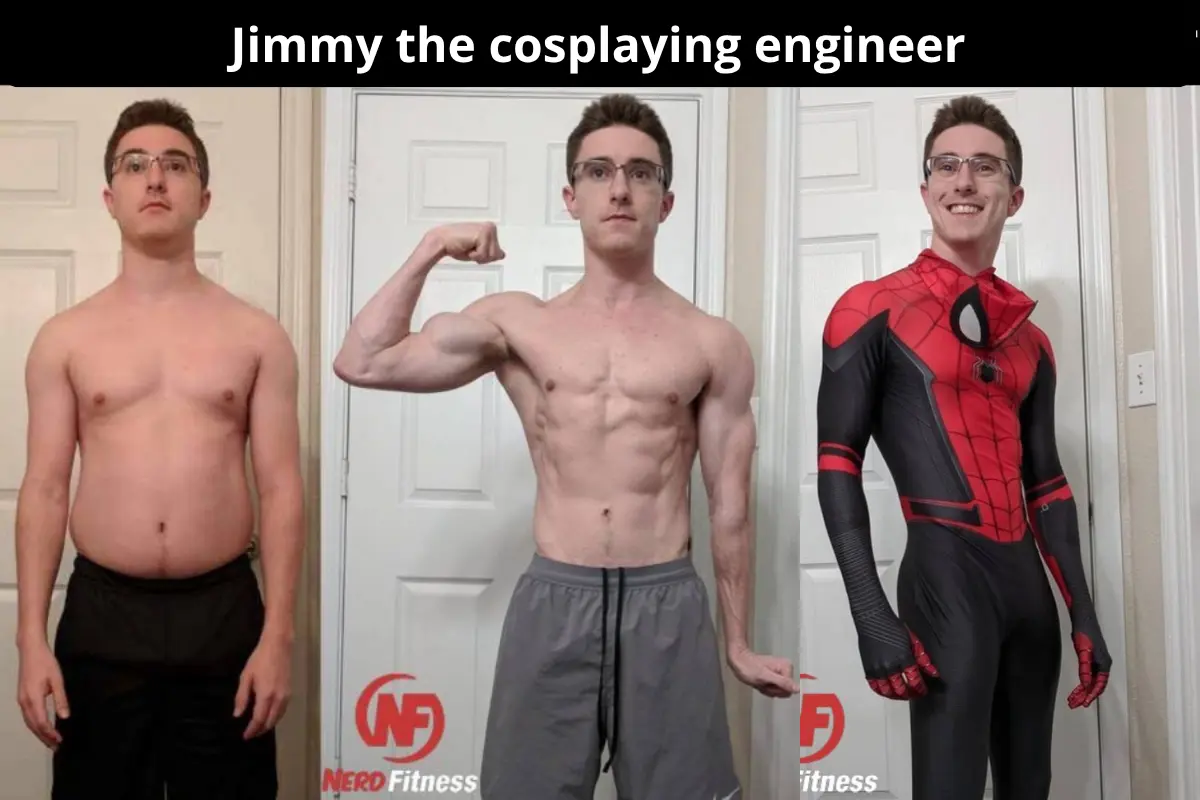
Real-world examples further validate this approach. Consider the case of Jimmy, an engineer with a demanding schedule who despised the environment of commercial gyms. Like many beginners, Jimmy worried that training exclusively at home would limit his ability to achieve serious physical results. Within twelve months of adhering to a structured, progressive home bodyweight program, he built substantial strength and muscle mass, ultimately achieving a physical transformation that allowed him to successfully cosplay as his favorite superhero, Spider-Man.
Bodyweight training possesses a distinct set of practical advantages that make it uniquely suited for modern lifestyles. Because it requires minimal or zero equipment, it travels seamlessly with the practitioner, whether they are exercising in a living room, a hotel room while traveling for work, or a local public park. Additionally, bodyweight movements are exceptionally scalable, meaning they can be modified instantly to match an individual’s precise current ability level, whether they are recovering from an injury, starting from a sedentary lifestyle, or pushing toward advanced athletic mastery.
OK, So What About the Gym?
While bodyweight training offers unmatched convenience and accessibility, a fair assessment of physical culture must acknowledge the distinct benefits that traditional gyms and heavy weights provide. Ant-Man’s friend, while misguided in dismissing home workouts, was not entirely wrong about the utility of a well-equipped fitness facility.
Weights and gyms possess their own set of genuine advantages for certain training goals. For movements that require pulling against heavy resistance—such as deadlifts, heavy rows, or weighted pull-ups—commercial gym equipment makes the process of heavy loading and progression mathematics significantly more straightforward. Adding a ten-pound plate to a barbell provides a clean, quantifiable metric of progression that appeals to many trainees.
Additionally, commercial gyms offer access to a vast array of specialized apparatuses, cables, and machines designed to isolate specific muscle groups with precision. For individuals who thrive in a dedicated training environment away from home distractions, or for those who simply prefer the atmosphere of a physical fitness club, the gym serves as an invaluable sanctuary.
Ultimately, the fitness landscape is expansive enough to accommodate diverse preferences. Some individuals thrive and find consistency training exclusively in their living rooms, while others prefer the energy and equipment array of a commercial gym. Many experienced practitioners even utilize a hybrid approach, shifting between home-based calisthenics and gym-based lifting depending on the changing seasons of their lives and professional schedules. All of these pathways are equally valid.
The Real Deal About Progress
An individual’s physical progress, particularly during the crucial initial stages of a fitness journey, is not owned by any specific location, facility, or brand of equipment. True physiological development is governed by fundamental training principles that can be applied successfully regardless of where a person happens to be standing.
These universal principles include mechanical tension, which involves challenging muscles through a full range of motion; consistency, which ensures the body receives a regular stimulus to adapt to; and progressive overload, which steadily increases the demands placed upon the neuromuscular system over time.
The central question facing anyone looking to improve their physical health is not whether a particular style of exercise "counts" in the eyes of fitness purists. Instead, the most critical inquiry is determining which method an individual can execute consistently, sustainably, and enjoyably within the reality of their current lifestyle.
For readers like Ant-Man, that sustainable pathway may very well be a structured bodyweight routine performed in the comfort of home. For others, it may involve purchasing a gym membership and lifting heavy iron. Both choices are entirely valid, and neither holds a monopoly on physical health.
For those who have ever hesitated to begin their fitness journey because they felt their chosen method was somehow inadequate, fitness advocates emphasize that the barriers are largely cultural rather than physiological. By focusing on fundamental principles rather than dogmatic rules, anyone can build strength, improve their health, and make meaningful progress on their own terms.