
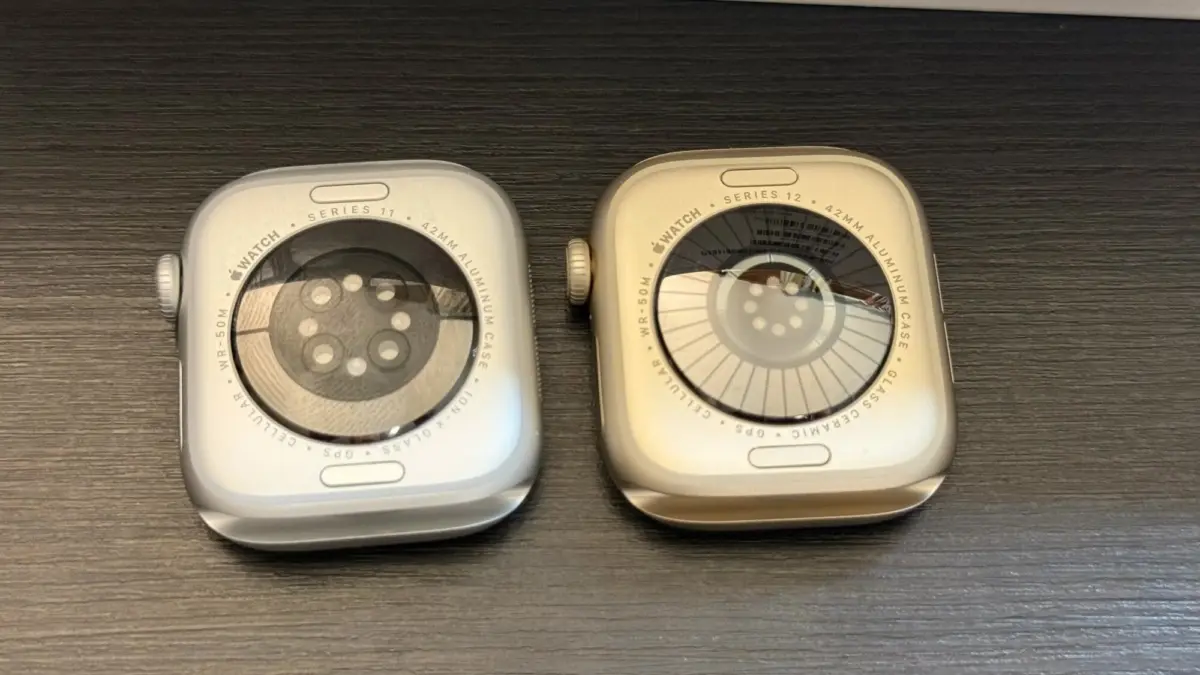
The device, which has recently landed on wrists across the globe, introduces several noticeable physical and functional changes. Among the most immediately striking modifications is a redesigned heart rate sensor located on the back casing of the watch. This hardware shift accompanies the launch of watchOS, bringing advanced health tracking metrics to the forefront, including a new "recovery HRV" metric designed to measure physiological readiness, moving away from the more cardiac-health-focused heart rate variability metrics utilized by previous generations of Apple wearables.
Step Counting Arrives, But Leaves Older Models Behind

For years, users have voiced frustration over Apple’s reluctance to display step counts as an easily accessible primary metric directly on the watch face or through quick-glance interfaces. With the Series 12, that wait has come to an end. Users can now access a smart stack interface simply by performing a double pinch gesture with their fingers, bringing their daily step count to the very top of the display without even needing to touch the screen.
Furthermore, a dedicated step count complication can now be added to various watch faces. While the traditional activity rings remain available, users finally have the flexibility to swap them out for explicit step counts or wheelchair pushes.
Preliminary tests indicate that the new step tracking works exceptionally well. Measurements update rapidly and align closely with manual tracking during short walks, registering exact numbers consistently. Apple has marketed the Series 12 as boasting some of the most accurate step-counting capabilities currently available on the wearable market.
However, this long-overdue addition comes with a notable drawback: step counting is conspicuously absent from the Series 11 and all earlier models. Apple attributes this limitation to the specialized pedometer model integrated directly into the new processor found exclusively in the Series 12. Because older Apple Watches lack the specific hardware required to calculate steps with the same level of precision, those devices are being left behind. For many industry observers, the fact that a basic health metric standard across virtually all other fitness trackers took this long to arrive—and remains restricted to the newest hardware—is a frustrating limitation.

Skepticism Surrounds Heart Rate Accuracy Claims
One of the boldest marketing claims surrounding the Apple Watch Series 12 is that it offers the most accurate heart rate monitoring ever built into a wearable device. Given historical data and performance benchmarks from both Apple and competing brands, reviewers have approached this assertion with a healthy dose of caution.
Early testing against a traditional chest strap—widely considered the gold standard for athletic heart rate monitoring—suggests that the Series 12 performs admirably, though perhaps not remarkably better than its immediate predecessor. During indoor running tests comparing the Series 11 and the Series 12 against a chest strap baseline, both Apple devices performed capably. However, discerning a tangible improvement in the Series 12’s output has proven difficult during preliminary trials.
A primary technical bottleneck appears to be Apple’s continued reliance on a five-second sampling rate during active workouts. While dedicated chest straps and rival fitness watches, such as Garmin’s lineup, record heart rate data once every second—yielding sixty data points per minute—the Apple Watch captures only twelve points per minute. This sparser dataset can occasionally result in missed peaks during sudden spikes in physical exertion.

During outdoor running evaluations comparing the Series 12 against a Garmin Forerunner and a reference chest strap, the Apple Watch exhibited similar limitations. While it tracked overall trends effectively, minor discrepancies during rapid intensity changes highlighted the constraints of its lower sampling frequency. More comprehensive testing across a wider variety of sports, environmental conditions, and physical activities will be necessary to determine whether the hardware redesign translates into real-world performance gains.
Features Awaiting Future Software Updates
Several of the most heavily anticipated software capabilities for the platform are not yet available for testing. Features such as Live Rewind and Siri Recaps are scheduled to arrive later in the year and were not included in the baseline version of the operating system shipped with the hardware. Live Rewind is designed to provide text transcriptions of ambient audio from the preceding fifteen seconds, while Recaps are intended to summarize longer periods, such as meetings or lengthy conversations.
Similarly, comprehensive readiness scores require an extended baseline of sleep data—typically around a week of continuous overnight tracking—before they can generate meaningful insights. As a preliminary glimpse into these upcoming health metrics, the device successfully logs recovery heart rate variability alongside standard sleep data. Early comparisons between the Apple Watch and competing devices like the Oura ring show slight numerical variations in HRV readings, a common occurrence driven by differing measurement timestamps. Reviewers note that tracking overarching personal trends over time, rather than focusing on isolated daily figures, will be the true test of these new health analytics tools.