
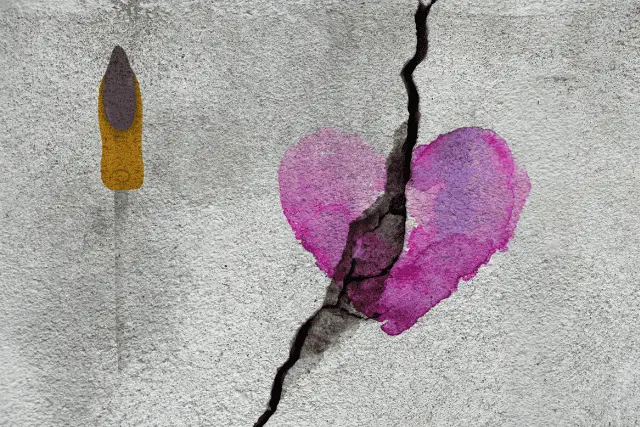
In modern relationship discourse, divorce is frequently depicted as the dramatic aftermath of infidelity, financial ruin, or overt hostility. However, legal and psychological professionals increasingly recognize that many marriages end through a quieter, more insidious process. P.V.’s experience exemplifies this phenomenon—a gradual recalibration of what constitutes "normal" behavior, where one partner systematically shrinks their own needs to preserve the structural integrity of the relationship.
The Virtual Origins and Early Warning Signs
The relationship began in the digital sphere during their teenage years, initiated through a mutual acquaintance. Like many contemporary romances, the connection flourished in the safe, curated environment of text messages and inside jokes. This digital buffer allowed both parties to project idealized versions of themselves before having to navigate the complex, imperfect realities of face-to-face intimacy.
The first shift occurred a year into their correspondence when P.V. suggested meeting in person. The response she received—a cold, defensive inquiry of "Why do you want to meet?"—served as an early, destabilizing shock. Rather than addressing the discomfort of this reaction, P.V. made a choice that would define her behavioral patterns for the next ten years: she rationalized the incident, dismissed her own unease, and remained committed to the connection.
As the years progressed, this dynamic solidified into a recurring pattern. Cutting remarks were disguised as humor, followed by apologies that subtly reframed the original insult rather than taking accountability for it. When P.V. voiced insecurities or emotional needs, they were turned back on her as evidence that she was "too much" or overly sensitive. Conversely, her partner’s requirements and boundaries were treated as objective, self-evident truths that she was expected to accommodate without question.
This slow erosion of self-worth is a common theme in long-term relationships where emotional unavailability is present. Because each individual incident appears minor in isolation, the affected partner often struggles to find a clear, justifiable threshold for departure, choosing instead to adapt to an increasingly restrictive emotional environment.
The Illusion of Stability and the Self-Correction
"None of it, on its own, seemed like a reason to leave," P.V. reflects, pointing to the insidious nature of slow erosion. Without a singular, catastrophic event to act upon, she, like many others in similar dynamics, continued to adapt.
In sharing her story, P.V. emphasizes the importance of self-honesty, rejecting the simplistic narrative of being a purely passive victim. She acknowledges that she fought back, occasionally unfairly, expressed anger in ways she later regretted, and treated her husband as her sole emotional anchor when she should have built independent support systems.
Acknowledging one’s own reactive behavior is a crucial step in healing. It allows individuals to hold their own missteps and their partner’s systematic patterns of harm as two separate, coexisting truths, without allowing one to invalidate the other. This balanced perspective prevents the self-blame that often keeps individuals trapped in dysfunctional dynamics.
The Sudden Departure and the Search for Clarity
The definitive fracture in the marriage occurred without warning. Out of nowhere, P.V.’s husband announced that he had stopped loving her in the same way, describing a feeling of numbness and expressing a need for space to reevaluate their future.
In the immediate aftermath, P.V. engaged in what relationship experts describe as the repair phase—an intensive effort to locate the thread that could bind the relationship back together. This involved seeking individual therapy, researching attachment theory, studying communication patterns, and joining a support group specifically tailored for individuals recovering from relationships with emotionally unavailable or narcissistic partners. Within this structured environment, the isolated, confusing incidents of the past decade began to coalesce into a recognizable, documented pattern of behavior, dissolving the persistent fog of self-doubt that had characterized her marriage.
The Final Confrontation
Despite the insights gained from her support network, P.V. chose to seek one final, face-to-face meeting with her husband. Although peers in her support group warned that such an encounter could cause further emotional distress, she felt it was necessary to confront the reality of the relationship directly, without the buffer of digital communication, to prevent herself from retroactively romanticizing the marriage or wondering if it was salvageable.
The meeting, which took place in a public park, lasted over two hours. During this time, her husband avoided eye contact and characterized their eleven-year history as largely transactional, claiming to remember little of their shared life beyond their travels. In doing so, he dismissed a decade of intimate, everyday connection—the books they read aloud to one another before sleeping, the audiobooks on long road trips, the collaborative music medleys, and the shared emotional experiences of watching films together.

The turning point of the conversation came when P.V. asked him what the best version of himself looked like, hoping to find a flicker of self-reflection. His response was immediate and unreflective: "Honestly, I think I am already the best version of me."
For P.V., this statement was the definitive end of her marriage. It was not delivered with malice, but its implications were absolute. It signaled that there was no desire or perceived need for personal growth on his part, leaving her to realize that she had spent eleven years carrying the weight of two people’s emotional development—an unsustainable dynamic that threatened her own identity.
Lessons in Emotional Resilience
Through the process of dismantling her marriage and preparing for her legal divorce, P.V. identified several key insights aimed at helping others who may find themselves in similar circumstances.
Distinguishing Between Patterns and Phases
One of the most common pitfalls in struggling relationships is mistaking a long-term behavioral pattern for a temporary phase. Individuals often remain in unfulfilling situations under the assumption that their partner will become emotionally available once external stressors—such as career pressures or financial difficulties—subside.
P.V. advises paying close attention to the duration of these supposed phases. Time alone does not generate emotional capacity if the willingness to self-reflect is absent. No amount of external support or affection can force an individual to undertake the internal work required to change their behavioral patterns.
The Importance of Trusting One’s Own Memory
Gaslighting and chronic invalidation often cause individuals to doubt their own perception of reality. To counteract this, P.V. highlights the utility of maintaining a written record.
During periods of confusion, documenting specific events, conversations, and dates can serve as an objective anchor. This written evidence is not necessarily for legal purposes, but rather to provide future self-validation when memory begins to waver under the influence of nostalgia or external denial.
Protecting Personal Peace Amid External Pressure
When a long-term marriage ends, friends and family members often intervene with well-meaning attempts to reconcile the couple. While these efforts are typically rooted in care, they can inadvertently undermine the individual’s agency.
P.V. discovered that maintaining boundaries with loved ones is essential. Accepting support does not require accepting their roadmap for one’s life. It is entirely permissible to request that friends and family trust the deep deliberation that went into the decision, asking for solidarity rather than intervention.
Grief and the Rightness of Departure
A major source of internal conflict for those leaving a relationship is the co-occurrence of grief and certainty. It is entirely possible to mourn the genuine, positive aspects of a shared past while simultaneously recognizing that leaving is the correct and necessary choice.
Holding these two truths in tandem, rather than trying to force a simplistic narrative where the relationship was entirely bad, allows for a more honest and thorough grieving process.
Looking Forward
As the legal proceedings draw to a close, P.V. views the end of her marriage not as a failure, but as a transition toward a more authentic existence. By relinquishing the responsibility of single-handedly maintaining the relationship, she has redirected her energy toward her own recovery and passions—including her career in technology, her practice of Indian classical music, and her writing on emotional resilience. The finality of the court order represents the formal conclusion of a chapter that, in all practical terms, ended months prior in a park, where clarity finally replaced hope.