The enduring fascination with these substances often begins quietly. For botanical fragrance makers and historians alike, materials like frankincense and myrrh are initially understood as standard aromatic components. However, delving deeper into their historical footprint reveals lives far more complex and traveled than what reaches a modern perfume bottle sitting on a vanity. This historical journey bridges the gap between ancient survival, global trade, and the intimate, everyday rituals that modern society still seeks out today.
When Fragrance Was Precious
It remains a significant challenge for the modern mind to fully imagine a world in which physical scents had to travel hundreds or even thousands of miles across hazardous terrain to reach consumers. Long before globalized shipping and synthetic aroma laboratories, aromatic materials were rare commodities tied directly to the earth’s natural geography.
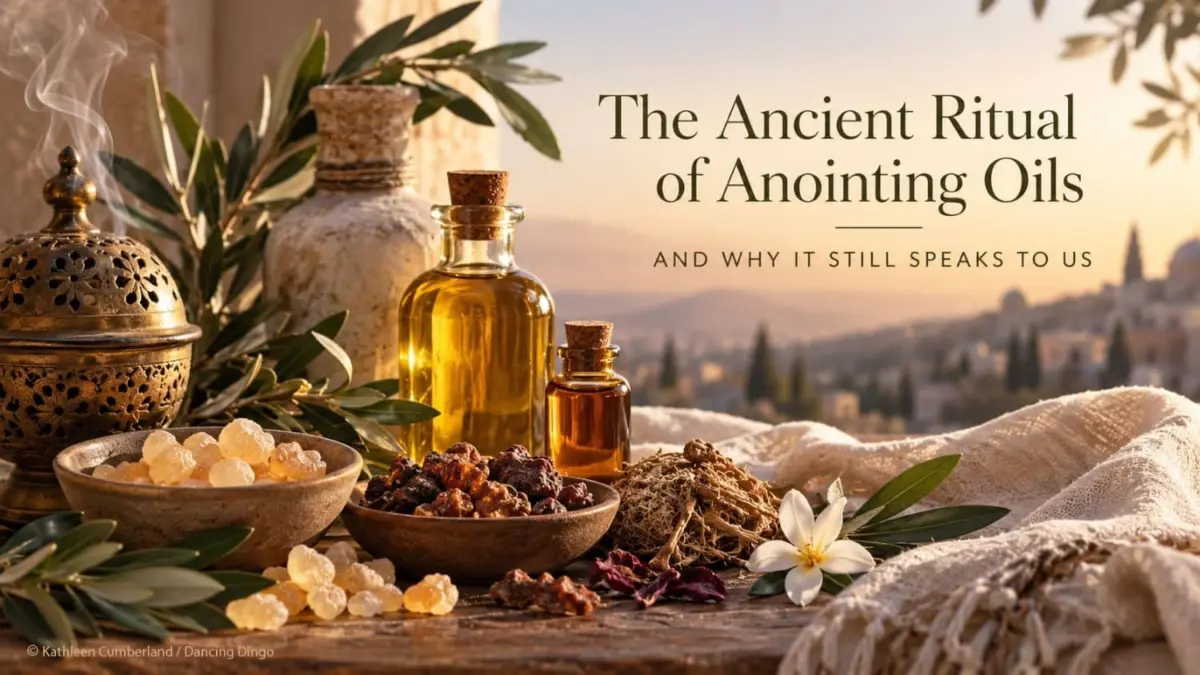
Frankincense and myrrh originated primarily as natural resins gathered carefully from hardy trees coping with arid climates. Spikenard, widely known as nard, served as another exceedingly prized aromatic derived from high-altitude plants, while labdanum emerged as a sticky, aromatic resin associated with rockrose shrubs native to the Mediterranean basin. These substances were never treated as merely pleasant smells meant to mask unpleasant odors. Instead, they functioned as exceptionally valuable currency and commodities, carried along ancient trade routes to be utilized in complex religious observances, high-end perfumery, traditional medicinal remedies, and daily life.
Alongside these exotic resins stood olive oil, a staple that forms the backbone of Mediterranean agriculture and history. While contemporary perspectives often associate olive oil strictly with culinary uses beside the kitchen stove, ancient civilizations viewed it as an astonishingly versatile resource. Olive oil provided vital nutrition and fuel for lighting lamps. It was smoothed over human skin and hair as a protective and softening agent, offered to travelers and guests as a profound gesture of hospitality, and integrated deeply into sacred religious ceremonies.
Crucially, olive oil frequently served as the foundational carrier for materials far more precious and rare: concentrated fragrances. The combination of an accessible, highly useful base carrying a rare, extraordinary botanical extract highlights a historical ingenuity where the ordinary seamlessly supported the extraordinary.
Frankincense, Myrrh, and Stories We Still Know
Even individuals who possess very little familiarity with ancient botanicals or historical trade routes usually recognize two prominent names immediately: frankincense and myrrh. For many people, these substances make their first cultural appearance within traditional holiday narratives, specifically the Christmas story. The biblical Magi famously brought gold, frankincense, and myrrh as gifts to the infant Jesus—offerings that can sound wonderfully exotic and mysterious to a child who has not yet learned what two of those items actually are in physical reality.
Rarely does anyone pause the storytelling to deliver a detailed botany lesson, an omission that arguably preserves the poetic atmosphere of the moment. Yet, discovering the true nature of these substances later in life fundamentally enriches the narrative. They were never imaginative or mythical treasures; they were authentic, highly tangible aromatic substances. They possessed enough economic and cultural value to travel great distances across ancient empires, and they carried enough cultural weight to become permanently intertwined with worship, ceremony, and the highest forms of honor.
Myrrh resurfaces later within the biblical narrative in direct association with the burial customs of the era. Similarly, spikenard appears in an especially intimate and famous account where Mary anoints Jesus with costly perfume, filling the entire house with its rich fragrance. Regardless of an individual’s personal religious beliefs or lack thereof, these scenes remain remarkably human at their core. Throughout history, human beings have consistently utilized scent to honor others, to welcome strangers, to process grief, and to remember significant moments. Thousands of years later, modern society continues these exact practices, often without realizing the deep lineage of the gestures.
Maybe Ritual Doesn’t Have to Be Grand
The word "ritual" often carries an unintended weight, making routine actions sound overly formal, rigid, or detached from daily life. In reality, human existence is continuously populated by tiny, recurring rituals that people execute daily while barely noticing them.
Consider the deliberate way a cup of coffee is prepared each morning, the simple act of striking a match to light a candle as evening falls, the application of a favorite personal fragrance before stepping out the door, or the habit of sitting quietly for a few minutes before the rest of the household wakes up. In these scenarios, the physical object itself is rarely the most important factor. The true value lies in the attention being paid.
A small, deliberate ritual communicates a clear message to the mind: this specific moment is distinct from the one that came before it. Recognizing this fundamental truth shifts the perspective surrounding anointing oils. Rather than viewing them strictly as archaic artifacts locked behind the glass of ancient religious history, observers can begin to understand the remarkably simple, enduring idea that underpins them: oil, fragrance, and intention.
Nothing overly complicated is required to achieve this sense of grounding. A single drop touched to the skin before a moment of prayer, a small amount of oil warmed in the palms during meditation, a familiar aroma filling the room during journaling, or a quiet pause for remembrance serves the exact same psychological and emotional purpose. For others, it simply functions as a physical anchor to stop moving forward for a brief moment in time.
Old Things in Modern Hands
Curiosity regarding these historical materials eventually leads modern creators to experiment directly with the ingredients themselves. Working practically with cold-pressed olive oil infused with botanicals such as frankincense, myrrh, spikenard, and labdanum offers a tangible link to the past.
Opening bottles containing materials with histories spanning thousands of years evokes a distinct emotional response. These are substances that commanded immense respect and value when the contemporary world of skyscrapers, digital technology, and global communication would have been entirely unimaginable. Yet, the core human experience of interacting with them has not become obsolete or lost its meaning.
The physical process remains entirely unchanged: you open a bottle, you breathe in the aroma, and for a fleeting moment, you are forced to pay attention to the present. Perhaps this precise psychological mechanism is why ancient botanicals continue to feel entirely at home in modern hands, despite the world around them having changed almost beyond recognition. The external environment has transformed completely, but the fundamental human need to pause, to remember what truly matters, and to infuse ordinary moments with meaning remains entirely constant.
Botanical historians, fragrance enthusiasts, and modern makers continue to explore these historical aromatics through ongoing study and the creation of contemporary botanical collections inspired by ancient traditions. As these practices persist, they invite individuals to reflect on their own daily routines. Which botanical oils have you read about, and what personal routines do you connect them to? Do you maintain your own distinct ritual connected to fragrance in your daily life?