
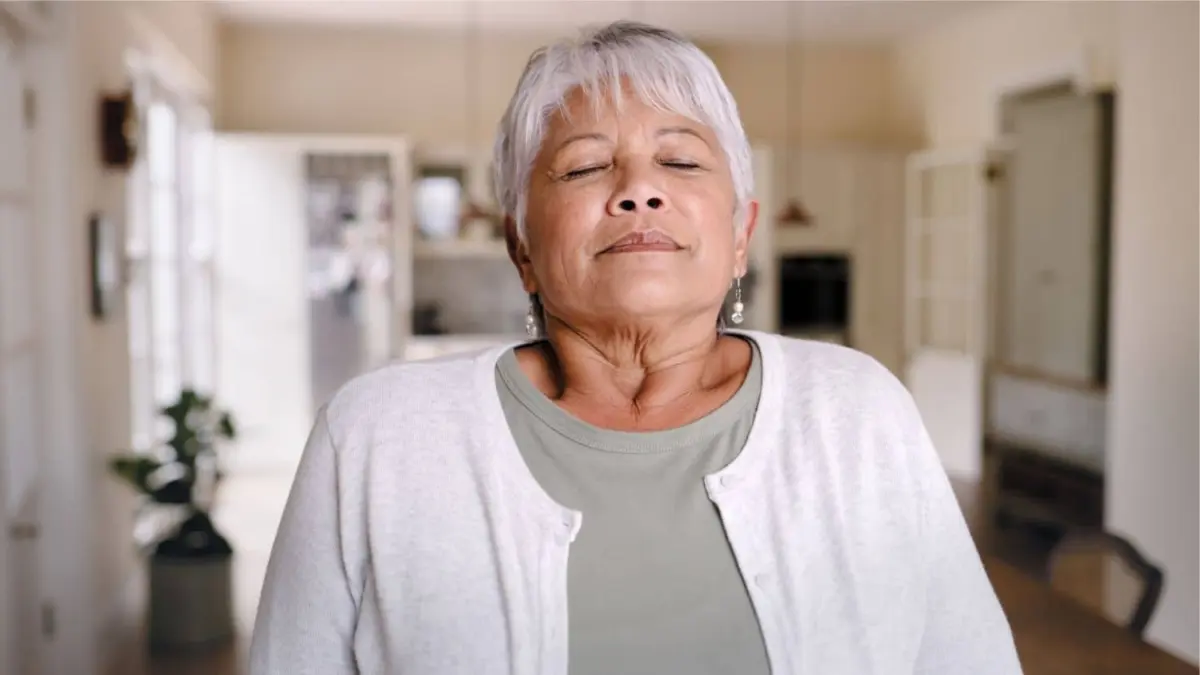
This contradiction offers a comforting reality. Breathing is not a skill mastered once and retained for life. Instead, it evolves alongside the human body. How well individuals understand their breath at ages sixty, seventy, or eighty depends entirely on how attentively they have listened to it throughout the changing phases of their lives.
The Breath That Kept Changing on Me
This fluid nature of respiration often reveals itself during major biological milestones. For many, the first realization occurs during pregnancy. Sitting in meditation—engaging in a practice performed countless times before—an individual might try to settle into a familiar rhythm, only to find it completely inaccessible.
While nothing is dramatically wrong and there is no sudden gasping for air, the trusted rhythm feels suddenly unfamiliar. A growing body alters the fundamental mechanics of respiration, providing a stark reminder of how easily one can take something as automatic as breathing for granted.
These shifts continue to manifest across decades. Approaching age fifty, long before the onset of classic indicators like hot flashes or a racing heart, subtle alterations in breathing patterns often emerge. While not dramatically different, the shift is noticeable and strangely unsettling. While the theoretical connection between hormones and respiratory function is widely understood, experiencing that shift internally bridges the gap between academic knowledge and physical reality. Each transition requires a person to relearn a biological process they assumed was permanently mastered.
Why the Nose Matters More Than We Realize
Central to optimal respiratory health is a fundamental physiological rule: whenever it is comfortable and practical to do so, breathing should occur through the nose.
The human nasal passage serves as an advanced environmental conditioning system. It actively filters, warms, and humidifies incoming air before it ever reaches the delicate tissues of the lungs. Conversely, mouth breathing bypasses this crucial filtration and conditioning process. This habit frequently contributes to a dry mouth and throat, chronic snoring, and disrupted sleep architecture.
What often surprises both professionals and laypeople alike is that mouth breathing is frequently a passive habit rather than a conscious choice. Working with individuals who assume oral breathing is an absolute necessity often reveals that, with gentle awareness and without force, the nasal passages are capable of handling far more of the workload than previously recognized.
This realization carries particular significance during midlife, a period when the respiratory system undergoes under-appreciated physiological changes. Research highlighted in the American Journal of Respiratory and Critical Care Medicine offers compelling insight into this transition. A large European study tracked 1,438 women across three distinct study periods to monitor respiratory health over time.
The findings demonstrated that lung function declined significantly faster during the menopausal transition and the postmenopausal years than would typically be expected from natural aging alone, even after researchers adjusted for confounding variables such as body weight and smoking habits.
This data does not suggest that individuals should cultivate anxiety over every minor fluctuation in their breathing patterns. Rather, it highlights a simpler, more grounded truth: the respiratory system is an active participant in the broader systemic transitions of the body, making it well worth paying attention to.
The Exercise I Actually Use: Breathe Light
Among the myriad techniques taught in professional practice, certain foundational exercises remain the most practical for daily application—particularly while sitting at a desk or upon realizing that mouth breathing has quietly resumed.
The practice involves sitting comfortably with proper back support while keeping the shoulders and jaw entirely relaxed. By gently closing the mouth, an individual inhales softly through the nose, making the breath-in just slightly lighter, shorter, and quieter than usual rather than taking a deep, expansive gulp of air. The exhale is then allowed to exit naturally without any physical force.
Continuing this pattern eventually induces a mild, manageable urge to breathe slightly more—a small edge of awareness rather than a state of discomfort. This approach strictly avoids breath-holding or pushing through physical strain; if any discomfort arises, the individual simply returns to their normal breathing pattern.
Achieving perfection in this practice is rarely the goal. Some days, the breath settles within a single minute, while other days—typically those marked by elevated stress—require significantly more time. Perfection has never been the objective; simple, non-judgmental awareness is.
Everything Changes – Including Your Breath
Experiences like pregnancy and midlife demonstrate that the human body continuously rewrites itself, dragging our breathing patterns along for the journey. These shifts do not represent losses to mourn, but rather ongoing invitations to pay close attention to our physical selves, much like any other vital relationship that demands care and observation.
Reflecting on these personal and physiological shifts raises broader questions about daily physical awareness. Have you noticed your breathing change at different points in your life? Do you tend to breathe predominantly through your nose or your mouth? And, if you pause to check honestly right this moment, is your mouth open or closed?