This reality, however, is frequently obscured by pervasive fitness industry dogmas and offhand remarks from well-meaning friends. The friction between specialized gym culture and accessible home workouts often creates psychological barriers that keep beginners sidelined for weeks, months, or even indefinitely.
The Psychological Impact of Fitness Gatekeeping
Consider the case of one recent fitness participant, a reader who asked to remain anonymous under the pseudonym "Ant-Man" to protect his privacy. For weeks, Ant-Man had been making commendable progress in his health journey. He successfully tracked his nutritional intake, dialed in his daily dietary habits, and established a consistent rhythm. When it came time to address his physical conditioning, he and his coach decided to implement a structured bodyweight routine designed to be performed entirely at home.
The momentum hit an immediate wall, however, after a casual conversation with an acquaintance. Upon hearing about the home-based bodyweight plan, the friend offered a discouraging critique, suggesting that the routine was essentially pointless and that achieving any meaningful physical progress would ultimately require transitioning to a traditional gym setting.
When later followed up with by his coach, Ant-Man admitted that the comment had an unexpectedly devastating impact on his motivation. Despite knowing intellectually that he was taking positive steps, the remark left him feeling deflated to the point where he could not summon the motivation to complete a single workout for an entire month.
Fitness professionals note that this type of psychological hurdle is far from unique. The broader fitness culture is heavily saturated with dogmatic assertions declaring that exercise only "counts" if it adheres to a very specific set of criteria or takes place in a dedicated facility. These gatekeeping attitudes create unnecessary hurdles between everyday individuals and the accessible physical activities that could immediately improve their health and well-being. Rather than encouraging people to start with the effective tools available to them today, such commentary often traps them in a state of perpetual paralysis, waiting for the elusive "right" conditions to materialize.
The Science of Strength: Progressive Overload
To understand why gym-only mentalities are fundamentally flawed, fitness experts point to the underlying science of how muscles grow and adapt. Whether an individual is lifting a steel barbell in a commercial facility or performing a calisthenics movement on a living room floor, both bodyweight training and traditional weight training fall under the exact same umbrella of strength training. Furthermore, both methods rely on the identical physiological engine: progressive overload.
The principle of progressive overload is straightforward. To force muscles to adapt, grow stronger, and increase in endurance, an individual must systematically challenge them beyond their current capacity, allow adequate time for recovery, and then incrementally increase the challenge over time.
In a traditional gym setting, practitioners typically apply progressive overload by adding physical weight to a barbell, dumbbell, or exercise machine. A lifter squatting 100 pounds this week might progress to 105 pounds the following month, creating a clear mathematical progression.
In bodyweight training, the method of increasing the challenge differs, but the objective remains identical. Instead of adding external weight, practitioners manipulate leverage. By adjusting body positions or angles, individuals can place their muscles at a mechanical disadvantage, forcing them to work significantly harder to perform the same basic movement pattern. A standard push-up, for instance, can be modified into an elevated or decline variation to drastically alter the resistance experienced by the chest, shoulders, and triceps without ever picking up a single dumbbell.
Regardless of the implement used—be it a cast-iron plate or one’s own body mass—the muscular system responds to the mechanical tension and metabolic stress placed upon it. The ceiling for bodyweight training is substantially higher than many casual observers realize. Elite gymnasts and calisthenics athletes routinely display extraordinary levels of strength and muscular hypertrophy built almost exclusively through body leverage and gravity-based movements.
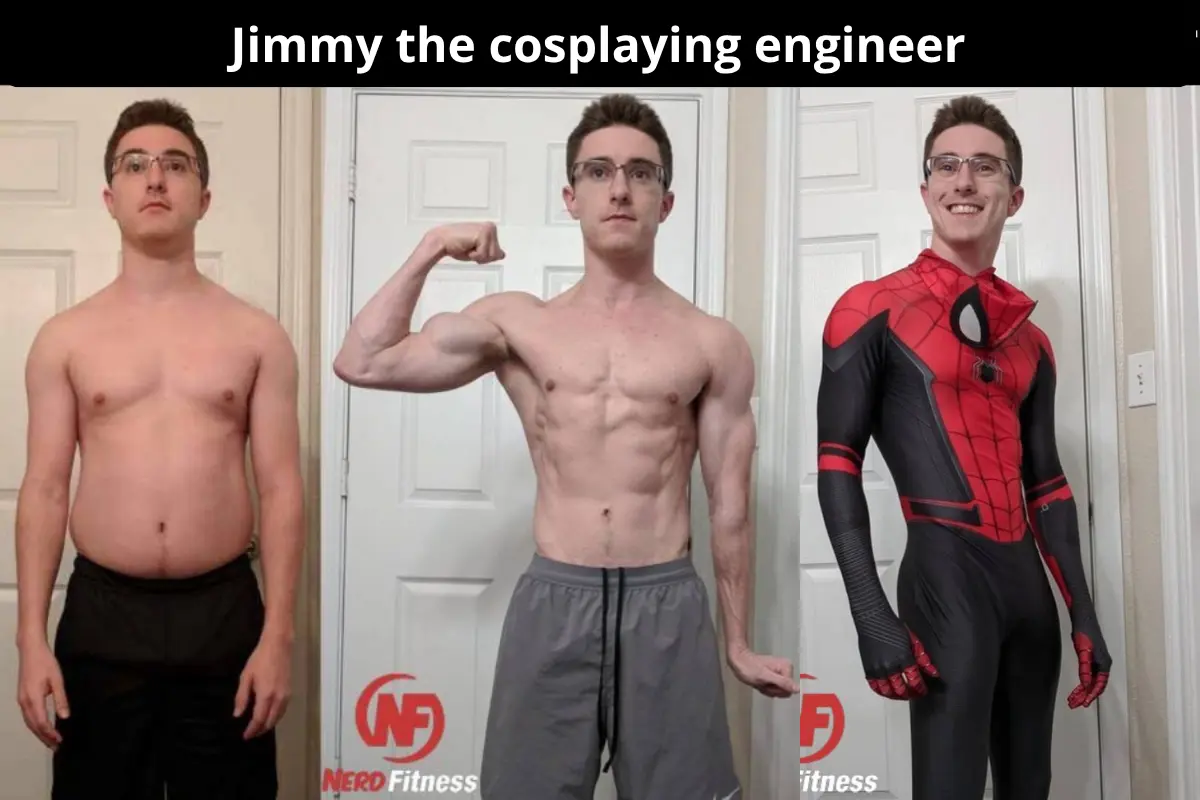
Real-world examples further illustrate this potential. Program participants with packed schedules and an aversion to commercial gym environments have achieved transformative physical results entirely at home. One notable trainee spent a year following a structured home calisthenics regime, ultimately developing the strength and conditioning required to successfully cosplay as his favorite fictional hero, Spider-Man, proving that impressive athletic milestones do not require a gym membership.
Weighing the Advantages of Both Approaches
While home-based bodyweight training is exceptionally effective, acknowledging the distinct benefits of traditional gym environments is equally important. Neither method is universally superior; rather, each offers unique advantages depending on an individual’s lifestyle, goals, and personal preferences.
Bodyweight training boasts a distinct set of practical superpowers. It is highly portable, allowing individuals to maintain their routines while traveling, staying in hotels, or visiting local parks. It requires minimal or zero specialized equipment, drastically reducing financial barriers to entry. Additionally, bodyweight movements are exceptionally scalable, meaning exercises can be easily modified to match any current fitness level, from absolute beginners to advanced athletes.
Conversely, traditional weights and gyms offer their own set of legitimate benefits. For many practitioners, the gym provides a dedicated, distraction-free environment specifically optimized for physical exertion. Furthermore, weight training makes heavy loading and progression tracking mathematically straightforward, as numerical increases on plates provide an unambiguous metric of progress. Weight equipment also tends to cover certain movement patterns, particularly heavy pulling exercises, with greater ease and versatility than pure bodyweight variations.
Ultimately, fitness professionals emphasize that successful physical development is not owned by a specific location or a particular piece of equipment. Progress is driven by fundamental training principles that can be successfully executed wherever an individual happens to be. The central question for anyone beginning a fitness journey is not whether a specific type of exercise "counts," but rather which method can be sustained consistently within the reality of their current daily life. For some, that will continue to be a structured home routine; for others, it will be the atmosphere of a commercial gym. Both paths remain entirely valid strategies for building long-term strength and health.