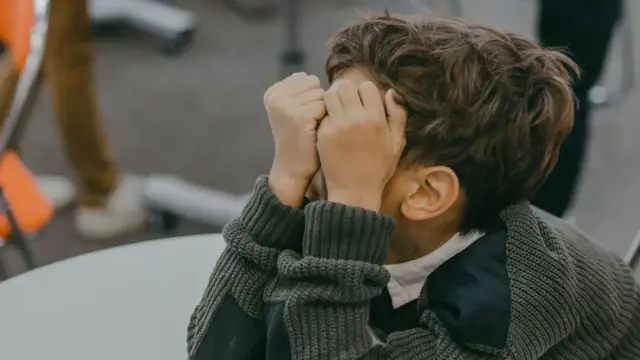
Consider an even more acute, universally understood crisis: a newborn baby who will not stop crying in the middle of the night. How did you solve it? If you reflect on that experience, you likely realize it was not accomplished by demanding absolute, peer-reviewed proof before taking your first step. Instead, you tried one approach and watched closely for a reaction. The gentle rocking helped a little bit; quiet, repetitive singing helped a great deal. You intuitively kept what seemed to work and discarded what did not. If you had insisted on absolute certainty before you acted, the infant would still be crying.
This messy, humble, and incremental way of learning is not a failure of logic or intellect. In truth, it is precisely how learning actually works. Yet, a surprisingly large part of the modern scientific establishment has spent a century pretending otherwise, boxing human inquiry into rigid frameworks that often obscure more than they reveal.
The Verdict Habit
To understand how traditional research often operates, look at its foundational mechanics. Most academic and clinical studies are conducted under a strict, courtroom-like premise: you must initially assume that absolutely nothing is happening. The researchers approach the data operating under the strict zero-hypothesis that a new medical treatment does nothing at all. Outside assumptions are strictly forbidden, under the warning that they will somehow compromise the integrity of the data. You essentially force yourself to pretend you know nothing.
From there, researchers gather data and ask a single, binary question: Is this specific result strong enough to force me to abandon that initial assumption if I assume nothing but random chance is operating? If the statistical threshold is crossed, the finding is declared real and groundbreaking. If it falls just short of the arbitrary line, it goes straight into the filing cabinet bin, often ignored or forgotten.
This process mirrors a courtroom mentality. The defendant—in this case, the hypothesis or treatment—is presumed innocent until proven guilty, and the study acts as the trial. The ultimate verdict is binary and final. Every single trial starts as if the jury’s collective memory has been completely wiped clean. What was learned in previous iterations does not count. The forty studies that came before it do not prove a thing. A treatment that genuinely helped some people in specific, observable circumstances gets filed away simply as ineffective because it failed to clear a broad, generalized average.
Finding the Submarine
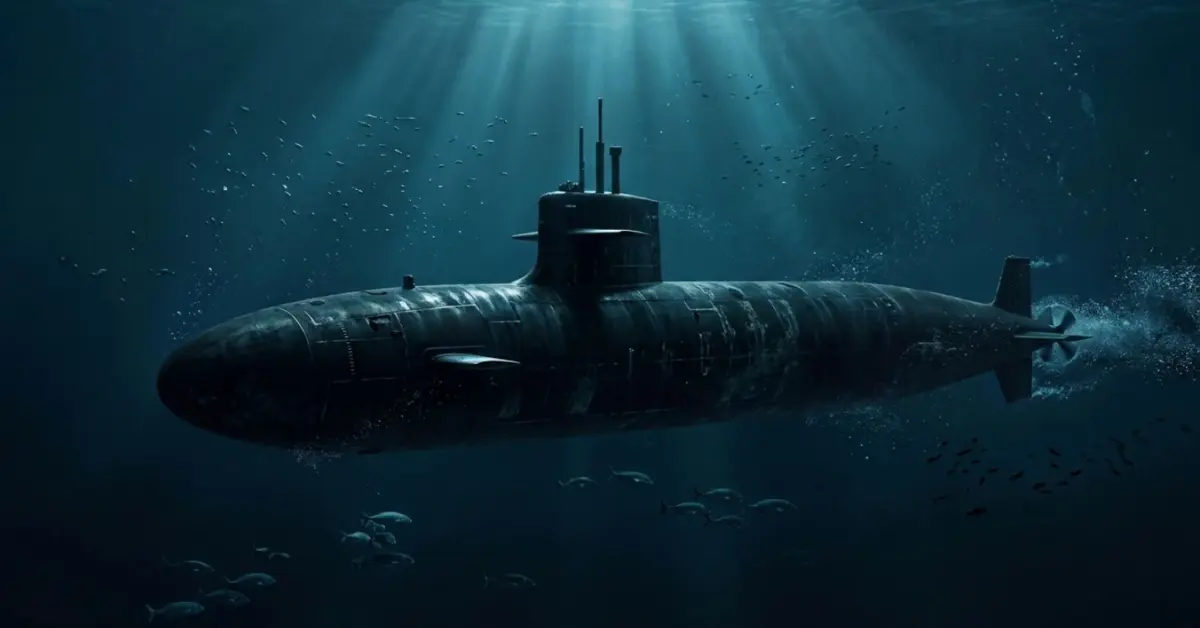
A starkly different approach to uncertainty can be found in moments of high-stakes crisis where absolute initial certainty is impossible, yet action is urgently required. In May 1968, the American nuclear submarine USS Scorpion vanished mysteriously in the vast expanses of the Atlantic Ocean with 99 people on board. The U.S. Navy faced an immense, terrifying expanse of water and virtually no concrete clues as to where the vessel might have gone down.
The government handed this seemingly impossible problem to U.S. Navy chief scientist John Craven. He had only one search ship at his disposal, meaning wasted time and incorrect coordinates carried a devastating human cost. Instead of waiting for a perfect, mathematically undisputed theory of the sinking, Craven did what a parent does with a crying baby, only with far more rigorous mathematical tracking.
He divided the vast search area of the ocean into a grid of numbered squares. Then, he asked veteran submarine commanders to look at the data and guess which numbered square contained the sub. He prompted them to weigh in on where it might have gone down and why, allowing them to bet on their scenarios, sometimes even wagering bottles of scotch on their competing hypotheses.
Every single time the search ship swept a specific square and found nothing, that empty square was not treated as a failure or a dead end. Instead, the empty result lowered the statistical probability for that specific square and correspondingly raised the probability for the remaining unsearched areas. The probability map shifted, and the commanders’ collective votes changed accordingly. Craven directed the search ship to the new coordinates where the evolving map now suggested they look.
In late October of that same year, the ship finally located the wreckage of the submarine resting on the ocean floor about 460 miles southwest of the Azores.
The exact same adaptive methodology proved successful decades later during the search for the wreckage of Air France Flight 447, which disappeared over the Atlantic Ocean between Rio de Janeiro and Paris in 2009. After two years of conventional searching turned up virtually nothing, a specialized team of mathematicians took those repeated empty passes, treated every failed search as a valuable clue rather than a final defeat, and completely redrew the probability map. Guided by this dynamic approach, the next targeted search located the plane within a single week.
These searchers operated with the foundational knowledge that the submarine or the plane was somewhere in that ocean. They did not throw away a search effort simply because a specific grid sector turned up empty. Instead, they started with their best educated guess, allowed harsh reality to push and pull against that guess, and systematically got a little less wrong with every passing day.
Just a Little Bit of Science
For generations, statisticians have engaged in long and sometimes bitter debates over whether the broader scientific enterprise should function more like a rigid courtroom trial or an adaptive search operation. Dragging the public into the weeds of technical statistical terminology often creates unnecessary confusion, distracting people from the realization that they already intuitively understand the answer through their own lived experiences.
The search-based philosophy dictates that true knowledge is essentially a dynamic map reflecting our current level of confidence in our working guesses. In this model, old evidence stays anchored on the map, while incoming new evidence continuously shifts the boundaries. A study that ultimately finds "nothing" still tells researchers something meaningful about where not to look. Disagreement among experts is not only allowed, but two individuals who hold opposing views can still share their findings, pool their insights, and refine the collective picture.
Conversely, the traditional verdict-based model produces stark winners and losers. An idea is either officially convicted or formally acquitted, leading academic fields to spend decades relitigating settled arguments rather than focusing on actual learning and adaptation.
Human beings are not biological clones. What genuinely helps your neighbor may fail to help you, and what worked effectively for your body last year may no longer work today. A broad verdict derived from the average person cannot possibly account for these nuances. A living map that individuals continuously update for a specific person, within the context of their actual life, can. The intuitive process through which you finally figured out how to soothe your crying infant mirrors precisely how a skilled clinician figures out a complex client. If society is wise enough to recognize this, meaningful progress can be made across many troubled fields.
Where This Lands
Humanity is currently navigating an era defined by massive, shifting, and unfamiliar challenges, ranging from global climate disruptions and fractured communities to rapidly evolving technologies that outpace our regulatory frameworks. Nobody holds a comprehensive instruction manual for these crises. Waiting for absolute, undeniable proof before taking any action is a recipe for standing entirely still while the rising waters surround us. Pretending to possess total certainty when none exists is the equivalent of driving off a cliff with misplaced confidence.
The alternative path requires humility. It asks individuals and institutions to make their best educated guess, state that hypothesis clearly out loud, act upon it, and allow the resulting consequences to reshape the initial assumption. It means treating strategies that did not work not as shameful failures, but as vital clues that narrow down the path forward, while pooling all available maps together for the common good.
This is fundamentally how one manages to soothe a crying infant in the dark of night, and it is how search teams locate a lost vessel in an endless ocean. By tackling complex problems one square at a time, society may yet find a way through the immense difficulties it currently faces. People already possess the inherent capacity for this kind of adaptive problem-solving, having practiced it throughout their entire lives. The only truly new step required now is to stop apologizing for it.