
According to physical therapy experts, neglecting the intricate mechanics that keep the knees aligned can leave individuals vulnerable to unnecessary wear and tear. Carrie Whitelam, PT, DPT, OCS, ATC, a physical therapist at the prestigious Hospital for Special Surgery in New York City, emphasizes the widespread need for this type of focused training. "Everybody could probably benefit from some sort of strengthening to improve stability of the knee," Whitelam notes, highlighting that joint health is a universal concern rather than something reserved strictly for elite athletes or those recovering from surgery.
Fortunately, incorporating effective knee stability exercises into an existing gym routine is much simpler than many gym-goers might assume. Physical therapists point to a handful of foundational movements that can easily be woven into regular workouts without requiring specialized equipment or an entirely overhauled training schedule. However, before diving into any new regimen, fitness enthusiasts and casual exercisers alike benefit from understanding what knee stability actually means and why it holds such critical importance for overall physical wellness.
What Exactly Is Knee Stability?
Knee stability is a multifaceted concept, but at its core, physical therapists define it as the ability to maintain proper alignment and positioning of the knee joint during dynamic movement and everyday activity. Achieving this stability requires a sophisticated interplay between both passive and active biological structures within the lower body.
Whitelam explains that passive structures include various ligaments within the knee joint, such as the anterior cruciate ligament (ACL) and the medial collateral ligament (MCL), which provide foundational structural support. Alongside these passive stabilizers are active structures—namely the muscles surrounding the joint, including the quadriceps, hamstrings, and the muscles of the hips. Each of these muscle groups plays a distinct, specialized role in how the knee operates under load.

The quadriceps primarily function to straighten the knee, while the hamstrings work in opposition to bend it. Meanwhile, the hips act as what Braidy Solie, DPT, SCS, CSCS, a Minnesota-based physical therapist and strength and conditioning specialist with Training HAUS, describes as the "steering wheel" that controls the position and alignment of the knees throughout various ranges of motion.
Essentially, knee stability reflects how effectively these three muscle groups work together in real time to control the joint during fundamental movement patterns like squatting, lunging, and stepping up. During a movement as common as a squat, for instance, a person needs all three physiological players firing and coordinating harmoniously to complete the action correctly. This precise coordination prevents the knee from collapsing inward, a common mechanical flaw that places undue stress on the surrounding tissues.
Why Does Knee Stability Matter?
Having good knee stability extends far beyond simply maintaining pristine form during a heavy barbell squat. It is a vital mechanism that directly reduces the likelihood of experiencing chronic knee pain and acute injuries during exercise, competitive sports, and routine daily life.
When the knees are stable—a state achieved when the quads, hamstrings, and hips are sufficiently strong to perform their respective jobs—the internal bones, cartilage, and other stabilizing ligaments like the ACL and MCL are spared from taking on excessive, unnatural stress. Solie points out that from a big-picture perspective, safeguarding the joint against these micro-traumas helps protect long-term mobility. Over the long haul, this robust joint integrity plays a crucial role in preserving an individual’s physical independence and ensuring they can continue participating in the activities they love as they age.
How to Improve Knee Stability Through Functional Training
Improving knee stability does not require an overly complex or intimidating fitness protocol. One of the most straightforward yet effective approaches is to incorporate movements that specifically target the primary muscle groups responsible for supporting the joint: the quads, hamstrings, and glutes.

Specialists recommend starting with exercises that require the quads and hamstrings to work together dynamically across the knee joint, while simultaneously engaging the hips to steer and maintain proper alignment as the knee bends and straightens. These movements serve as ideal starter exercises for individuals looking to upgrade their joint health. Solie notes that these types of exercises offer an exceptional crossover benefit, helping to build stability that translates directly into functional, real-world tasks—whether that means carrying heavy groceries up a flight of stairs or lifting a growing child.
Three Essential Exercises for Better Knee Stability
Physical therapy and strength conditioning experts frequently recommend three specific movements for cultivating superior knee stability: the step-up, the forward lunge, and the lateral lunge. Because these are already common movements in many standard resistance training programs, gym-goers may find they are already performing them regularly. If so, they are well on their way; if not, these exercises can easily be introduced in a mini circuit-style workout.
To structure such a routine, fitness specialists suggest performing the movements in sequence, executing each exercise for 30 seconds followed by a 30-second rest period before transitioning to the next. Repeating this sequence for a total of three to four rounds provides an efficient, low-barrier entry point into stability training. Once an exerciser has mastered proper form and the movements begin to feel manageable, external loads—such as dumbbells or kettlebells—can be introduced to progressively challenge the musculature. When transitioning to weighted exercises, experts recommend shifting the programming to three sets of 15 to 20 repetitions per movement, gradually increasing the weight while decreasing the repetition count over time to ensure continuous muscular adaptation.
However, professionals emphasize a vital safety caveat before anyone begins a new lower-body stability program. Whitelam advises that individuals who experience repeated knee buckling, a sensation that the kneecap is popping in and out of place, or unusual weakness around the joint should consult a physical therapist or physician first. Underlying structural damage may be present, and introducing unmonitored movement without professional guidance could inadvertently exacerbate an existing injury.
For those cleared for exercise, the selected movements offer targeted benefits. The step-up is widely praised because it encourages proactive stabilization. By placing the foot directly on top of a box or step before initiating the movement, the exerciser effectively pre-positions the limb in the exact alignment they intend to maintain throughout the exercise, ensuring the knee tracks cleanly in line with the foot rather than caving inward.

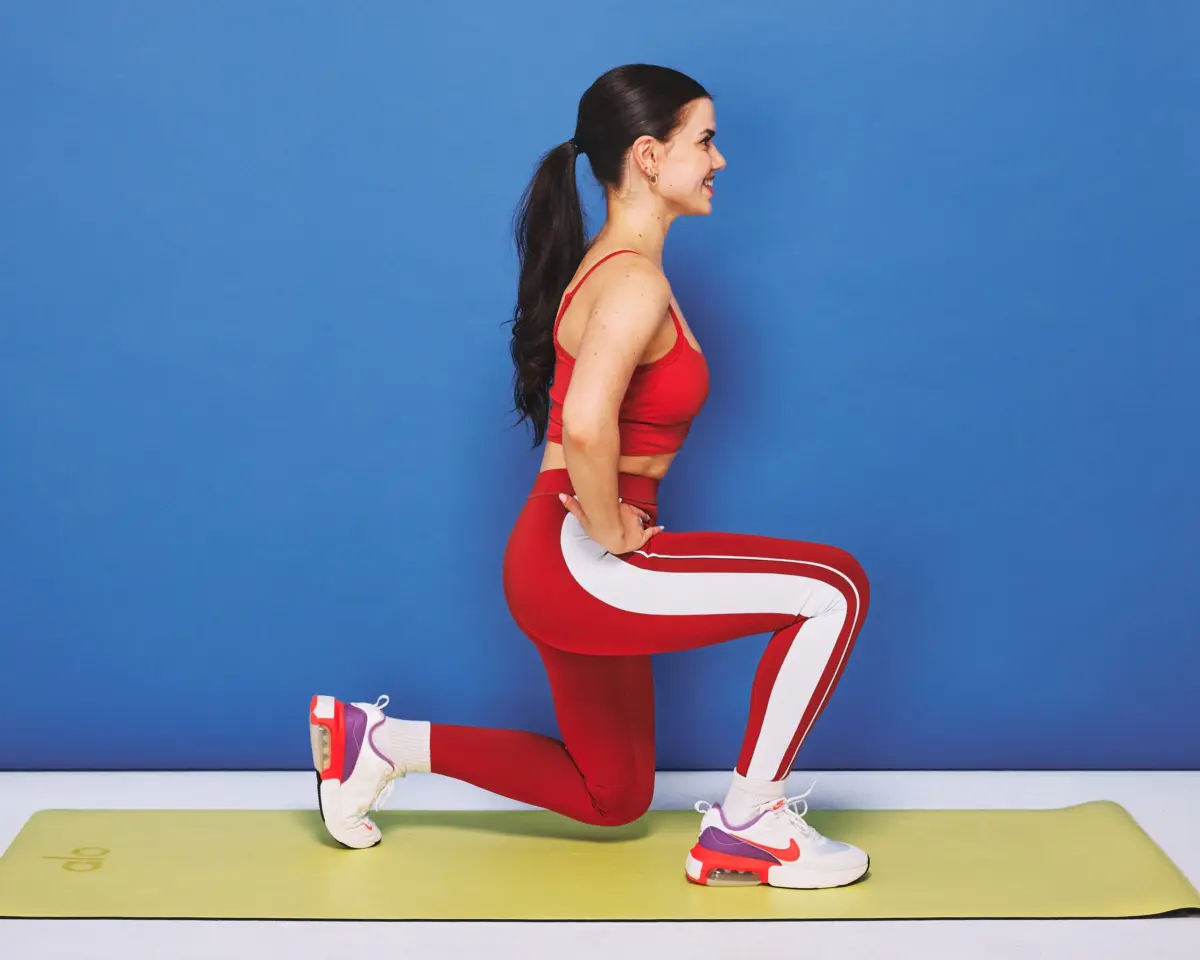
The forward lunge introduces an extra layer of complexity by requiring the body to take a step forward and actively control the deceleration of the knee. For individuals who struggle with excessive side-to-side wobbling during a lunge, physical therapists suggest regressing temporarily to a standard squat until foundational strength improves. Once comfortable, lunges can be varied by keeping the torso vertical to heavily emphasize the quads, or by hinging slightly forward at the hips to place more demand on the glutes.
Finally, the lateral lunge represents one of the more advanced challenges in a stability routine. This movement requires the knee to bend and extend while the body’s center of mass travels sideways, demanding a significantly higher degree of neuromuscular coordination. Maintaining an upright posture, preventing the knee from collapsing inward, and keeping the trunk stable are critical components of the movement. For those finding the dynamic version too difficult, static lateral lunges—where the feet remain wide and stationary throughout the set—offer an accessible entry point to build the requisite strength and confidence over time.