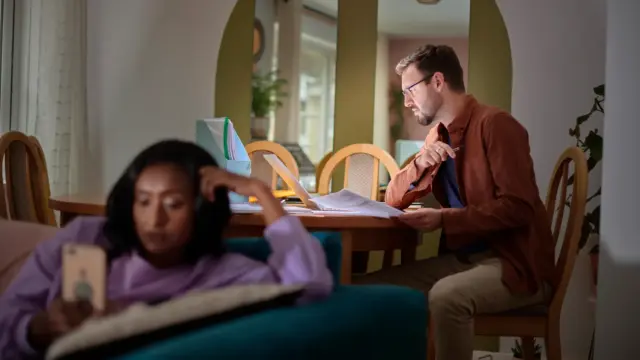

While digital tools and AI applications offer valuable resources for learning and self-reflection, recent observations from clinical practice suggest that there remains a profound gap between intellectually understanding emotions and genuinely experiencing them with another person in real time.
Technology has proven to be a useful and relatively safe space for individuals to challenge misconceptions and examine beliefs they might otherwise hold onto, largely because people often approach AI as an unbiased ally designed to help. However, the fundamental difference between processing data about an emotion and living through an emotional experience in the physical presence of another human being highlights the irreplaceable value of traditional, in-person therapy—particularly in couples counseling.
Sometimes the Body Tells a Different Story
The limitations of digital interfaces become clear when considering how physical presence reveals vital emotional cues that cameras simply miss. During the COVID-19 pandemic, many mental health professionals adapted by working exclusively through video sessions. In one notable case, a therapist worked with a client whom she had only ever met on a screen. The client’s facial expression rarely changed, and she appeared remarkably calm even when discussing deeply painful experiences. At the time, it was impossible to know whether her composure was natural or a learned defense mechanism stemming from earlier life experiences where expressing emotion felt unsafe.
It was only when the client and therapist finally met in person that a different story unfolded. As they talked, the therapist’s dog settled into the client’s lap. While her facial expression remained completely unchanged, her physical body revealed an entirely different state of arousal: she was petting the dog so vigorously that she had accumulated a noticeable pile of loose fur beside her, and her foot was tapping continuously.
When the therapist gently noted the physical release of energy, it opened up a new avenue for understanding the client’s emotional experience. Rather than diagnosing the behavior or assuming a definitive meaning, the therapist simply shared an observation and invited the client to help make sense of it together. That dynamic interaction illustrates a critical distinction between passive observation and active clinical engagement.
Technology Changes What We Can See
Video therapy offers immense value by expanding access to care for individuals who might otherwise struggle to receive treatment, and meaningful therapeutic bonds can undoubtedly develop across a digital divide. Yet, a camera frames and restricts what can be observed.
When conducting virtual sessions, practitioners may see a client’s face while entirely missing their hands, legs, posture, or subtle micro-movements. In couples therapy, this limitation is magnified. A therapist might miss the subtle ways partners respond—or fail to respond—to one another. One partner might lean in with open body language seeking connection, while the other avoids eye contact or ignores the invitation entirely. A slight shift in posture or a minor change in vocal tone can communicate volumes that the spoken words conceal.
Furthermore, emotional distress and flooding manifest differently across individuals. Some clients become entirely still, freezing and withdrawing to blend into their environment, while others exhibit visible distress with animated bodies and fluctuating vocal tones. When therapists share physical space with clients, they gain access to crucial physiological markers—changes in breathing, a clenched hand, a tapping foot, or opposing physical orientations.
These observations do not provide immediate answers; rather, they serve as invitations to foster curiosity about what is transpiring beneath the surface. Automated systems relying on written text prompts lack direct observation capabilities, and even advanced technologies attempting audio or video analysis struggle to interpret those signals within the complex, evolving context of a specific human relationship.
In Couples Therapy, We Are Watching the Relationship Happen
The core of effective couples therapy involves observing the relationship in real time as interactions unfold. Imagine a scenario where one partner expresses disappointment and the other falls completely silent. The first partner is prone to interpreting that silence as cold indifference. However, a trained human therapist may observe that the quiet partner’s breathing pattern has shifted, their hands are tightly clenched, and maintaining eye contact has become difficult.
Rather than validating only one partner’s interpretation, the therapist can slow the pace of the room, gently interrupt the cycle, and ask the quiet partner what is happening internally. By subsequently inviting the first partner to share their assumptions about the silence, the focus shifts from arguing over who is "right" to exploring the live interaction. The quiet partner might be experiencing emotional flooding, deep shame, or an intense fear of saying something hurtful. Those underlying realities remain hidden until explored through direct human engagement.
When individuals consult AI systems for relationship guidance, the advice is inherently filtered through the user’s subjective perspective. Users frequently describe their partner’s actions without recognizing how their own behaviors contributed to the dynamic. They may label silence as rejection, defensiveness as a lack of accountability, or withdrawal as indifference. While those interpretations feel absolute to the person experiencing them, certainty does not equate to objective fact.
In contrast, a couples therapist listens to both narratives simultaneously while directly observing the physical and verbal interplay between the partners. This allows the practitioner to notice contradictions—such as a partner who claims the other is emotionally unavailable while systematically interrupting every vulnerable attempt at expression. The objective is not to confirm a single version of events, but to help both partners develop curiosity about the blind spots in their shared communication.
Knowing When to Intervene Is Part of the Therapy
A vital component of professional mental health practice is clinical judgment: knowing not only what is happening between two people, but precisely what to do with that information and when to act.
When familiar conflict patterns emerge—such as one partner growing defensive while the other escalates in frustration—therapists do not always intervene immediately. Often, observing how the couple navigates the tension is essential. Will a partner recognize the other’s overwhelm and make a repair attempt? Will they spiral into further escalation, or spontaneously find a pathway back to connection?
At other times, when conversations become unproductive or emotional flooding threatens psychological safety, the clinician intervenes to slow the pace, de-escalate tension, or suggest a structured break. Making these determinations requires deep understanding of the couple’s shared history, individual emotional capacities, room safety, and therapeutic goals.
An AI chatbot responding to a typed user prompt lacks the capacity to sit quietly with a couple, observe minutes of live non-verbal communication, and make a deliberate clinical choice to wait rather than speak. Clients seek therapy precisely because they need help recognizing and breaking cycles they cannot interrupt independently. Sometimes the most effective intervention is an observation, sometimes it is a challenge to an underlying assumption, and sometimes it is simply allowing silence to linger.
Knowing the Skills Is Not the Same as Being Able to Use Them
Established frameworks like the Gottman Method provide couples with invaluable, empirically supported tools for managing conflict, recognizing bids for connection, and executing repair attempts. Yet, clinicians frequently encounter couples who understand these concepts intellectually but remain unable to deploy them during moments of acute emotional distress.
An individual may fully understand how to deliver a softened startup, yet default instantly to criticism under pressure. Another might memorize the structure of an apology but deliver it with a tone of irritation so sharp that it drives their partner further away.
In a live therapy setting, practitioners can pause these exact moments, deconstruct the breakdown, and allow partners to practice responding differently in real time. This process requires continuous emotional attunement, clinical discernment, and a steady focus on maintaining psychological safety within the room.
The Relationship Is Part of the Intervention
Another irreplaceable element of traditional therapy is the unique experience of being emotionally present with another human being who is genuinely striving to understand your inner world. Therapists are not infallible; they occasionally misunderstand cues, miss signals, or deliver interventions that fail to land as intended.
However, even those missteps provide essential modeling for human connection. They demonstrate that healthy relationships do not demand perfection, but rather rely on mutual curiosity, personal accountability, and a consistent willingness to repair misunderstandings.
Technology and therapy do not need to exist in opposition. Digital tools can assist individuals in preparing for difficult conversations, learning conceptual relationship skills, and reflecting on personal patterns. However, knowing what emotional connection looks like in theory is vastly different from experiencing it in practice. Ultimately, technology may help people learn the language of connection, but human relationships provide the necessary space to live it.