The initiative began as a low-stakes experiment. Equipped with a batch of free black cotton bandanas left over from an unrelated prior project, the goal was to adapt the color palette to better suit the rustic, natural environment of an upcoming school camp party. Standard bandanas typically feature saturated primary colors or stark black-and-white motifs, which can clash with muted outdoor themes. By rethinking the chemical treatment of the fabric, the project yielded surprisingly sophisticated results, producing dusty, neutral tones that felt both intentional and professionally styled.
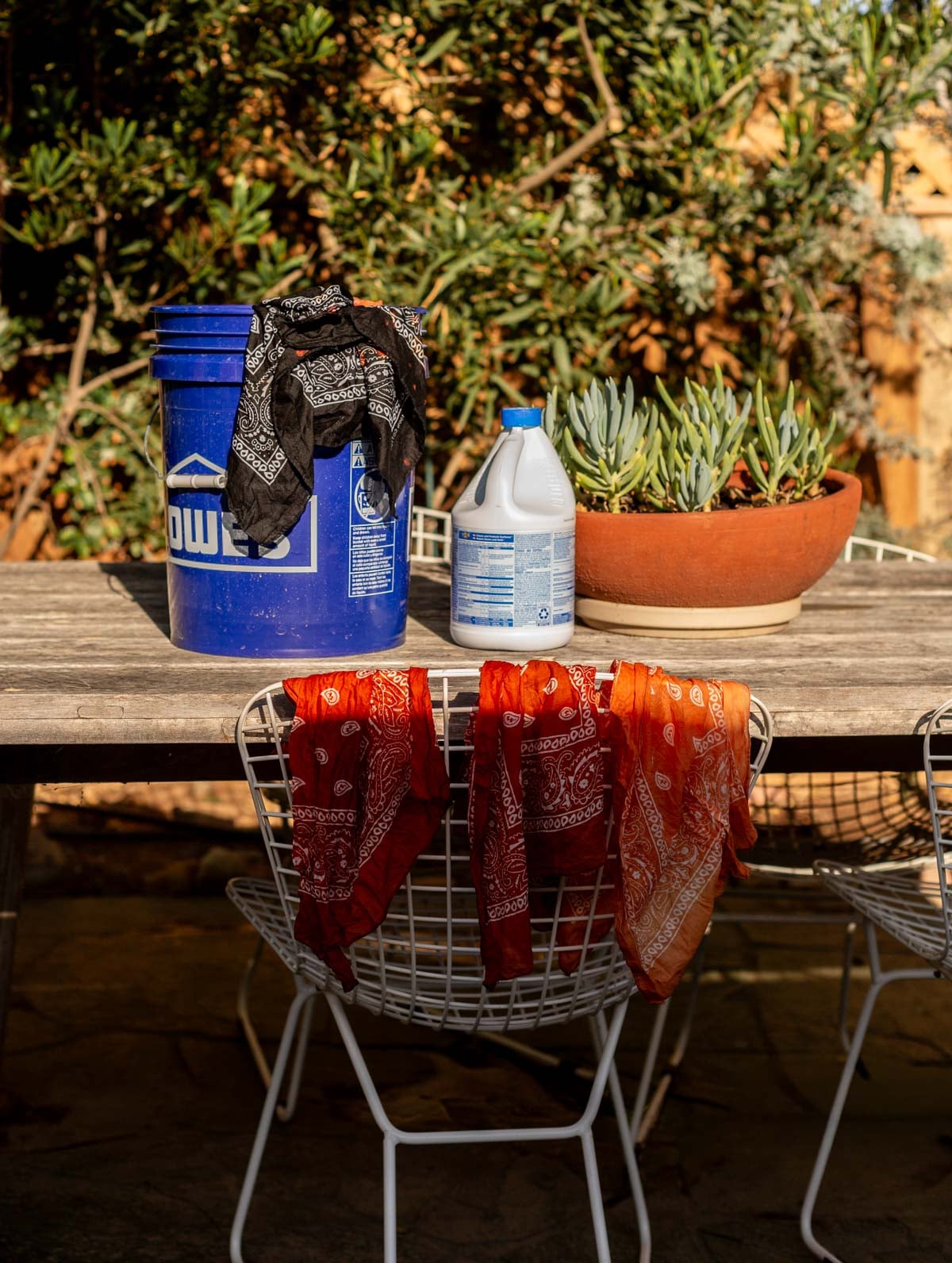
While textile bleaching is a familiar concept in the broader craft community—often utilized to create high-contrast Shibori patterns or tie-dye designs—this particular method diverged from traditional approaches. Instead of relying solely on bleach to selectively remove color for the final pattern, the process introduced a secondary dyeing phase. Bleaching served purely as a foundational reduction step, stripping the heavy black dye to create a blank canvas before introducing custom earth-tone colors.
The methodology required careful handling, particularly given the caustic nature of bleach. Working outdoors in a well-ventilated area was established as a mandatory safety precaution. The process commenced with thoroughly wetting the cotton bandanas and wringing out excess moisture to ensure even absorption. Protective gloves were donned before pouring standard household bleach into a large container, maintaining a volume sufficient to fully submerge the fabric.
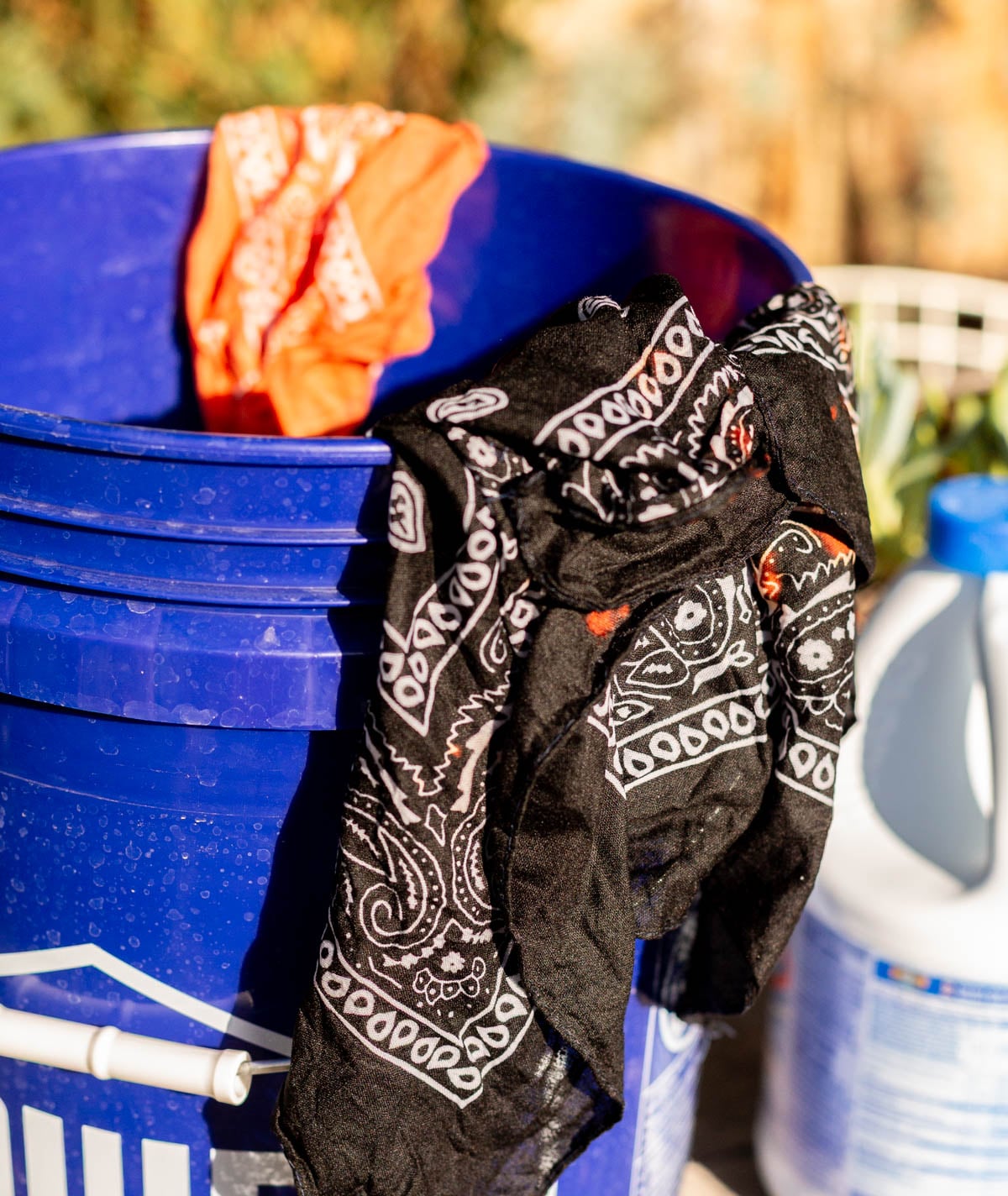
Timing proved to be the most critical variable in the bleaching phase. Unlike traditional soaking methods designed to completely whiten fabrics over hours, these bandanas required only a momentary dip. Within thirty seconds to a minute of contact with the bleach, the dense black dye began to lift, shifting into warm, amber, and tan undertones. Swift removal was essential not only to capture the desired intermediary shade but also to preserve the structural integrity of the cotton fibers. Prolonged exposure to bleach rapidly degrades cellulose fibers, weakening the fabric and shortening its lifespan.
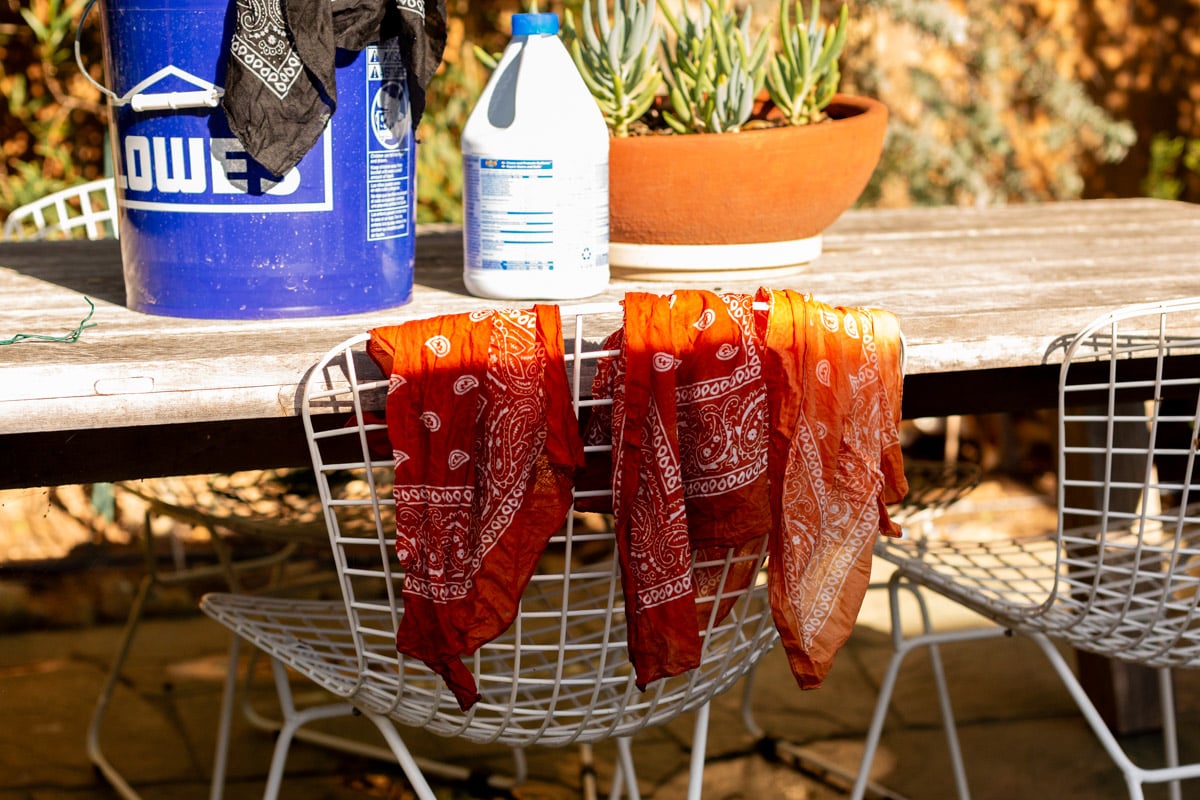
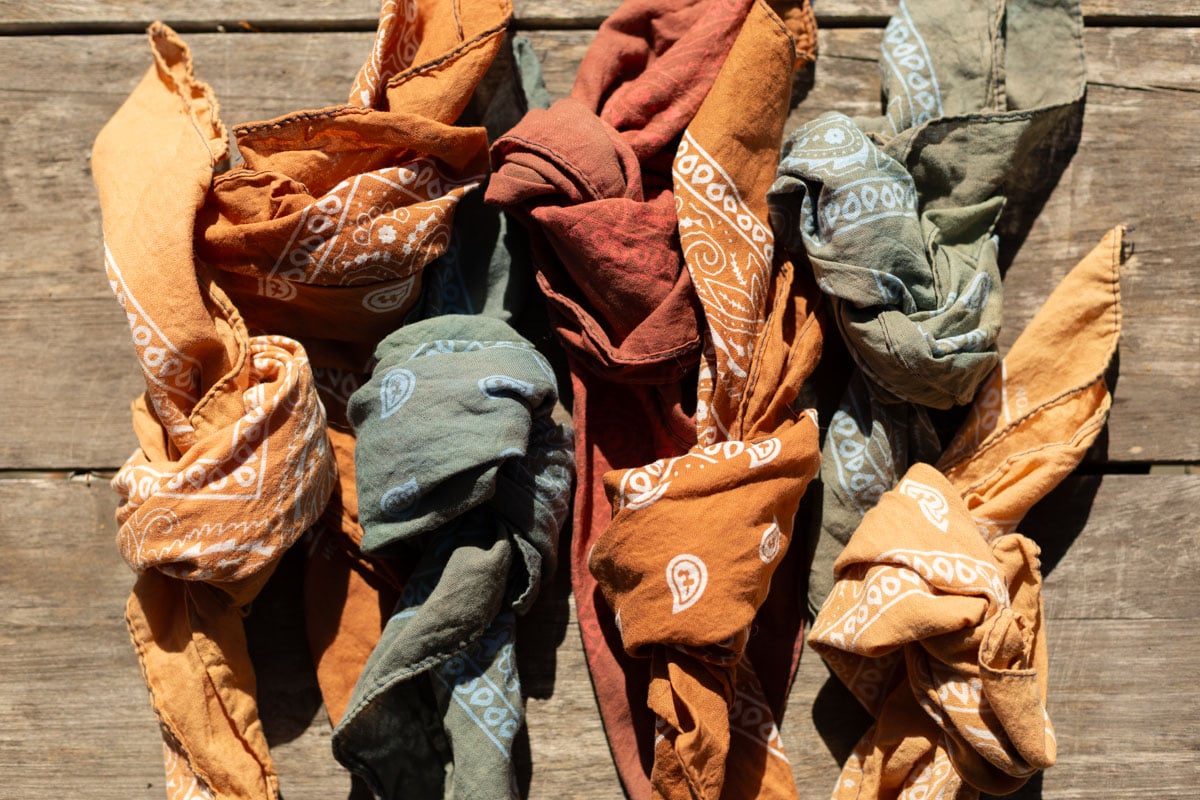
Following the brief chemical bath, the bandanas underwent an immediate cold-water rinse lasting one to two minutes to halt the bleaching reaction, followed by a standard cycle in a washing machine and dryer. Once thoroughly cleaned and dried, the textiles exhibited a range of muted, neutral ground colors determined by the duration of the bleach exposure.
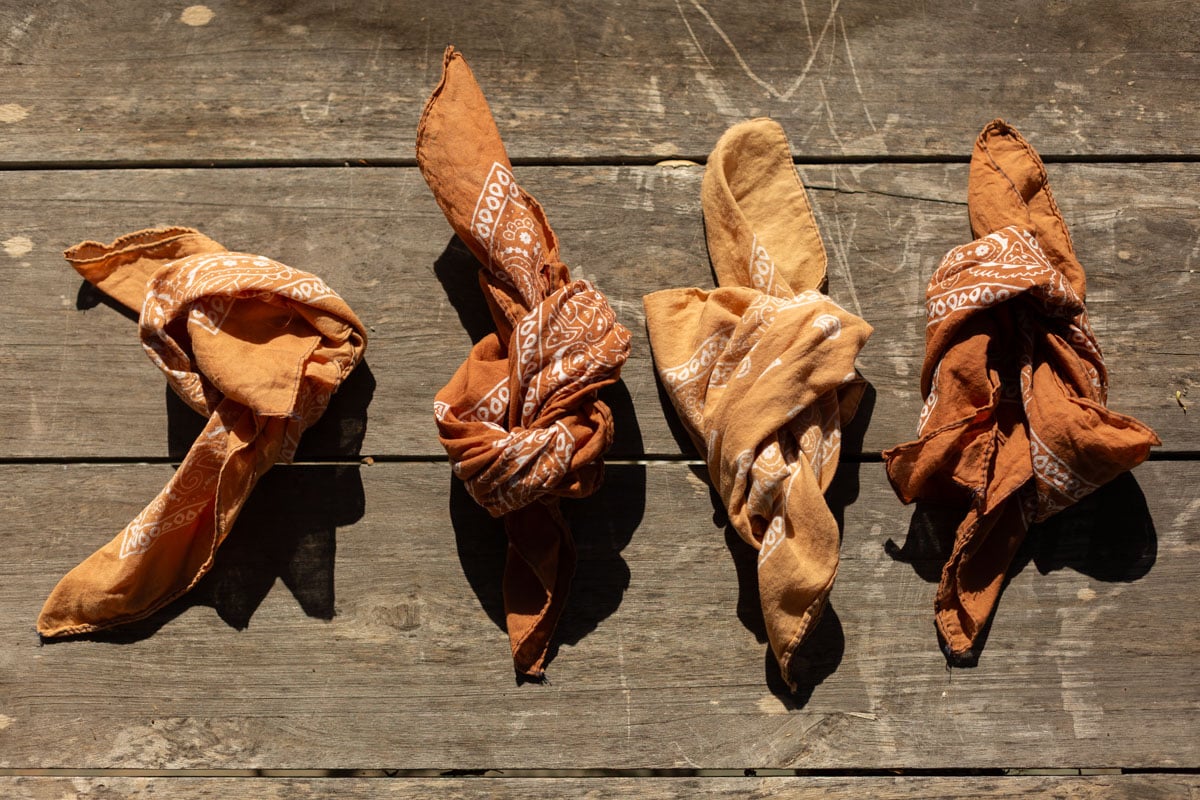
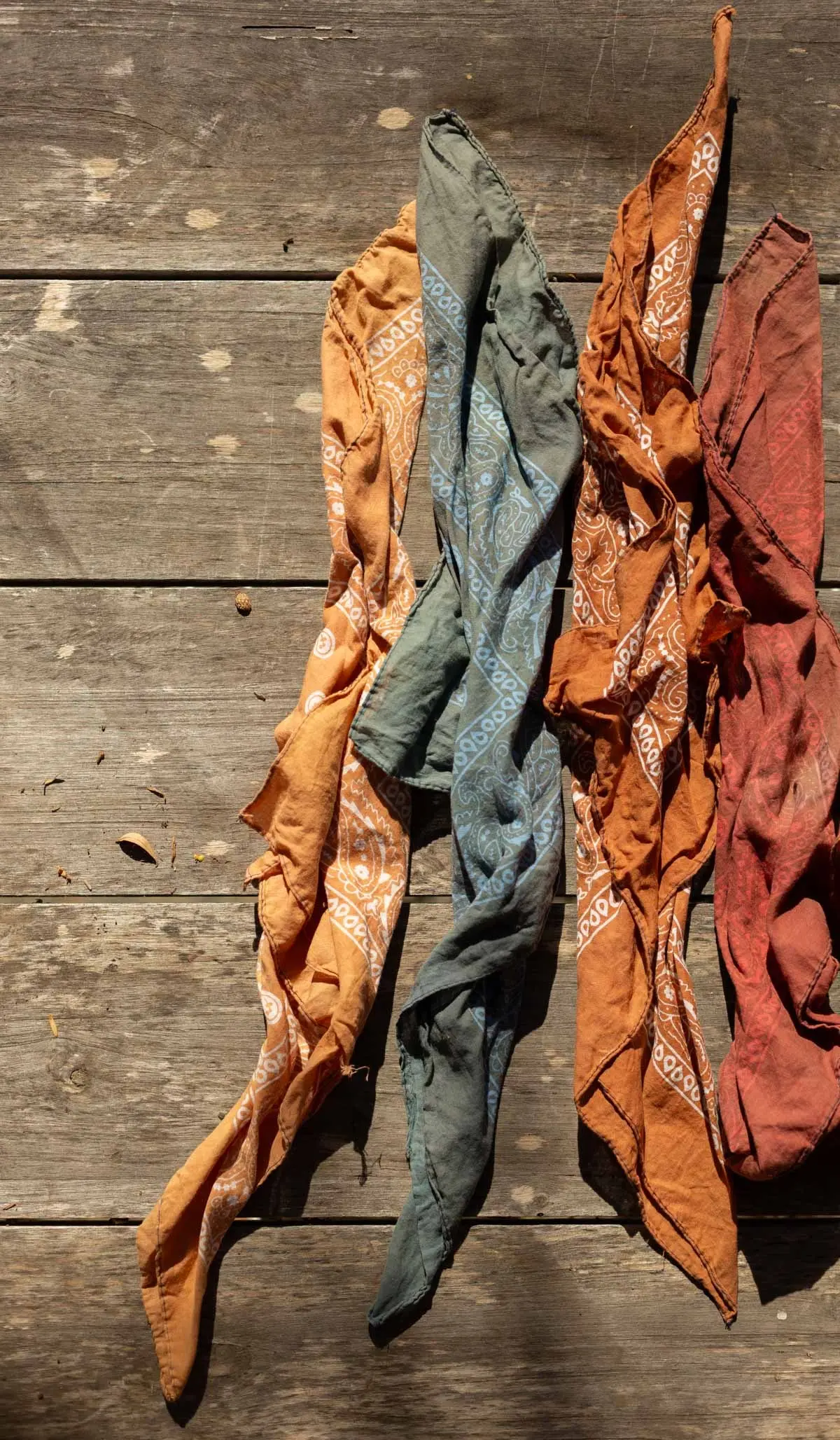
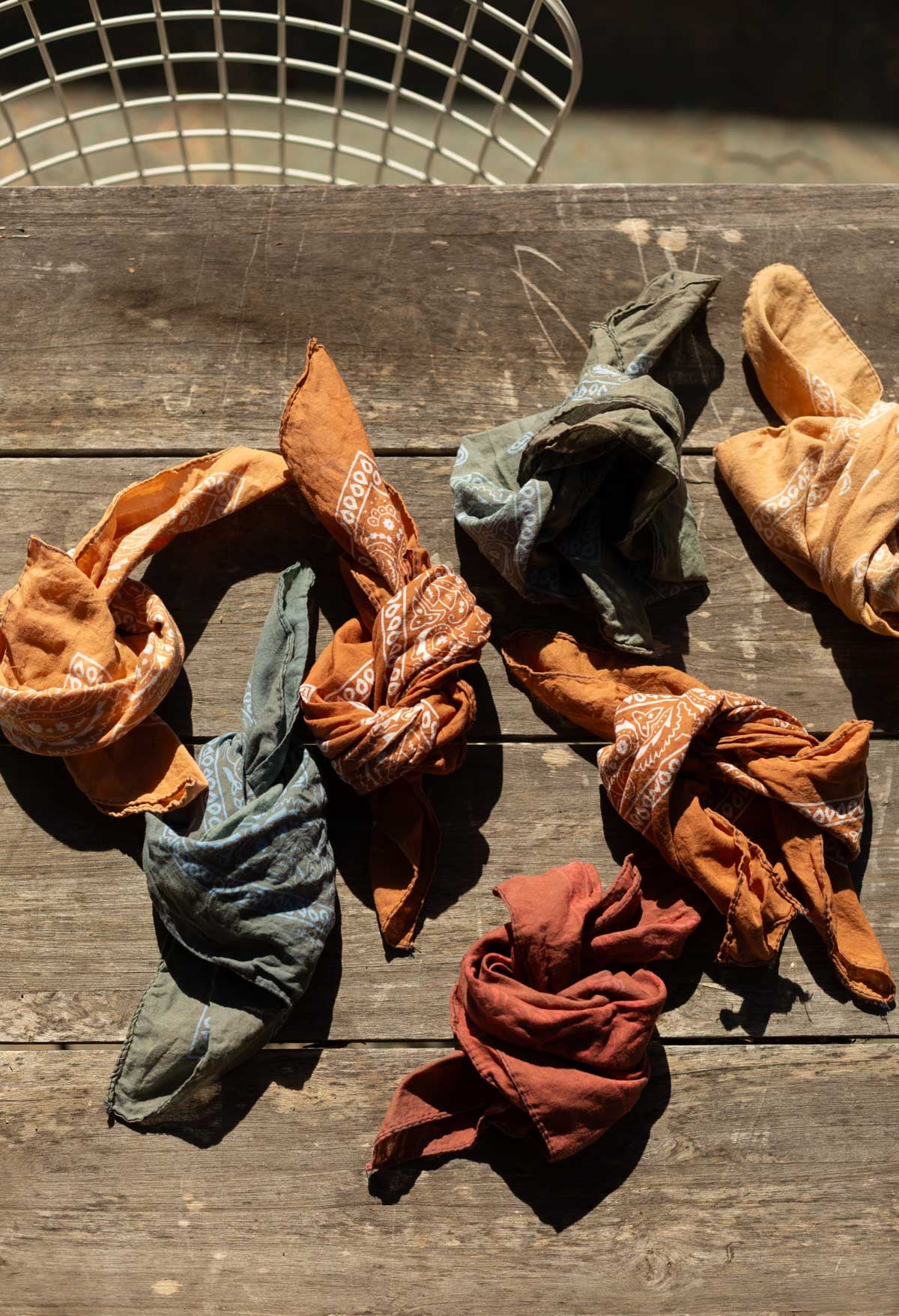
The final transformation took place during the subsequent re-dyeing phase. Utilizing established fabric-dyeing techniques, the neutralized bandanas absorbed new pigments with a softer, more muted saturation than would have been possible over a pure black base. The resulting color palette featured dusty olives, muted terracottas, and weathered grays—shades that successfully mirrored the natural surroundings of the camp event.
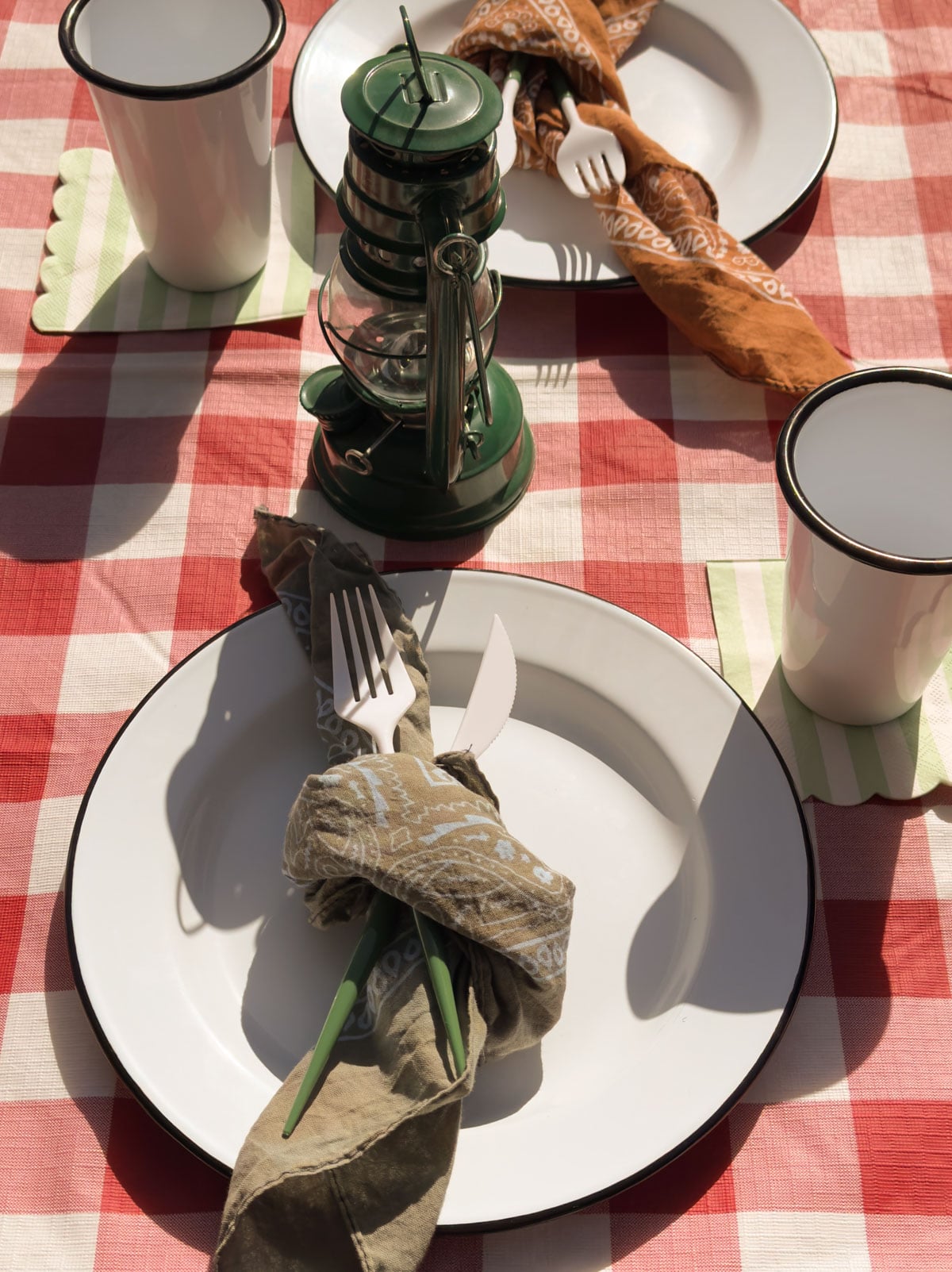
The practical application of the newly transformed accessories was first showcased at the school camp party, where they served a dual purpose at each child’s place setting. Positioned as decorative napkins, the bandanas added a cohesive textural element to the tablescape alongside conventional paper napkins. This practical arrangement allowed young attendees to wear the customized bandanas as camp accessories while relying on paper napkins for actual cleanup, thereby preserving the newly dyed fabric.

Following the event, the utility of the project extended beyond the classroom celebration. Leftover bandanas found a secondary life as casual pet accessories, demonstrating the adaptability of the upcycled textiles for everyday use.
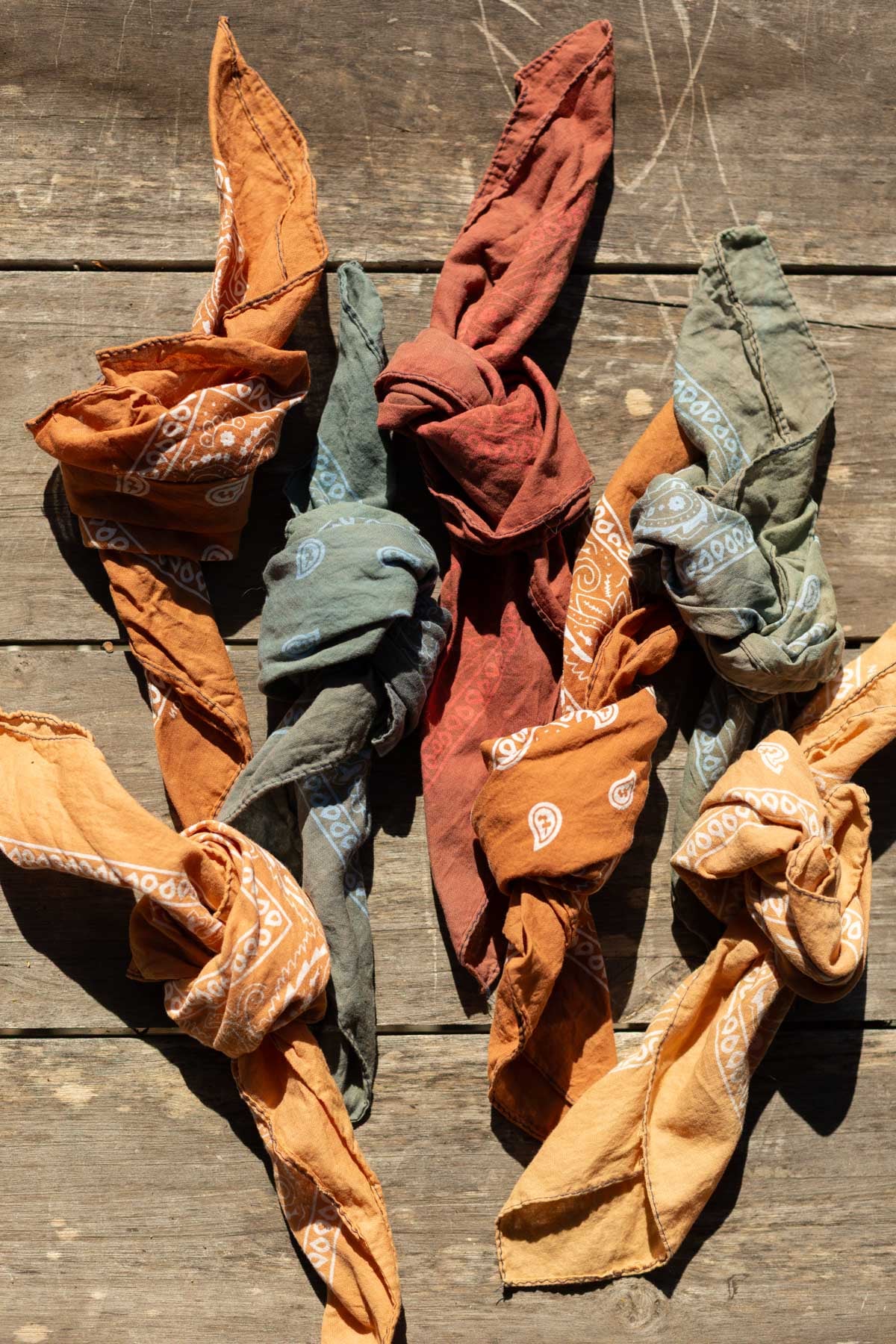
Beyond the specific application of bandanas, the project highlights broader possibilities for wardrobe updates and home textiles. By utilizing readily available or surplus materials and applying a controlled two-step reduction and dyeing process, standard mass-produced items can be effectively repurposed into custom, high-end aesthetic pieces without significant financial investment.