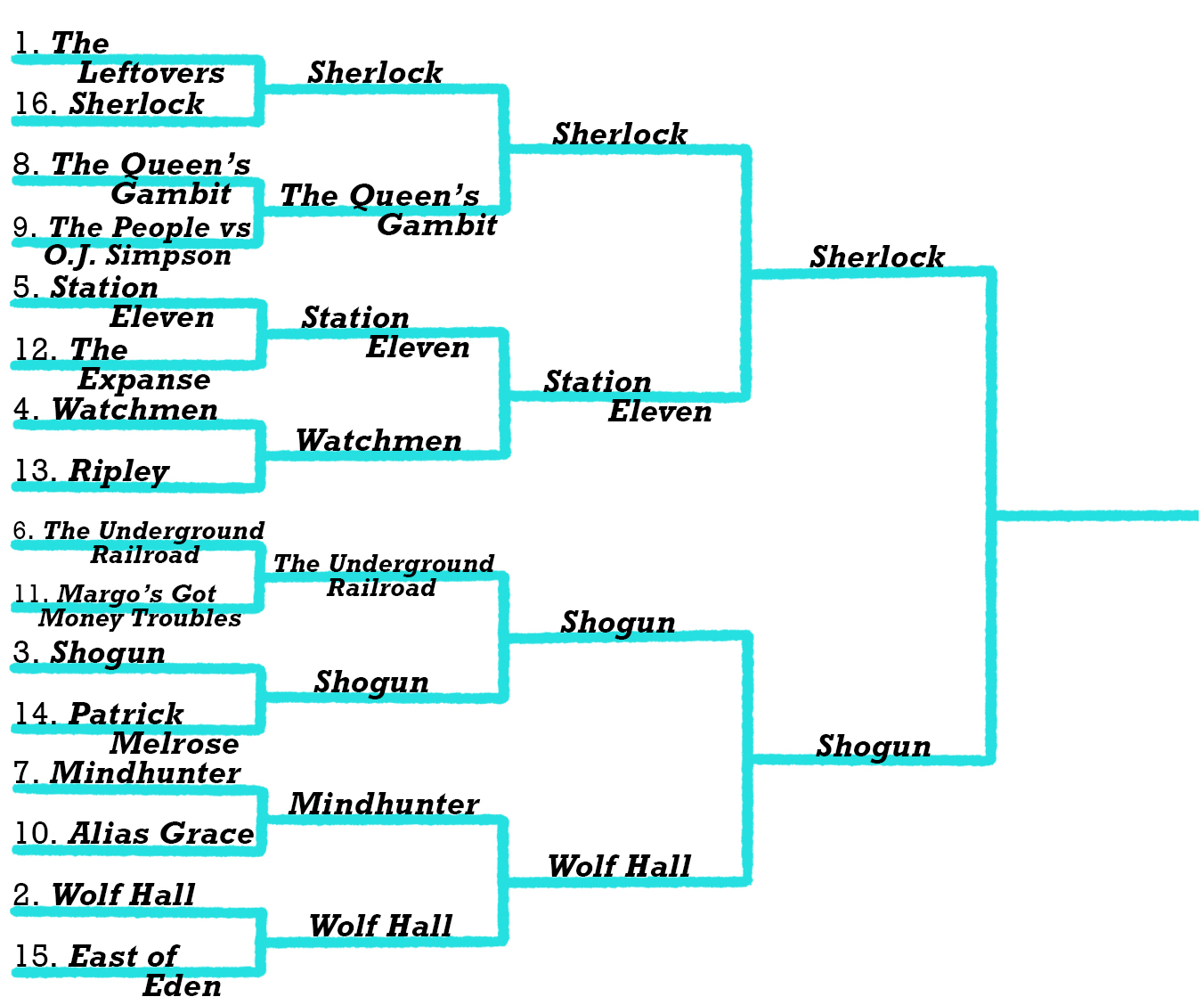
The vote tallies were razor-thin across multiple matchups, proving that every single ballot truly matters. In one of the tightest contests of the tournament, Brideshead Revisited managed to slip past Agatha Christie’s Poirot by a mere three votes. Meanwhile, the iconic anti-war comedy MASH edged out Pride & Prejudice* by just five votes—a result that shocked many bracketologists who had penned Jane Austen’s classic down as a guaranteed finalist, if not the ultimate crown-bearer.
Further down the bracket, the tournament witnessed a massive seismic shift: Game of Thrones has officially been eliminated from contention. While historical epic Roots is widely regarded as the superior dramatic achievement, it remains difficult for television analysts to fathom a franchise as historically massive as GoT missing out on at least the semifinals. Evidently, audiences are still holding onto lingering frustrations regarding that infamous final season.
At the same time, viewers had to pour one out for Wolf Hall. Thomas Cromwell’s quiet, masterful tale of power, ambition, and Tudor court intrigue—grounded in one of the greatest historical novels ever written—proved simply too refined and subtle for the chaotic energy of a public internet bracket.
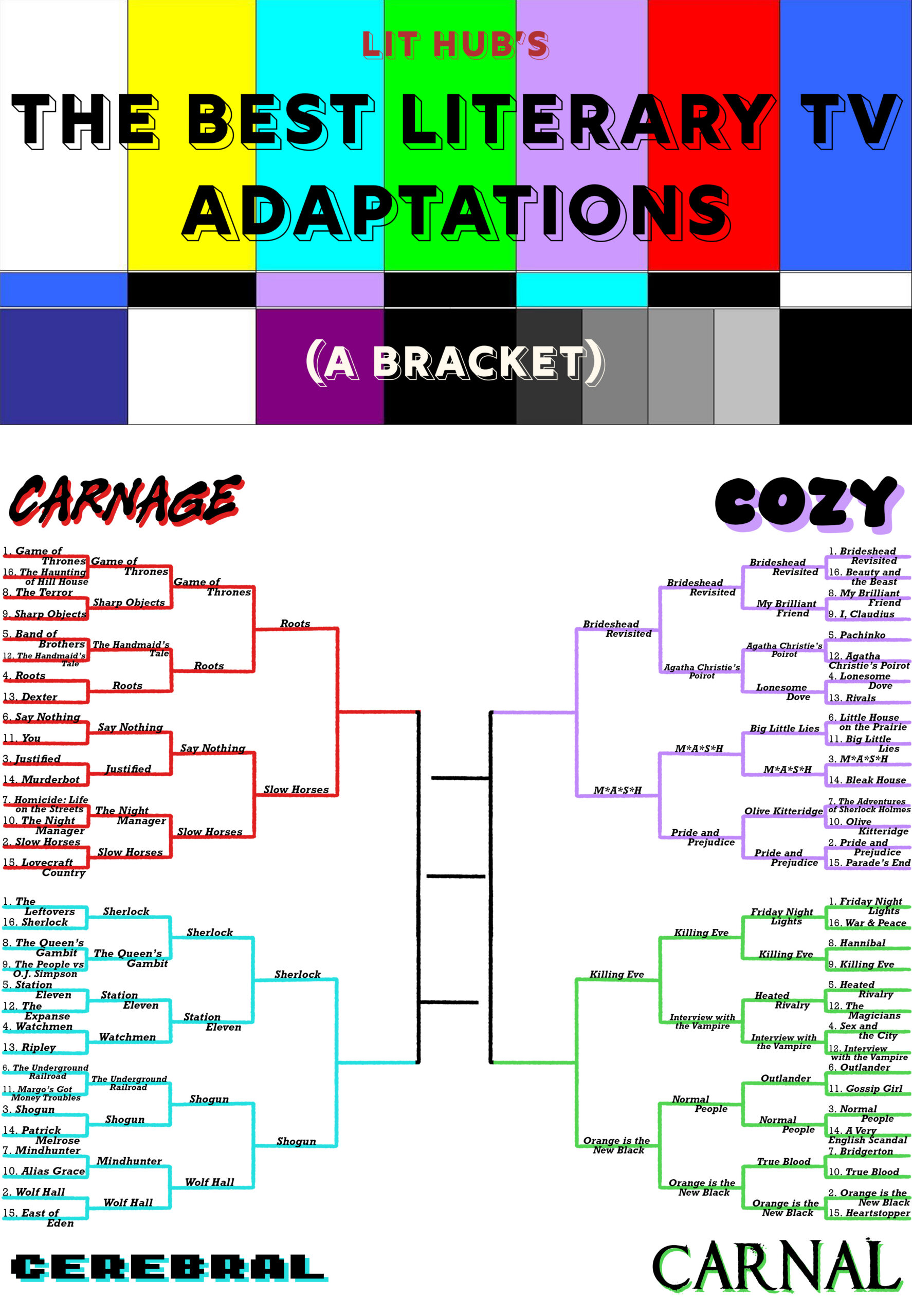
Now, as Day Four gets underway, the tournament turns its attention to the quadrant finals. Today’s matchups will determine which shows reign supreme over their respective corners of the bracket, crowning the coziest of the cozy and the most intense of the dramatic heavyweights.
In the Cozy quadrant, Brideshead Revisited stands as the final remaining top seed, though it faces a formidable challenge from MASH. While Brideshead* is expected to hold its ground, the classic military comedy has proven to have a far deeper reservoir of passionate support among readers than initially anticipated.
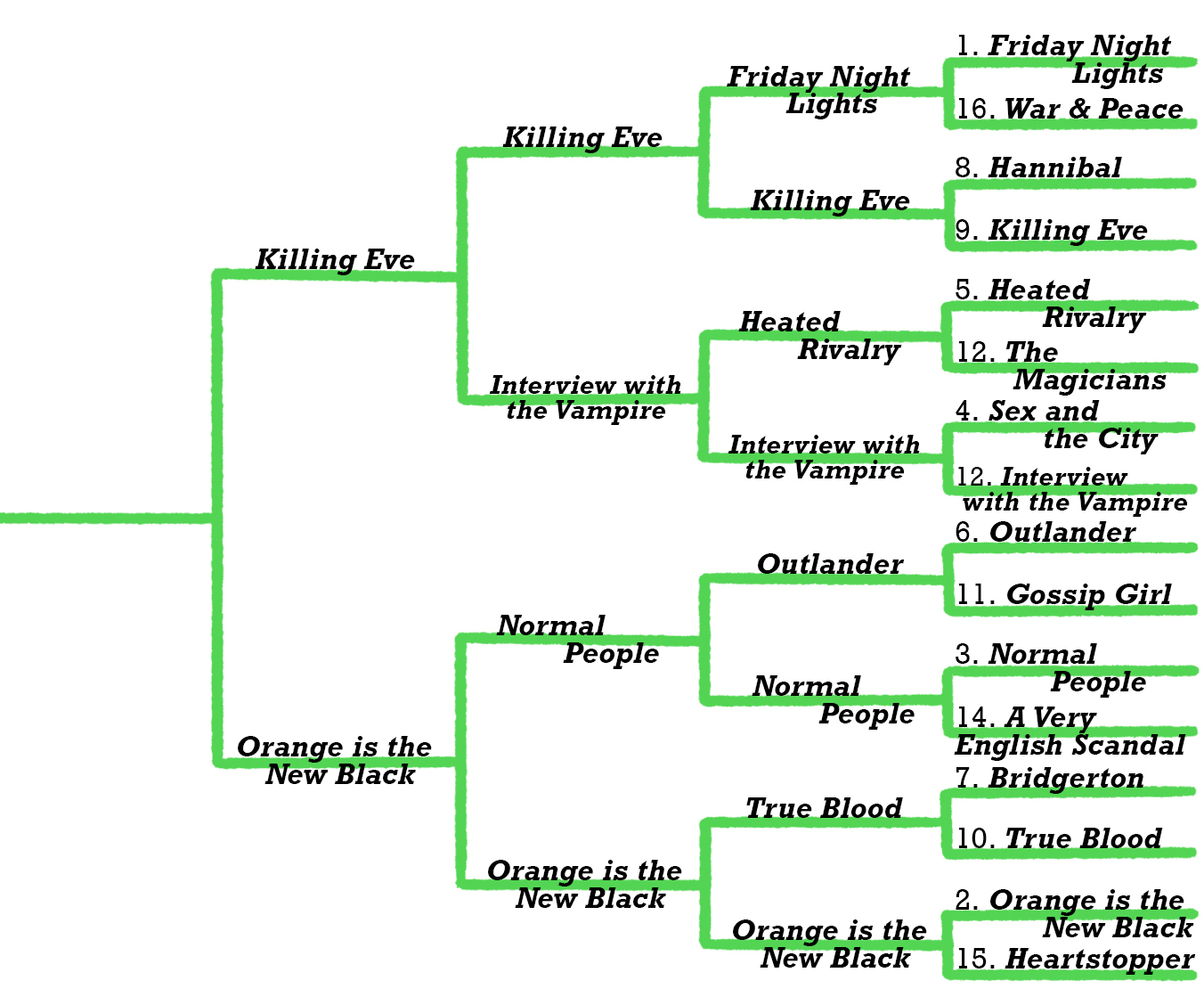
Over in the Carnal quadrant, Killing Eve goes head-to-head with Orange Is the New Black in a fascinating clash of criminal narratives. While the spy thriller is widely favored to advance, Orange Is the New Black has experienced a notable resurgence in pop culture discourse, setting the stage for another potential photo finish.
Finally, the Cerebral quadrant delivers a battle of linguistic heavyweights as Sherlock squares off against Shogun. These two shows vie not only for a spot in the semifinals but also for linguistic supremacy as the ultimate "sh" contenders of prestige television. With lingering animosity from fans over Sherlock knocking out The Leftovers in an earlier round, many are throwing their support behind the sweeping historical epic of Shogun.
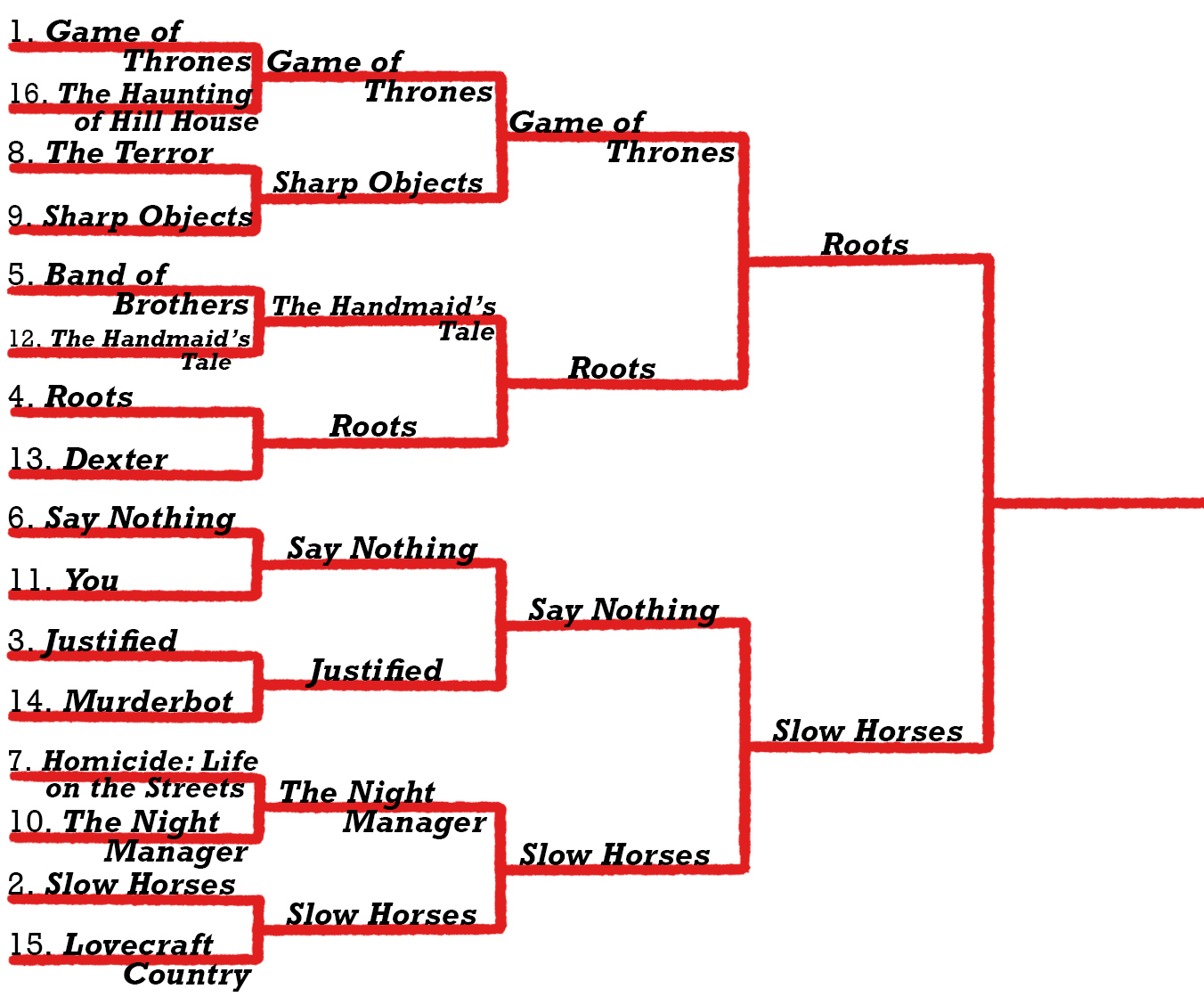
As this humble literary tournament charges toward its conclusion, the final stretch is shaping up to deliver plenty of unexpected twists. Readers can cast their votes below, with the tournament advancing to the semifinals tomorrow.
Tournament Schedule and Voting Information
The rules of the competition are straightforward: for every matchup, choose your personal favorite. Voters are encouraged to look for the overall best television show, though faithfulness to the source material may factor into individual decisions—or not. Ultimately, voters are advised to go with their gut instincts. Results are calculated using liberal arts major mathematics, with winners announced daily.
- Round of 64: Monday, November 9, from 10:00 AM to 7:00 PM EST
- Round of 32: Tuesday, November 10, from 10:00 AM to 7:00 PM EST
- Round of 16: Wednesday, November 11, from 10:00 AM to 7:00 PM EST
- Quarterfinals: Open now until 7:00 PM EST
- Semifinals: Friday, November 13, at 10:00 AM through Sunday, November 15, at 7:00 PM EST
- The Finals: Monday, November 16, from 10:00 AM to 7:00 PM EST
- Winner Announcement: Tuesday, November 17
To cast a vote, simply scroll to the voting forms located at the bottom of each matchup and click your selection to move forward.
Carnal Matchup: Roots (4) vs. Slow Horses (2)
Roots (1977)
- A very American family saga
- Based on: Alex Haley’s Roots (1976)
- Subgenres: Classroom Classics, It Did Happen Here, Generational Stories
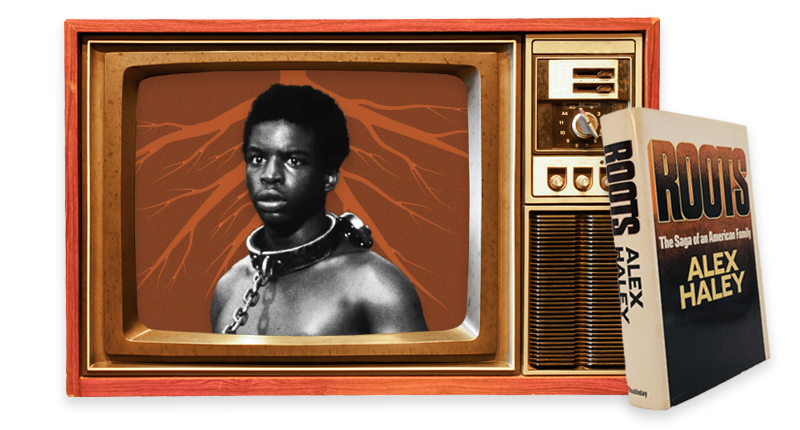
Ranked as one of the most-watched miniseries in American television history, Roots stands as a seminal dramatic portrayal of the nation through the eras of slavery and the Civil War. Production almost stalled when network executives at ABC grew uneasy over the unflinching depiction of the brutality inflicted by slavers, particularly given that some perpetrators were portrayed by recognizable white actors. Consequently, the network insisted on introducing a concerned white captain who does not exist in Alex Haley’s original novel.
Haley’s book broke ground as the first popular work of fiction to openly confront the horrors of the Middle Passage, a core truth that the television adaptation successfully preserves. While some of the novel’s complex historical nuances were inevitably lost in translation to the small screen, Roots remains a towering achievement anchored by powerful performances, including an unforgettable early career turn by LeVar Burton.
Slow Horses (2022)
- Gary Oldman zinger vehicle
- Based on: Mick Herron’s Slough House novels (2010–2025)
- Subgenres: Losers, Our Peerless Leader, Highbrow Fart Jokes, Elevated Espionage
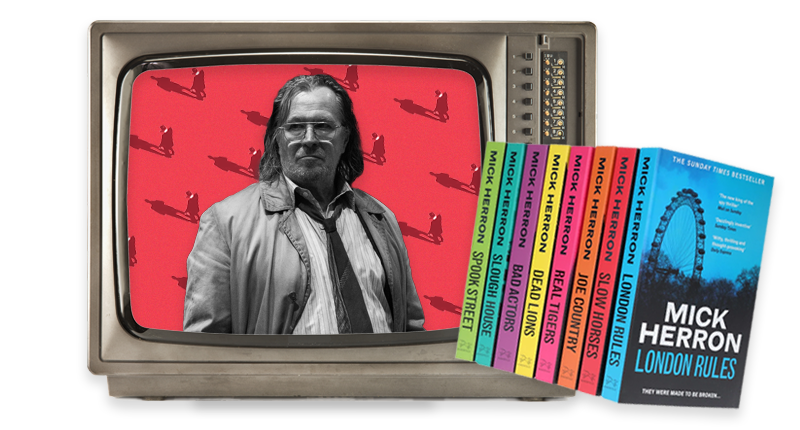
Featuring one of the most brilliant premises in modern spy fiction, Slow Horses follows a dysfunctional branch of MI5 known as Slough House. Populated entirely by agents who have made career-ending mistakes, the department relegates its staff to menial administrative labor while keeping them safely out of the operational mainstream. Their fearless leader is Jackson Lamb, played with glorious, relentless disgust and unmatched brilliance by Gary Oldman. Lamb insults, cajoles, and gaslights his foot-dragging subordinates into pulling off surprising feats of daring heroism.
While the series delivers all the standard thrills of a top-tier espionage drama, it distinguishes itself through mordant wit, slapstick comedy, and delightful Britishisms, all anchored by a consistently stellar supporting cast that includes Kristin Scott Thomas.
Carnal Matchup: Killing Eve (9) vs. Orange is the New Black (2)
Killing Eve (2018)
- What’s a little assassination between two consenting adults?
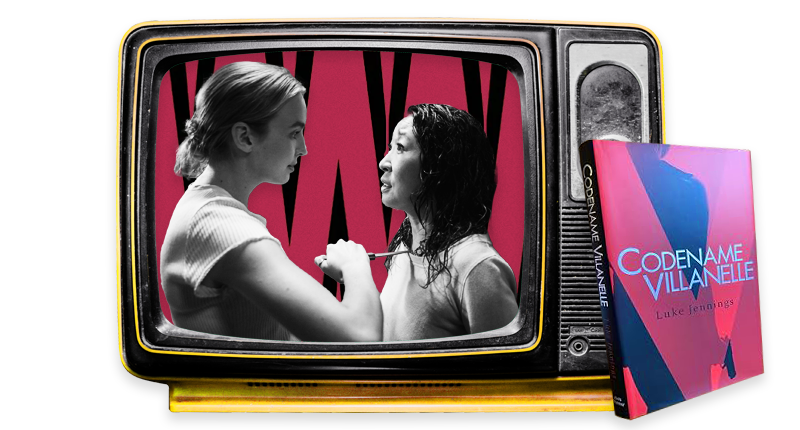
- Based on: Luke Jennings’s Codename Villanelle (2017)
- Subgenres: The Thrill of the Chase, Recreational Murder, Tension
The beating heart of Killing Eve is the crackling, mutual obsession between volatile assassin Villanelle and her dogged pursuer, MI6 operative Eve Polastri. Jodie Comer’s portrayal of Villanelle is ruthless, volatile, and endlessly entertaining, while Sandra Oh grounds the narrative with sharp intelligence. The two characters form a perfectly matched psychological pairing.
Phoebe Waller-Bridge spearheaded the writer’s room for the show’s razor-sharp, sexy first season, followed by Emerald Fennell in season two. While later seasons and the show’s controversial conclusion sparked division among fans, the series cemented its cultural footprint with iconic sequences like the legendary kitchen scene.
Orange is the New Black (2013)
- A show where they mostly wore khaki
- Based on: Piper Kerman’s Orange Is the New Black: My Year in a Women’s Prison (2010)
- Subgenres: Worst Places to See Your Ex, The Prison Industrial Complex is Evil, Cosplay Ideas for Large Groups
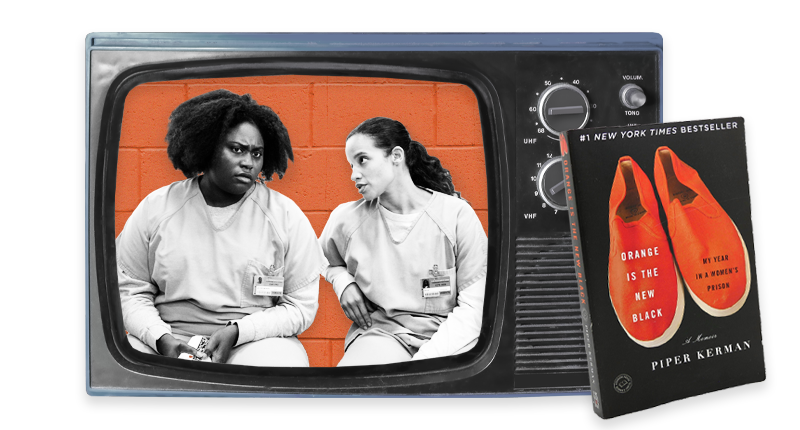
Finding yourself incarcerated in the exact same facility as the ex-girlfriend who coaxed you into transporting drug money sounds like a cruel cosmic joke, but it is precisely what happened to memoirist Piper Kerman. Her subsequent book provided the foundation for one of the streaming era’s earliest breakout hits.
Orange Is the New Black balanced humor, heartbreak, and an earnest, systemic examination of the American prison system. As its narrative scope expanded beyond Piper to spotlight a sprawling, diverse ensemble cast, its cultural saturation became ubiquitous, sparking passionate public discourse around every major character arc and plot twist.
Cerebral Matchup: Sherlock (16) vs. Shogun (3)
Sherlock (2010)
- The game is on
- Based on: Sir Arthur Conan Doyle’s The Sherlock Holmes Stories (1887–1927)
- Subgenres: Former Tumblr Teen Bait, They Should Have Kissed, Seeing the Mind Palace
For anyone navigating the internet during the early 2010s, it was practically impossible to avoid knowing every detail of Sherlock regardless of whether you had actually watched an episode. This contemporary adaptation reimagined Arthur Conan Doyle’s iconic detective in modern-day London, utilizing slick editing, undersaturated cinematography, and digital text overlays to visualize Holmes’s rapid-fire mental deductions. Benedict Cumberbatch and Martin Freeman drove the phenomenon, demonstrating why, over a century after their literary debut, Holmes and Watson remain endlessly compelling.
Shogun (2024)
- A stranger fumbling in a strange land, with swords
- Based on: James Clavell’s Shogun (1975)
- Subgenres: Memed, Subtitles, Epic Battles, Chaotic White Boys, Studying the Blade
Just when critics declared the era of the epic historical prestige drama thoroughly exhausted, Shogun arrived to revitalize the genre. Grand in scale, the series balances political upheaval, massive battles, and fish-out-water humor against the backdrop of a Japan standing on the precipice of the Shogunate Restoration after the arrival of foreign ships.
Featuring stunning production design, meticulous writing, and standout performances from Anna Sawai and Hiroyuki Sanada—who portrays Lord Toranaga with quiet, self-assured authority—the adaptation honors the gritty, grounded humanity of James Clavell’s 1975 novel while easily surpassing the television adaptation of the 1980s.

Cozy Matchup: Brideshead Revisited (1) vs. MAS*H (3)
Brideshead Revisited (1981)
- We have always remembered when we lived in the castle
- Based on: Evelyn Waugh’s Brideshead Revisited (1945)
- Subgenres: Teddy Bears, Stiff Upper Lip, Everything Changed During the War, Drugs, Booze & Generational Privilege, Debating Catholicism
Evelyn Waugh’s observant humanism always maintained an intriguing tension with his political conservatism. His masterpiece, Brideshead Revisited, captures both a nostalgic yearning for the aristocracy and a clear-eyed critique of its moral decay.
This eleven-episode miniseries succeeds by offering a remarkably faithful translation of the novel, with much of the dialogue lifted directly from Waugh’s prose. Jeremy Irons and Anthony Andrews star as Charles Ryder and Lord Sebastian Flyte, whose complex friendship unfolds against the shifting sands of pre-WWII England. Supported by a stellar cast that includes Laurence Olivier and Peter Bull’s famously memorable teddy bear, Aloysius, the adaptation stands as a towering classic of British television.
MAS*H (1972)
- Antics among atrocities
- Based on: Richard Hooker’s MASH: A Novel About Three Army Doctors (1968)
- Subgenres: War is Bad, Wisecracking is Fun
As an iconic anti-war sitcom, *MASH* redefined the boundaries of television comedy by seamlessly layering dark humor, dramatic tension, and pointed social commentary. Spinning off from Robert Altman’s 1970 feature film—itself adapted from Richard Hooker’s novel—the series ran for eleven seasons. Its landmark series finale shattered broadcast records to become the most-watched television episode in American history at the time of its airing. Set against the backdrop of the Korean War, the series served as an unmistakable critique of contemporary American military involvement in Vietnam, securing its legacy more than fifty years after its premiere.