
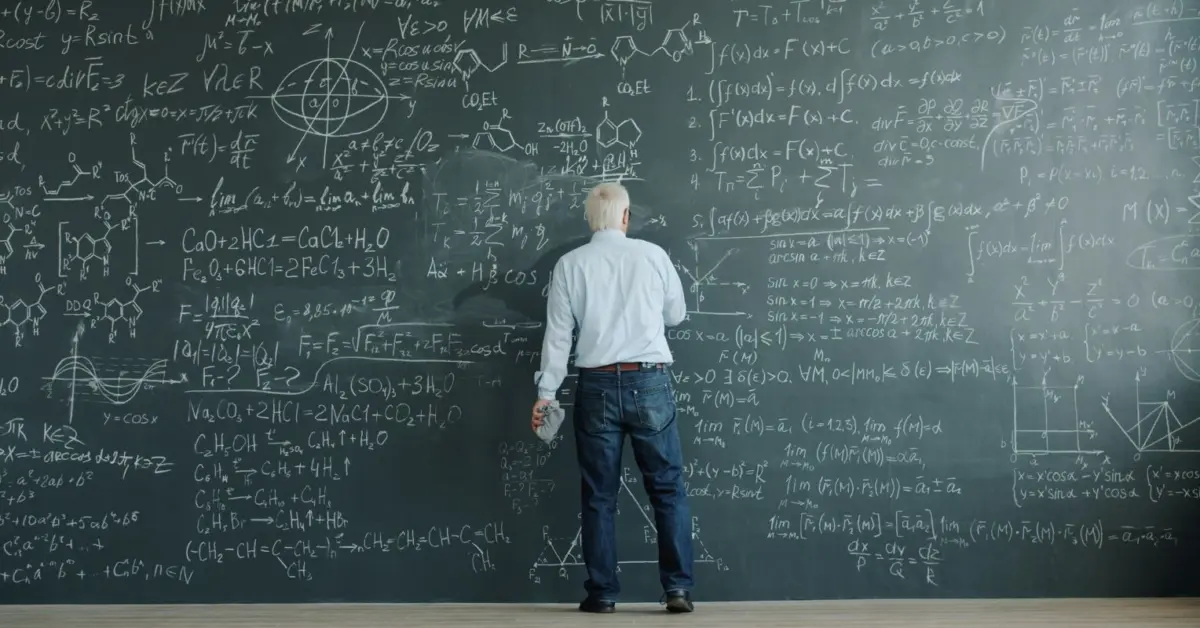
One might naturally imagine that a founding father of computing would have relied heavily on machines to solve the most complex and difficult problems of his era. In reality, Dijkstra’s approach was precisely the opposite. He steadfastly insisted on doing the vast majority of his deep, rigorous thinking entirely away from a keyboard. Much of his groundbreaking work started out meticulously handwritten using a traditional fountain pen, relying on human intellect rather than computational brute force to navigate structural logic.
The question of how human beings think about thinking—and more specifically, which parts of our cognitive workload should be handed over to computers—has become remarkably urgent today. Artificial intelligence is rapidly approaching a tipping point where individuals can completely offload the substance of their work to algorithms. Society has long moved past a world where technology merely outsources basic physical labor; today, workers are increasingly able to let AI handle the bulk of their creative, strategic, and analytical responsibilities.
On the surface, this transition appears to be an unalloyed positive development, as it allows people to obtain the results they need with minimal effort. However, when tasks are outsourced wholesale without a genuine understanding of what went into the final output, society risks losing some of the most profound benefits of human endeavor.
Whenever people work, they inherently produce two distinct kinds of outputs: the tangible work product itself and the deep learning that occurs naturally throughout the process. This internal learning process equips individuals to solve similar issues much faster the next time around, while also granting them the cognitive acuity to recognize complex situations where they can deploy their newly acquired skills.
If problem-solving is outsourced entirely, the work product is secured, but the individual misses out entirely on building the internal mental models required to apply those lessons later. This deficit makes it significantly harder to integrate new information with existing knowledge, ultimately stunting long-term intellectual growth and adaptability.
The Work We Don’t Notice
One of the primary psychological temptations when adopting any new technological tool is the comforting assumption that everything the tool does represents wasted effort in the first place. People begin to question why they should expend any mental energy remembering information when a smartphone can instantly store and retrieve it.
Cognitive offloading serves a genuinely useful purpose in many everyday situations, as humans regularly use external tools to reduce the sheer volume of information they must hold in their working memory. Writing down a routine shopping list or placing a future appointment into a digital calendar successfully frees up valuable mental bandwidth for other immediate tasks. Yet, distinguishing which parts of a complex cognitive task are more useful than others remains a subtle and challenging endeavor.
In 1998, philosophers Andy Clark and David Chalmers published a landmark academic paper titled "The Extended Mind," in which they argued that the boundary between human internal thinking and the outside world is not always located where people naturally assume it is. Their most famous philosophical example involved a hypothetical man named Otto, who suffers from Alzheimer’s and relies on a physical notebook to store vital information he cannot reliably remember on his own. Clark and Chalmers argued that if Otto consults his personal notebook in the exact same functional way another person utilizes biological memory, it makes little logical sense to treat the notebook merely as a passive external aid. For all practical purposes, a vital part of Otto’s extended mind is the notebook itself.
The underlying premise is that the human mind naturally forms a tightly coupled system with its surrounding environment. The human body continuously optimizes for metabolic and cognitive efficiency. If an external tool can reliably hold information or solve a problem, human cognitive systems naturally stop expending energy processing that information. While this is a brilliant and adaptive feature of human intelligence, it also reveals why the choice of modern technology carries such high stakes. Adopting a new technology heavily shapes the exact cognitive strategies individuals rely on, as well as the specialized skills they ultimately allow to wither and die.
Paying Attention
One fundamental reason why thinkers like Dijkstra deliberately avoided using a computer during the initial deep-thinking phase of their work is that writing on a keyboard is fundamentally different from writing on paper.
A physical or digital keyboard introduces a computational environment that dramatically lowers the immediate cost of making an error. A writer can type a complex sentence, realize mid-stream that it does not quite work, and instantly backspace it into total oblivion with a single keystroke. While this appears to be a purely beneficial feature because it frees people from the anxiety of achieving perfection on the first try, it also subtly alters how humans approach complex problems.
When the cost of making a mistake drops to absolute zero, individuals no longer feel compelled to meticulously plan their structural arguments and logic in advance. Instead, human behavior shifts away from intentional architectural design toward reactive tweaking. People throw half-formed, unstructured ideas onto a glowing screen and let those arbitrary prompts guide their subsequent actions.
This behavioral shift directly intersects with the concept of "desirable difficulties," a term originally coined by cognitive psychologist Robert A. Bjork. His extensive research suggests that introducing specific types of friction into a learning environment actually improves long-term retention and comprehension. For instance, when individuals are physically forced to slow down while taking notes by hand, they cannot simply transcribe lectures or texts verbatim. They are forced to actively synthesize information and exercise selectivity, which triggers deep conceptual understanding. Conversely, when a laptop or an AI assistant removes that necessary friction, human beings frequently default to mindless transcription and shallow engagement.
Arriving at Your Destination
When people offload the natural friction of figuring things out for themselves, they may indeed reach a finished product much faster, but they arrive at that destination merely as tourists. Because they took a convenient digital shortcut, they completely lack a deep, structural understanding of what they just created.
If an individual only occasionally arrives at a destination as an uncomprehending tourist, there is no real, lasting harm done. However, if people constantly and exclusively rely on automated tools to generate the core substance of their work while they merely tweak the outer edges, they will eventually end up with a polished output that contains none of their actual understanding or intellectual imprint.
Decades ago, while working on the Manhattan Project, renowned physicist Richard Feynman observed a troubling psychological phenomenon he famously labeled "computer disease." He watched with growing concern as brilliant scientific minds became so completely mesmerized by what the era’s new punch-card tabulators could do that they started playing with the machines for their own sake, abandoning their actual physics research. They fundamentally mistook the mere operation of a powerful tool for genuine comprehension of the underlying scientific problem.
Feynman understood the vital distinction between tool operation and deep understanding better than almost anyone of his generation. At the time of his passing, he left a single, profound sentence written on his blackboard as a final testament to his philosophy: "What I cannot create, I do not understand."