It is true that the average person in the developed world consumes more than the official Recommended Daily Allowance (RDA) of protein. However, that is actually a positive development, largely because the RDA was never designed to be an optimal target. Instead, it serves as a functional baseline. While it is also true that commercial, highly processed protein-boosted foods are having a major moment in the grocery aisles—and may not always represent the best overall dietary choices—we must avoid conflating processed novelty items with protein itself. Furthermore, while a healthy diet can certainly be maintained with little to no meat, meat is not synonymous with protein. To understand whether anyone is truly eating too much or too little, we need to examine what nutritional science actually tells us about this vital macronutrient.
What Foods Contain Protein?
As a fundamental refresher, protein is one of the three primary calorie-containing macronutrients—alongside fats and carbohydrates—that form the vast majority of our daily food intake. Proteins are composed of chains of amino acids, which are strictly required for the growth, structural repair, and daily physiological functioning of the human body.
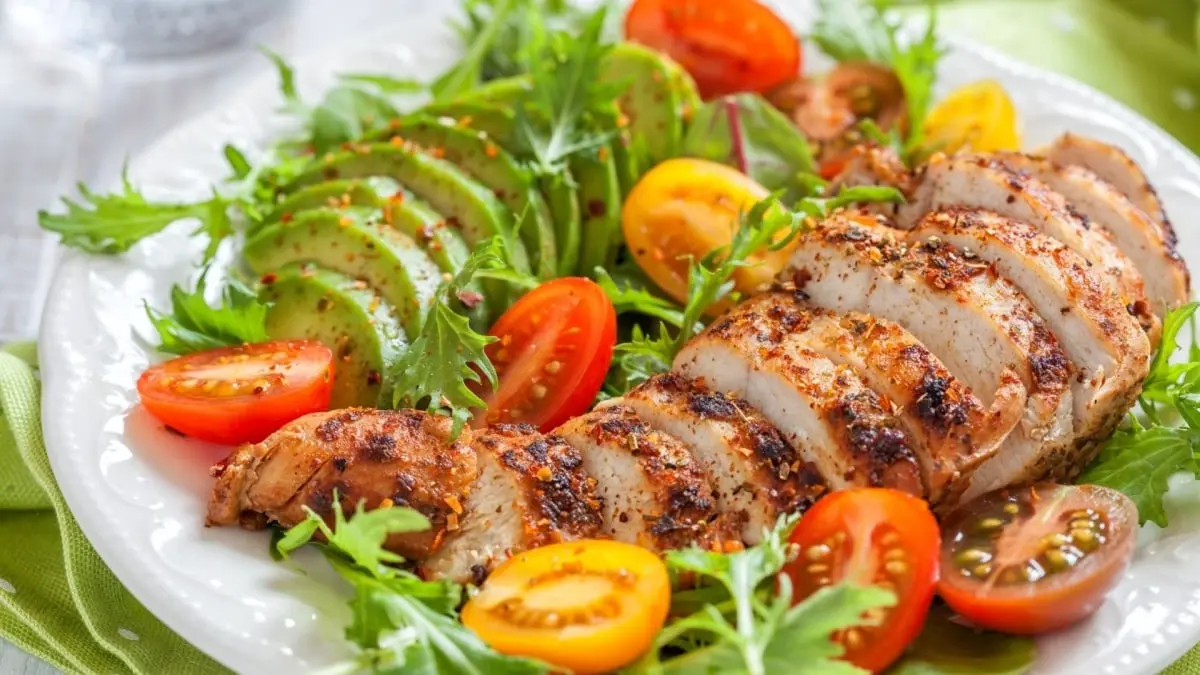
We obtain protein from a diverse array of dietary sources. Animal-based foods tend to be particularly protein-dense; for instance, a single chicken breast provides roughly 35 grams of protein. Other traditional animal products, including eggs and dairy milk, are likewise rich in complete proteins. Plant-based options often have lower concentrations of protein per serving compared to animal products, but meeting or even exceeding daily requirements on a vegan or vegetarian diet is entirely achievable. Legumes, whole grains, and soy-based products such as tofu supply significant, highly usable amounts of protein.
Before declaring any specific intake level to be "too much," it is necessary to first understand how much is actually "enough."
The RDA Is Meant to Be Considered a Minimum
Government agencies and public health organizations communicate specific nutritional targets to encourage balanced eating habits. These figures form the foundation for the daily value percentages listed on packaged food nutrition labels and guide the nutritional standards for institutional programs like school lunches.
The Recommended Daily Allowance (RDA) is formally defined as the average daily dietary intake level that is sufficient to meet the nutrient requirements of nearly all—specifically 97 to 98 percent—healthy individuals within a given demographic group. In practical terms, if an entire population consumed exactly the RDA of a given nutrient, the vast majority would receive just enough to prevent deficiency, but very few would be operating at an optimal level. This metric represents a minimum threshold designed to prevent malnutrition and deficiency diseases, rather than an upper ceiling or a recommendation for peak physiological performance.
The scientific calculation of the protein RDA is rooted in nitrogen balance studies. The human body continuously breaks down its own proteins as part of regular daily metabolic functions, excreting nitrogen as a byproduct. When a person consumes sufficient protein, which inherently contains nitrogen, the amount of nitrogen excreted matches or falls below the amount ingested. If nitrogen balance is maintained, the body is not breaking down its own structural proteins in excess, meaning the intake is functionally adequate.
There Is No Maximum Amount of Protein for Healthy People
Because the RDA functions strictly as a baseline minimum, consuming more than that amount is entirely normal and expected for healthy individuals. In nutritional science, certain nutrients feature a Tolerable Upper Intake Level (UL), which designates a threshold where exceeding the limit can lead to adverse health effects. These upper limits are commonly calculated for specific vitamins and minerals. However, no such upper limit has been established for protein among healthy populations.
Consequently, there is no official medical definition for eating "too much" protein under normal physiological conditions. Consuming an intake higher than the RDA does not mean an individual is overdoing it; it simply means they are consuming more than the bare minimum required to avoid deficiency.
Examining the Numbers: RDA Versus Actual Intake
The established RDA for protein is set at 46 grams per day for a standard 125-pound woman, and 56 grams per day for a 154-pound man, based on a baseline calculation of 0.8 grams of protein per kilogram of body weight, or roughly 0.36 grams per pound. For instance, a 200-pound individual would require approximately 72 grams daily under this baseline formula.
Data from comprehensive nutritional surveys, such as reports from the United States Department of Agriculture, indicate that adult men average between 90 and 100 grams of protein daily, though this average drops to about 80 grams for men aged 70 and older. Women tend to average roughly 70 grams daily, with those aged 70 and older averaging around 62 grams.
While these figures clearly exceed the baseline RDA, characterizing them as "too much" ignores basic demographic realities. The standard RDA calculations are based on idealized weights of 125 and 154 pounds. In contrast, population averages reflect actual body measurements; the average American man weighs approximately 200 pounds, and the average American woman weighs roughly 171 pounds. When factoring in actual body weights, the apparent gap between recommendations and real-world consumption narrows significantly. Going slightly over the minimum requirement is not only harmless; it is often far more beneficial than scraping by at the absolute floor of nutritional adequacy.
Many Older Adults Do Not Get Enough Protein
The assumption that everyone is overconsuming protein overlooks vulnerable populations who routinely fall short. This is particularly true for older adults. As individuals age past 30, they naturally experience a gradual loss of muscle mass, typically declining by 3 to 5 percent per decade. This age-related loss can be mitigated through targeted resistance exercise and adequate protein intake, helping to preserve functional independence.
Official dietary guidelines note that approximately 50 percent of women and 30 percent of men aged 71 and older fall short of recommended protein intake levels. Furthermore, clinical research indicates that older adults who fail to meet these nutritional benchmarks experience a higher likelihood of physical limitations, such as difficulty standing for long periods, walking short distances, climbing stairs, or performing routine household tasks. While physical decline and dietary changes can form a complex cycle, older adults are certainly not a demographic that benefits from lowering their protein intake.
Special Physiological Demands: Pregnancy, Lactation, and Exercise
Certain physiological states demand significantly higher protein intake than the default baseline. Individuals who are pregnant or lactating require more than the standard RDA. Instead of the baseline 0.36 grams per pound, the recommended intake for pregnant or lactating individuals rises to approximately 0.5 grams per pound of body weight, translating to roughly 86 grams daily for a 171-pound person. While increased overall caloric needs during pregnancy make meeting this target more intuitive, prioritizing adequate protein remains essential for fetal development and maternal health.
Similarly, individuals who engage in regular physical training require higher protein intakes to support muscle repair, adaptation, and growth. Major athletic governing bodies, including international track and field associations and sports medicine organizations, recommend that athletes and regular exercisers aiming to maintain or build lean mass consume between 0.54 and 0.9 grams of protein per pound of body weight daily. For a 200-pound person or a heavily training individual, this can range anywhere from 100 to 180 grams of protein per day. This guidance applies not only to elite competitors but also to anyone engaging in serious resistance training, distance running, or high-intensity athletic pursuits.
Higher Protein Diets Support Healthy Weight Loss and Muscle Preservation
When individuals embark on weight-loss regimens, protein intake plays a critical structural role. Dieting inherently involves reducing overall energy intake, but the primary goal should always be the loss of excess adipose tissue rather than the wasting away of metabolically active muscle tissue. This consideration has gained even broader attention with the widespread use of modern weight-loss medications, which can sometimes accelerate lean mass loss if not managed properly.
Clinical studies demonstrate that higher-protein diets, when paired with appropriate resistance exercise, help dieters preserve lean muscle mass, enhance feelings of satiety, and maintain weight management over the long term. Research highlights that protein intakes ranging from roughly 0.48 to 0.72 grams per pound of body weight help individuals maintain muscle mass while managing hunger during caloric deficits. Consequently, health experts generally advise increasing the proportion of dietary protein when overall calorie consumption is reduced, rather than letting protein intake drop alongside everything else.
Does Excess Protein Turn Into Fat?
A recurring talking point in articles warning against protein is the claim that excess protein intake converts directly into body fat. While it is true that consuming more total energy than the body expends will result in fat storage—regardless of whether that excess energy comes from proteins, carbohydrates, or fats—the mechanism is frequently misunderstood.
The body utilizes dietary protein for numerous vital functions, including cellular repair, enzyme production, immune function, and maintaining structural tissues. It can also oxidize protein for immediate energy. If an individual adds a significant amount of protein on top of an already sufficient caloric intake, the surplus energy may indeed be stored as fat. However, if that additional protein is used strategically to replace less nutritious, calorie-dense foods within a balanced diet, total daily calories remain stable. As long as overall daily energy intake does not exceed the body’s metabolic demands, extra protein does not inherently convert into stored body fat.
Medical Exceptions and Scientific Nuance
While high-protein diets are generally safe and beneficial for healthy individuals, certain medical conditions require strict protein restriction. For example, individuals diagnosed with chronic kidney disease are frequently advised by nephrologists to limit their protein intake to the baseline RDA. Because the kidneys play a primary role in filtering and excreting nitrogenous waste products resulting from protein metabolism, a controlled intake reduces the functional workload on impaired renal tissue. However, once a patient transitions to dialysis, medical guidelines often reverse this restriction, advising higher protein intakes to compensate for nutrient losses during treatment. Other rare metabolic disorders, such as phenylketonuria, also necessitate specialized low-protein diets under direct medical supervision.
Aside from these specific clinical exceptions, periodic news reports suggesting that high-protein diets pose generalized health risks usually stem from preliminary or narrowly focused studies. Research investigating specific amino acids, such as leucine, and their interaction with cellular pathways like mTOR often generates complex laboratory data. While these scientific inquiries contribute valuable knowledge to cellular biology, they do not provide sufficient evidence to overturn established clinical guidelines supporting higher protein intakes for active, aging, or dieting populations.
Ultimately, public debates surrounding protein intake often mask entirely separate discussions regarding the environmental sustainability of industrial agriculture and livestock production. While conversations about food systems and resource management are entirely valid, framing these environmental arguments as an urgent public health crisis driven by widespread protein toxicity is scientifically unsupported. For the vast majority of people, incorporating adequate protein remains a cornerstone of a healthy, balanced lifestyle.