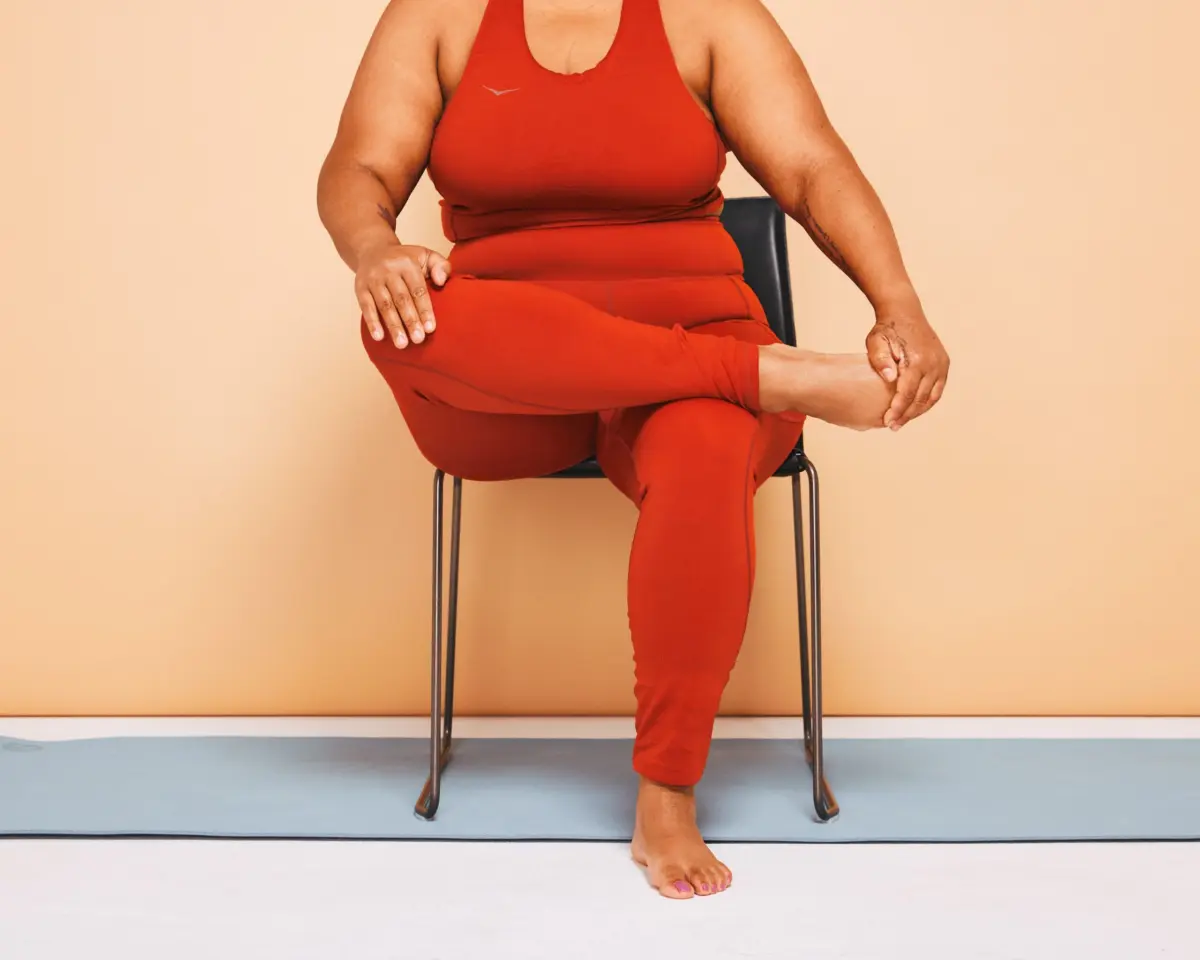
Integrating core exercises that utilize a chair can serve as a surprisingly convenient method to show your midsection some much-needed attention, particularly after you have spent hours sitting immobile at a desk. Beyond convenience, the chair acts as a remarkably smart exercise prop for individuals who are relatively new to structured fitness routines. Traditional bodyweight movements that ignite the abs—such as push-ups, planks, and mountain climbers—can frequently present a high barrier to entry for beginners. By elevating the hands onto the stable surface of a chair instead of the floor, the intensity of these foundational movements is lowered, making them far more approachable without sacrificing their core-strengthening benefits.
Furthermore, incorporating a chair into an ab routine provides tangible physical feedback that can significantly enhance overall core activation. Consider the transversus abdominis bracing drill, a simple yet highly effective core-strengthening technique. Becca Revier, a certified personal trainer and Pilates instructor at Life Time Lakeville in Minnesota, frequently guides her clients through this chair-based drill to sharpen their ability to engage the transversus abdominis. This deep-seated core muscle wraps around the torso like a natural corset, playing a critical role in stabilizing the spine. In this exercise, the chair is not merely a convenience; it serves as a vital component that offers tactile support to help practitioners maintain proper form and target the right muscle groups.

Chair-based core exercises are also proving to be indispensable for individuals who want to strengthen their midsection but face obstacles when it comes to getting down on the floor. Whether due to temporary injuries, chronic mobility limitations, or simply the pragmatic reality of a floor surface that may not be pristine enough to lie down on—with no judgment passed—getting horizontal for a workout is not always feasible. Utilizing furniture that is already in the room bridges this gap effectively.
Essentially, incorporating a chair can democratize core exercises, making them vastly more accessible to a wider demographic of people with varying fitness levels and physical needs, Revier notes. Recognizing this potential, fitness professionals have highlighted a selection of five distinct chair-based movements that individuals can easily perform at home to fire up their abdominal muscles. These exercises can be treated as standalone movements squeezed in between virtual work meetings to inject a dose of core-focused activity into a sedentary day. Alternatively, they can be strung together sequentially to form a comprehensive, full-body circuit workout.
Katie Pierson, a certified personal trainer based in Montana, recommends that individuals starting out with these movements should aim for three sets consisting of eight to ten repetitions per exercise. As physical strength, muscular endurance, and stability improve over time, the training volume can be gradually increased.

There is, however, one critical safety precaution that must be observed before attempting any furniture-based workout. Experts strongly emphasize the necessity of using a stable, stationary chair for every single movement. A rolling office chair equipped with swivel casters is decidedly the wrong choice for physical conditioning. You undoubtedly want a piece of furniture that remains firmly anchored and keeps you exactly where you need to be throughout the duration of the movement, Pierson cautions.
Elevated Push-Up
While the elevated push-up is categorized technically as a full-body exercise, fitness professionals view it as essentially a dynamic plank. This classification highlights the heavy emphasis the movement places on the abdominal muscles. During a push-up, the core works overtime to stabilize the spine against gravity while the upper body completes the pushing motion.
When executing repetitions using an elevated surface like a chair, practitioners must focus on maintaining a neutral pelvis, meaning they should consciously avoid overarching or rounding their lower back. Drawing the bellybutton inward and upward toward the spine is another crucial cue recommended by trainers to guarantee optimal core recruitment throughout the exercise.

Mountain Climber
Similar to the elevated push-up, the elevated mountain climber functions as a dynamic plank variation. In this movement, the core must engage deeply to maintain a rigid, stable spine while the legs alternate driving forward.
Instructors advise keeping the shoulders pulled down and back rather than hiking them up toward the ears, and drawing the bellybutton inward as each knee drives toward the chest. This precise coordination should produce a localized crunch sensation in the abdominal region with every single repetition. Maintaining steady hips that do not rock excessively from side to side is also essential, as stability helps exercisers connect more deeply with the transversus abdominis.
Chair Squat
Squats are widely celebrated as a premier exercise for building strength in the lower body, particularly the glutes and thighs, but they also deliver a potent dose of sneaky core work. The abdominal muscles must fire continuously to support upright posture and spinal alignment throughout the movement.

Utilizing a chair as a target during squats helps enforce proper mechanical form by prompting individuals to drive their hips backward onto the seat, preventing the common mistake of shifting body weight too far forward over the knees as they bend. Trainers suggest keeping the gaze directed outward, much like watching a television screen, rather than looking down toward the feet. This simple adjustment keeps the chest elevated and assists in engaging the deep core stabilizers effectively.
Single-Leg Squat to Chair
Representing a more advanced progression of the standard chair squat, this variation requires the exerciser to perform each repetition using the strength of just a single leg. The introduction of this single-leg element is precisely what forces the abdominal muscles into high gear.
Without both feet on the floor, the natural tendency of the body is to tip sideways, requiring the core to exert significant force to keep the torso upright and balanced. Despite the advanced nature of the movement, the presence of the chair introduces an element of protective stability. Sitting down safely onto a chair provides a secure target compared to performing a pistol squat suspended in open space, making it a controlled progression for building unilateral strength.

Alternating Cross Crunch
Rounding out the selection of chair-based movements, the alternating cross crunch specifically hurls its focus at the obliques, which are the muscles running along the sides of the torso. When executing this movement, fitness professionals stress the importance of exhaling deliberately as the elbow is brought across the body to meet the opposite knee, an action that deepens the muscular contraction and maximizes the effectiveness of the exercise.