
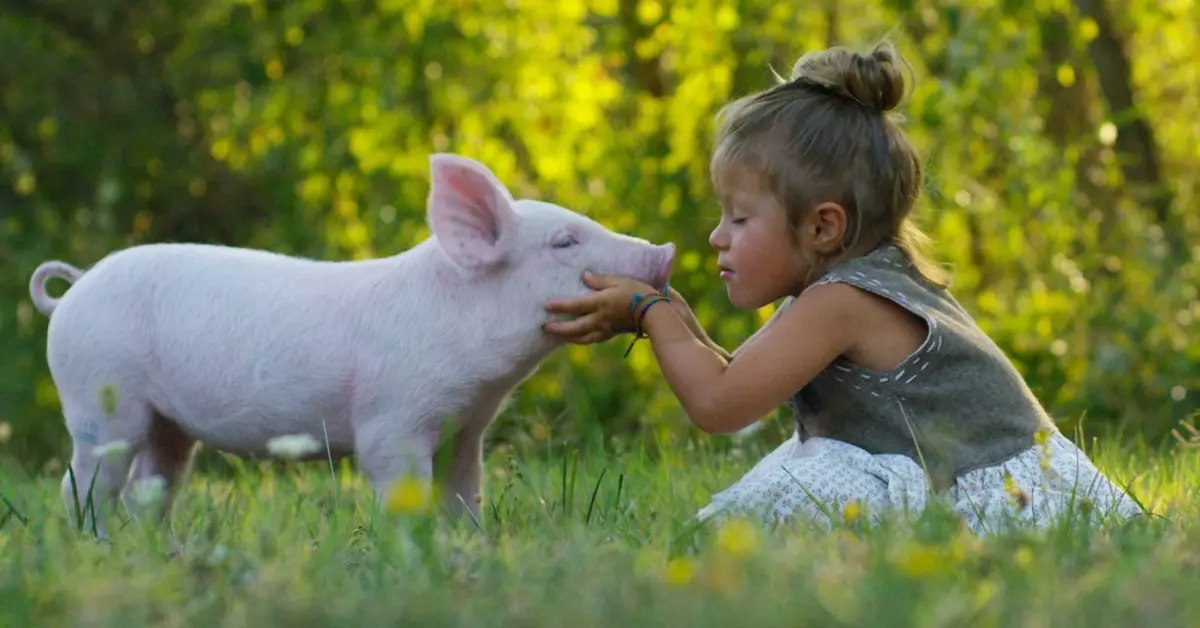
At the heart of this academic exploration is what researchers define as the "meat-paradox"—the psychological conflict experienced by individuals who care for animals yet routinely consume them. Seminal studies by psychologists Jared Piazza, Steve Loughnan, and Brock Bastian, among others, have systematically investigated how individuals resolve this cognitive dissonance. Their work demonstrates that people employ various rationalizations to reconcile their affection for animals with the reality of meat consumption. Notably, research published in Appetite in 2015 by Piazza and colleagues identified the core cognitive justifications—often referred to as the "4Ns"—which suggest that eating meat is perceived as normal, necessary, natural, and, as researchers have humorously added in subsequent observations, nice.
To maintain these beliefs, psychological research shows that individuals actively alter how they perceive the cognitive capacities of livestock. In a widely cited 2012 study published in the Personality and Social Psychology Bulletin, Bastian, Loughnan, Paul Haslam, and Helena Radke explored the phenomenon of denying minds to animals used for human consumption. When animals are categorized as food, humans tend to attribute lower levels of sentience and emotional capacity to them, effectively buffering themselves against feelings of guilt or moral distress. This categorization effect was further examined by Blagovesta Bratanova, Loughnan, and Bastian in a 2011 Appetite publication, which demonstrated that simply labeling an animal as food immediately diminishes its perceived moral standing in the eyes of the consumer.
Beyond individual cognition, researchers have increasingly focused on the broader ideological frameworks that govern human treatment of animals. Melanie Joy’s influential 2010 work, Why We Love Dogs, Eat Pigs, and Wear Cows: An Introduction to Carnism, introduced the concept of carnism to describe the invisible belief system that conditions people to eat certain animals while protecting others. Expanding on this, subsequent scholars have explored how carnistic ideology is measured and maintained. Studies such as the 2017 development of the Carnism Inventory by Cameron Monteiro, Thalia Pfeiler, Melissa Patterson, and Matthew Milburn have provided empirical tools to quantify this psychological orientation.
Moreover, researchers have identified deep connections between attitudes toward animals and broader social ideologies. In their 2016 study published in the European Journal of Personality, researchers Kristof Dhont, Gordon Hodson, and Aline Leite proposed the Social Dominance Human-Animal Relations Model, highlighting the common ideological roots shared by speciesism and generalized ethnic prejudice. This intersection of human intergroup relations and animal welfare has fostered specialized academic networks, such as the Society for the Psychology of Human-Animal Intergroup Relations, which continues to study how societal attitudes toward animals mirror interpersonal prejudices and hierarchies.
The psychological distance between consumers and the origins of their food is also maintained through linguistic and presentation practices. Research by Jonas Kunst and Sarah Hohle in 2016 demonstrated that "meat eaters by dissociation" rely heavily on culinary presentation, packaging, and language that obfuscates the living animal behind the product. By avoiding terms that link meat directly to a sentient creature, consumers experience reduced empathy and disgust, thereby facilitating a higher willingness to eat meat. This dissociation is reinforced by broader industrial practices, which keep the realities of slaughterhouses and factory farming largely out of public view.
As public interest in plant-based diets and animal advocacy grows, the academic field is synthesizing these findings to address not only individual psychology but also systemic social change. Forthcoming edited volumes, such as the upcoming work by Kristof Dhont, Robbie Sutton, and Maria Ioannidou on animal and vegan advocacy, reflect the maturation of psychological science in examining how attitudes, behaviors, and social norms surrounding food systems evolve. These inquiries intersect with nutritional science—such as the Academy of Nutrition and Dietetics’ position papers on vegetarian diets—to evaluate the health outcomes of dietary shifts.
At the same time, the broader implications of industrial animal agriculture extend far beyond consumer psychology. Recent reports from international bodies, including the Food and Agriculture Organization of the United Nations in 2023, have mapped the substantial greenhouse gas emissions and environmental footprints associated with livestock agrifood systems. Concurrently, public health researchers like Eva Pohl and Sang-Rim Lee have examined the local and global public health consequences of concentrated animal feeding operations in the United States, highlighting issues ranging from air and water emissions to community welfare.
The human cost within the meat production industry has also drawn rigorous academic and investigative scrutiny. Human Rights Watch documented systemic threats to workers’ rights in U.S. meat and poultry plants in a 2019 report, while historical and sociological analyses—such as Chris Hedges’ examinations of conflict and institutional violence—provide broader context on the structural vulnerabilities embedded in industrial labor systems. Furthermore, criminological and psychological research, including systematic reviews by Carlo Longobardi and Luca Badenes-Ribera, has explored the well-documented correlations between animal cruelty in youth and subsequent interpersonal violence, underscoring the deep sociological significance of human-animal interactions.
Quantifying the sheer scale of global animal consumption remains a critical component of contemporary research. Data compiled by researchers such as Max Roser and recent global estimates of wild-caught fishes by Alison Mood and Peter Brooke illustrate the staggering number of animals impacted by human food systems annually. Complementing these statistical analyses, organizations like the Sentience Institute conduct extensive public surveys, such as the Animals, Food, and Technology updates, to gauge shifting public perceptions toward alternative proteins, cultured meat, and animal welfare standards.
Finally, historians of science and psychology continue to contextualize modern behavioral research within the historical evolution of scientific thought. Scholarly reviews by Paul Reilly on the history of eugenics and involuntary sterilization, alongside examinations of historical texts like Henry Herbert Goddard’s 1912 study on the Kallikak family by researchers such as J.W. Dennert, remind the scientific community of the critical need for ethical rigor in psychological classification. These historical reflections run parallel to paradigm shifts within mental health diagnostics, such as the depathologization of homosexuality documented by Jack Drescher in 2015, illustrating how scientific consensus regarding human behavior, identity, and morality continuously evolves over time.