I welcomed some of this guidance when I was actively preparing for my trip back in September. During those months of anticipation, it arrived as a manageable trickle—only a few posts a day to help me orient myself. Now, however, it has mutated into an absolute avalanche of posts, emails, and targeted advertisements. Apparently, the complex algorithms governing our digital spaces know I was interested in walking the Camino, but they have completely failed to figure out the vital detail that I have already completed the journey.
All of the Advice I Never Wanted
And surely, with everything these platforms claim to know about me, they could find something else to recommend. Perhaps another long-distance walking trail in a different part of the world? Instead, they seem determined to equip me for a physical journey I have already successfully finished.
Much of the advice is sensible in isolation, but taken as a whole, it is remarkably contradictory. One post insists that I must wear heavy hiking boots to protect my ankles, while the next warns against boots in favor of lightweight trail runners. One expert advocates passionately for the use of walking poles, while another claims they are an unnecessary hindrance. It is enough to make a traveler wonder if anyone involved has ever agreed on anything. Will somebody please make up their mind?
What ultimately bothers me isn’t necessarily the advice itself, because sharing experiences is a natural human impulse. Rather, it is the absolute authority with which these recommendations are delivered. So many suggestions are presented as unyielding, universal truths, with little to no consideration for the unique individual receiving them.
Having now walked the Camino myself, I can see firsthand how misleading some of this conventional wisdom can be. Much of what circulates online is essentially marketing disguised as helpful recommendations, designed to funnel anxious pilgrims toward specific retail purchases. Other suggestions simply reflect one person’s isolated personal experience, which may have very little relevance to the realities another pilgrim will face on the trail.
Consider the vast differences in how people travel. Someone carrying every single possession on their back needs entirely different equipment from someone utilizing a luggage transfer service to hop between hotels. Someone sleeping in shared pilgrim hostels has starkly different daily needs from someone booking private rooms along the way. Furthermore, someone’s favorite walking shoes might be an absolute disaster for another person’s specific foot structure and stride.
We are all fundamentally different human beings, and there are countless valid ways to walk a Camino. The exact same principle applies to almost every kind of travel and life experience we undertake.
When Someone Else’s Experience Becomes Our Advice
Travel serves as a wonderful and obvious example of this phenomenon, but the culture of unsolicited advice goes well beyond holidays and walking adventures. Every day, we are constantly exposed to a barrage of guidance about retirement, health, relationships, finances, exercise, and how we should ideally spend our time. Much of this commentary comes from people who genuinely believe they are being helpful and supportive. Yet, what worked seamlessly for them may be completely wrong for someone else in a different station in life.
At our age, with decades of accumulated life experience safely behind us, why do we sometimes give more weight to a stranger’s casual advice than to our own well-tested judgment?
We are constantly told what constitutes a happy retirement, exactly how many minutes of exercise we should perform each week, whether we should downsize our homes, and even how we ought to age gracefully. Everyone seems to have a strong opinion, and plenty of people are more than happy to tell us what we should be doing with our lives.
Certainly, there is nothing inherently wrong with listening to others. Along the way, we might discover something genuinely useful or learn about an alternative approach we simply hadn’t considered before. But listening attentively does not mean we are obligated to follow instructions blindly.
And I am certainly not suggesting that we ignore qualified experts or evidence-based recommendations, particularly when it comes to critical matters concerning our health and safety. There is a considerable, undeniable difference between professional medical guidance and someone else’s personal preference being presented as a universal truth.
Making My Own Decisions
I spent months meticulously preparing for my Camino journey. I thoroughly researched the route, carefully considered equipment options, and ultimately made decisions based strictly on my own physical abilities, personal concerns, and what I actually wanted to experience.
I also changed my mind quite a few times along the way. As I learned more from the reality of the trail, I adjusted my plans accordingly. Some items I originally thought were absolute essentials turned out to be completely unnecessary, while other factors I had overlooked became significantly more important.
I listened to advice from various quarters, but at the end of the day, I made my own decisions.
And now that I am safely home, one subject in particular is driving me entirely crazy: walking poles.
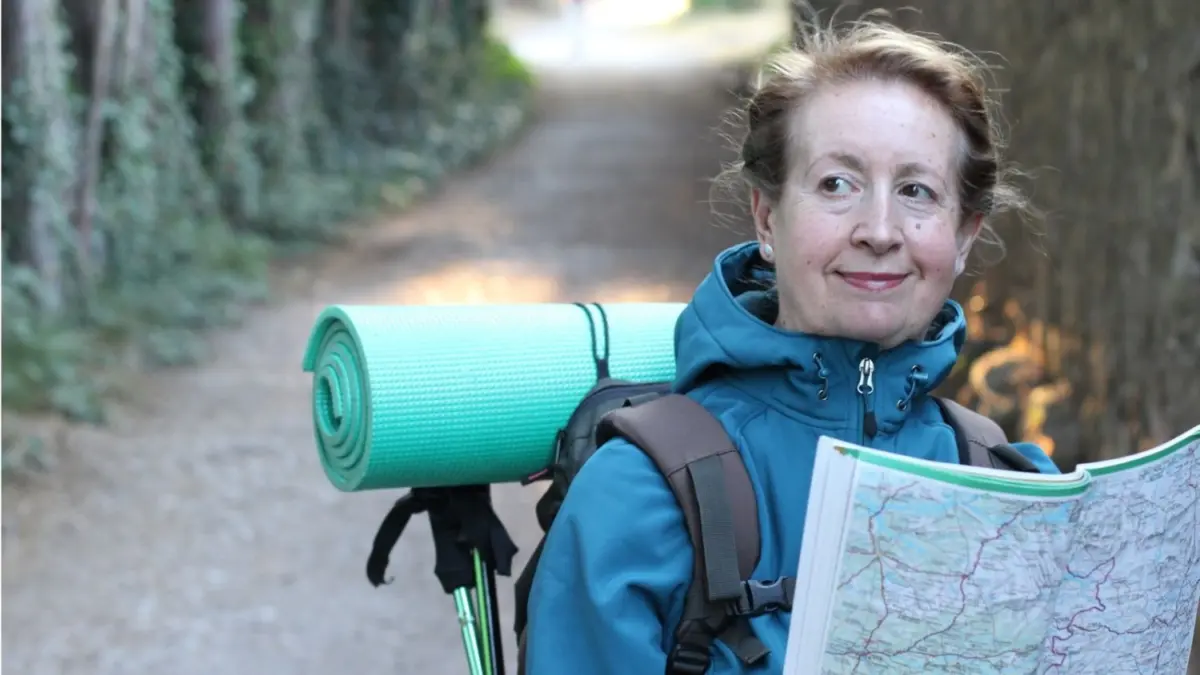
According to the endless advertisements and recommendations circulating online, no sensible pilgrim should ever leave home without a pair. Well, I did.
Walking poles remind me a great deal of candy preferences. Some people love chocolate, others strongly prefer licorice, and some happily eat both without hesitation. Walking poles function much the same way. Some people love them, others find them cumbersome, and many aren’t entirely sure until they have actually tried them out on the trail. Yet, the prevailing advice often makes them sound like an absolute, non-negotiable essential for survival.
What I actually discovered on the Camino was that a large number of pilgrims quickly decided they didn’t want or need their poles after all. Many simply left them behind at their accommodations, where other incoming pilgrims could freely take them if they wished. There were spare poles available in numerous guesthouses and hostels all along the way.
It is rather funny how that particular little detail never seems to feature prominently in advertisements encouraging everyone to buy an expensive new pair before leaving home!
I am certainly not suggesting that walking poles are entirely useless. They can be extremely helpful, particularly when navigating difficult terrain, which is precisely why I used them when the landscape demanded it. But whether they represent a necessary retail purchase depends entirely on the individual person, the specific route being walked, and the changing circumstances of the trip.
When Advice Becomes Too Much
The sheer volume of information available at our fingertips today can easily turn a relatively simple decision into an enormous, exhausting undertaking. We research endlessly, compare brands, read dozens of reviews, watch instructional videos, and seek out the opinions of others. Then, we inevitably stumble upon another article that completely contradicts everything we have just learned, and we find ourselves right back where we started.
During my time on the Camino, I occasionally observed fellow pilgrims struggling visibly under enormous, overloaded backpacks or wearing clothing that looked terribly uncomfortable for a long walk. I often wondered privately whether they had simply followed advice that wasn’t right for them, trusting someone else’s blueprint blindly.
Perhaps they had never undertaken anything remotely like this before and naturally trusted someone who sounded authoritative and knowledgeable. It is entirely understandable behavior. When we are trying something unfamiliar and daunting, we naturally look to people who appear to have more experience. But there is a fundamental difference between learning from someone else’s past experience and assuming that their personal choices should automatically become ours.
The real challenge lies in recognizing the exact moment when we have gathered enough information to make an informed decision, based strictly on our own needs, personal preferences, and specific circumstances. We do not need to research every minor detail to death. Sometimes, our own common sense simply deserves a little more attention and trust.
And as for my continuing avalanche of unwanted Camino advice? I have finally taken decisive action. I recently spent over an hour patiently unsubscribing and unfollowing various Camino and European travel accounts.
Apparently, even the process of getting rid of unwanted advice takes a considerable amount of time.