
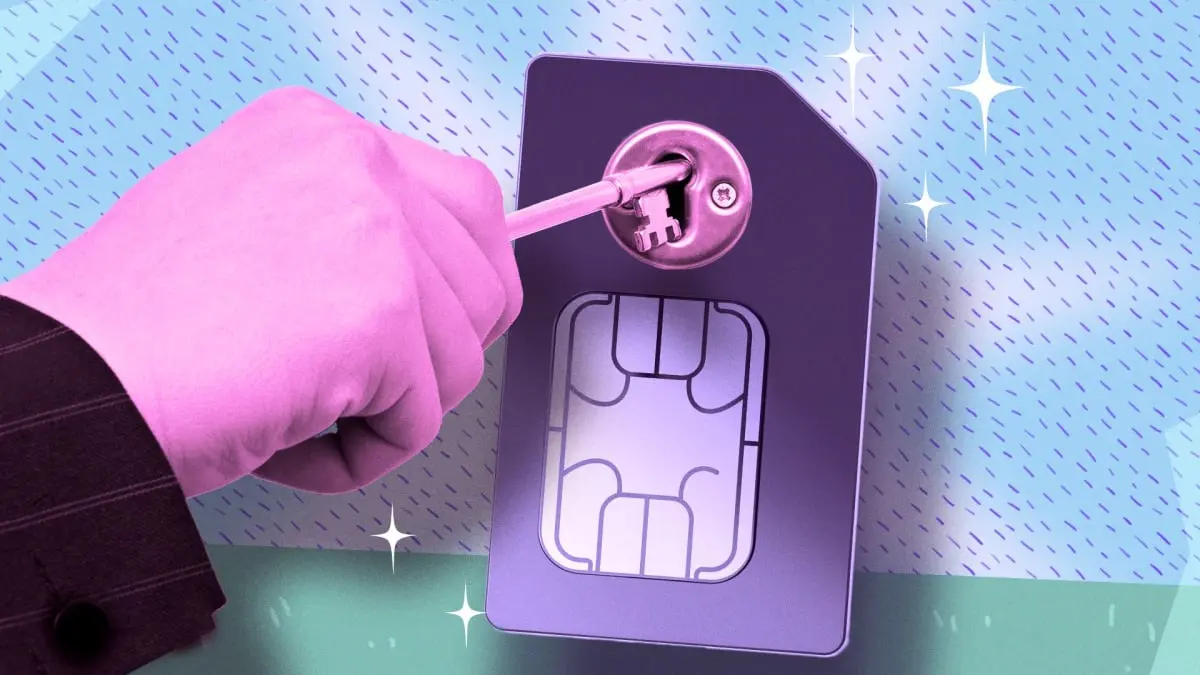
Fortunately, a vital shift is underway across the telecommunications landscape. All three major U.S. wireless carriers now provide customers with the ability to lock down their mobile numbers using straightforward digital toggles. Understanding how modern carrier attacks operate and knowing precisely where to find these protective switches has become an essential component of personal cybersecurity in an era where digital identities are constantly under siege.
How SIM Swaps and eSIM Hijacking Work
The mechanics of a traditional SIM swap typically begin long before a carrier is ever contacted. Malicious actors systematically aggregate a victim’s full name, home address, account numbers, and other sensitive details sourced from data breaches, corporate leaks, or targeted phishing campaigns. Armed with this harvested information, the attacker contacts the victim’s mobile carrier while impersonating the account holder. If they successfully manipulate or convince a customer service representative to transfer the subscriber’s phone number onto a subscriber identity module card under the attacker’s physical control, the consequences are immediate. Incoming phone calls, text messages, and critical two-factor authentication codes are instantly redirected to the adversary.
A close cousin to this threat is port-out fraud, a scheme where an attacker establishes a fraudulent account with an entirely different wireless carrier and arranges for the victim’s established phone number to be covertly transferred over.
While the precise economic scale of these crimes fluctuates, federal data highlights the ongoing severity of the threat. The FBI’s Internet Crime Complaint Center logged 982 formal SIM swap complaints alongside approximately $26 million in reported financial losses. This represented a notable decrease from the 2,026 complaints and $72.7 million in losses recorded just two years prior in 2022. However, cybersecurity analysts caution that this downward trend should be interpreted carefully, as these federal figures account exclusively for incidents that victims actively reported to government portals.
The advent of embedded subscriber identity modules, commonly known as eSIMs, successfully removed the vulnerable plastic card from the equation, but it did not eliminate the underlying systemic weaknesses. Security researchers at the cybersecurity firm F.A.C.C.T. discovered that modern attackers frequently bypass traditional customer service interactions altogether. Instead, malicious actors actively infiltrate a victim’s carrier account using stolen or leaked credentials, automatically generate a digital quick response code, and scan it directly onto their own hardware device. The legitimate subscriber’s physical or digital SIM is deactivated simultaneously, leaving the victim entirely in the dark without ever involving a physical retail store visit or a phone call to a support representative.
Further compounding these vulnerabilities, threat intelligence firm Intel 471 previously flagged a major service provider whose automated systems allowed digital activation codes to be delivered directly to an email inbox rather than via text message. This architectural flaw inadvertently provided attackers with a secondary digital inbox to compromise and exploit. Although the provider ultimately closed the loophole, the broader lesson remains stark: every technological shortcut and convenience designed to assist locked-out consumers serves as an identical shortcut for determined criminals.
What SIM Locks and Port-Out PINs Actually Do
To counter these evolving threats, major network operators have rolled out three distinct and overlapping layers of defense. A traditional SIM lock is designed to block unauthorized SIM card changes and device upgrades; a port-out lock prevents a phone number from being transferred to a competing carrier; and a dedicated account personal identification number adds an extra layer of verification whenever a customer contacts customer service or initiates a transfer request.
Among these protective measures, security experts generally regard the account PIN as the weakest link in the chain. PIN codes are not entirely bulletproof because human customer service representatives retain the administrative authority to override them under certain circumstances. By contrast, a permanent digital lock that completely grays out account modification options within the user interface is vastly more difficult for an attacker or an unsuspecting representative to circumvent.
In a landmark policy order, the Federal Communications Commission instructed wireless service providers to offer all consumers a free account security lock while mandating immediate notifications whenever SIM change or port-out requests are submitted. Although compliance deadlines faced delays pending routine federal administrative paperwork reviews, major carriers have increasingly integrated these requested protections into their subscriber management platforms.
AT&T has streamlined its security architecture by bundling multiple safeguards into a single, comprehensive toggle known as Wireless Account Lock. According to official corporate support documentation, activating this single feature successfully blocks unauthorized device upgrades, physical SIM and eSIM swaps, international mobile equipment identity changes, telephone number changes, transfers to alternative wireless providers, and any unauthorized edits to authorized users or billing information. Despite these extensive restrictions, account holders retain the ability to pay their monthly bills, modify service plans, and unlock eligible devices when needed.
For postpaid subscribers, activating the feature is managed directly through digital account management tools. Prepaid customers navigate a slightly different path by signing in, selecting their specific phone number, accessing profile settings and account preferences, and choosing the activation option under the wireless account lock menu, which is subsequently verified via a one-time confirmation text message.
Security frameworks of this nature rely heavily on access control and visibility. On AT&T networks, only users with primary or secondary account permissions are authorized to toggle the lock, and the carrier automatically dispatches email alerts to the primary account holder alongside text messages to every active number on the account whenever the lock status is modified. Security advocates consistently praise this approach, noting that silent administrative changes represent the core danger of carrier compromises, making noisy, unavoidable notifications a vital component of a robust defense strategy.
How to Lock Your Number on Verizon
Verizon approaches account fortification by dividing the security responsibilities into two distinct mechanisms. SIM Protection actively blocks unauthorized physical SIM and digital device changes, while Number Lock specifically prevents telephone numbers from being transferred to external carriers. Verizon’s internal technical guidance explicitly notes that enabling Number Lock in isolation does not prevent malicious SIM card modifications, meaning security-conscious subscribers must ensure that both protective features are enabled simultaneously.
Once enabled, disabling Verizon’s SIM protection initiates a temporary safety buffer, keeping SIM changes and hardware upgrade orders blocked for an additional fifteen minutes. Furthermore, if a customer genuinely decides to port their number to another provider in the future, the Number Lock feature must be manually deactivated beforehand to successfully generate a mandatory Number Transfer PIN. While maintaining two separate toggles requires slightly more administrative effort than a unified single-switch solution, it offers the practical advantage of securing the telephone number against theft while simultaneously leaving device upgrade paths open for consumers who frequently transition between different hardware devices.
How to Lock Your Number on T-Mobile
T-Mobile similarly utilizes a dual-feature defense structure to safeguard subscriber accounts. The carrier’s SIM Protection mechanism blocks unauthorized physical SIM and eSIM modifications, while Port Out Protection specifically halts unwanted transfers to competing wireless providers. Both features are provided to subscribers free of charge.
Implementing SIM Protection on postpaid accounts is handled directly within the company’s digital mobile application environment. Port Out Protection operates differently, as it functions as an individual add-on that must be applied to each distinct telephone line associated with the account. Subscribers must navigate through their account management interface, access plan details, manage add-ons, and manually activate the protection checkbox for every single line distributed across their family or enterprise plan.
While this per-line configuration requirement can prove somewhat tedious for larger family plans, cybersecurity professionals emphasize that spending a few minutes securing each line is well worth the effort. Additionally, T-Mobile recommends establishing a secure account personal identification number ranging from six to fifteen digits in length, which can exclusively be modified from the primary account holder’s physical device while connected directly to the cellular network with Wi-Fi functionality disabled.
What These Locks Don’t Cover
It is critical to recognize that a carrier-level security lock is designed specifically to protect against unauthorized administrative changes executed through your wireless provider. It does not provide absolute protection if an attacker has already compromised your primary carrier account credentials and possesses the ability to log in and toggle the protections off themselves.
Major carriers have steadily raised these operational bars. AT&T, for instance, requires its official management application to be actively operating on a device verified as active on the victim’s account to authorize major changes. Nevertheless, independent security researchers consistently recommend employing unique, complex passwords alongside robust multi-factor authentication directly on all carrier management portals to prevent unauthorized access at the login stage.
Subscribers must also remember to temporarily disable these locks prior to executing routine administrative tasks, such as upgrading to a new smartphone or migrating an eSIM to a replacement device, because every major carrier will strictly block the transaction until the security toggle is lifted. Once the legitimate hardware transition is complete, the security lock should be re-engaged immediately.
Ultimately, security experts emphasize that the most resilient long-term fix involves reducing reliance on your phone number as a solitary guardian for high-value digital assets. Whenever possible, users should migrate sensitive financial institutions, primary email services, and cryptocurrency portfolios toward dedicated authenticator applications or modern cryptographic passkeys. Think of a carrier security lock much like a vehicle seatbelt: you will rarely notice it during everyday life, but you will be profoundly grateful it was securely fastened the single time an emergency occurs.