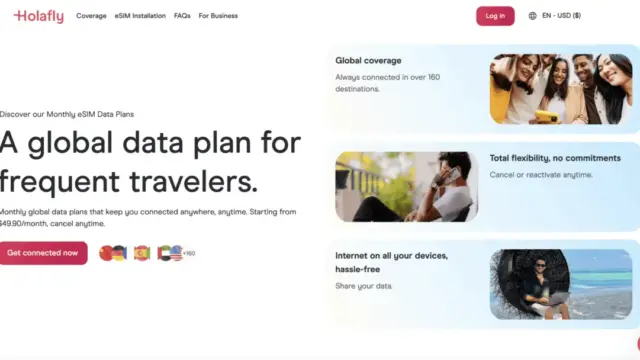
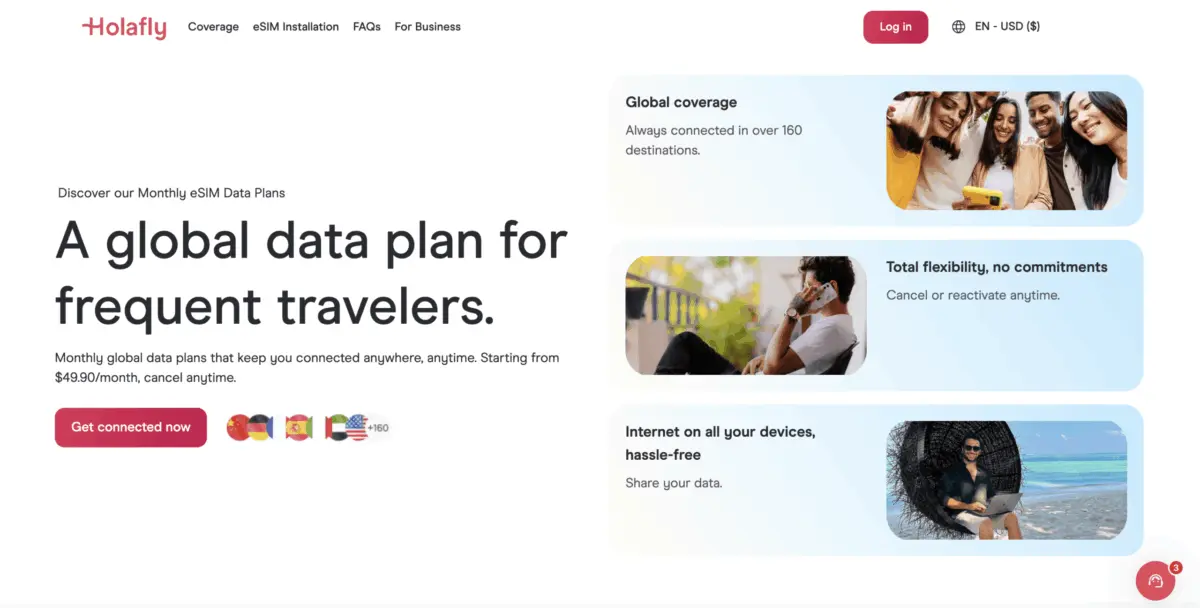
For years, the market for digital SIM cards has operated on a transactional basis. Travelers download a provider’s application, select a data package tailored to a specific geographic region or country, install the eSIM onto their smartphone hardware, and activate it upon arrival. While this technology eliminated the need to visit local storefronts for physical plastic SIM cards, frequent flyers and digital nomads often found themselves managing dozens of distinct installations across multiple international trips. Holafly’s latest offering addresses this operational friction by maintaining a continuous connection that automatically re-establishes service when users cross international borders.
What Are Holafly Plans?
The newly launched subscription service provides a single global eSIM that remains active across more than 160 countries under one ongoing billing cycle. Subscribers complete the installation process only once. As they move from one country to another, the service automatically reconnects to local networks without requiring users to reswap SIM profiles, redownload software packages, hunt for new QR codes, or complete new point-of-sale transactions.
The service operates similarly to a traditional domestic mobile carrier contract, though structured specifically for international mobility and at a lower price point than conventional roaming alternatives. Consumers can subscribe on a monthly, quarterly, or annual basis, with tiered pricing structures that offer discounts for longer commitments. Quarterly subscriptions reduce costs by approximately 10 percent, while annual commitments yield savings of about 15 percent. Furthermore, the service operates without fixed-term annual contracts, allowing subscribers to cancel their plans at any time.

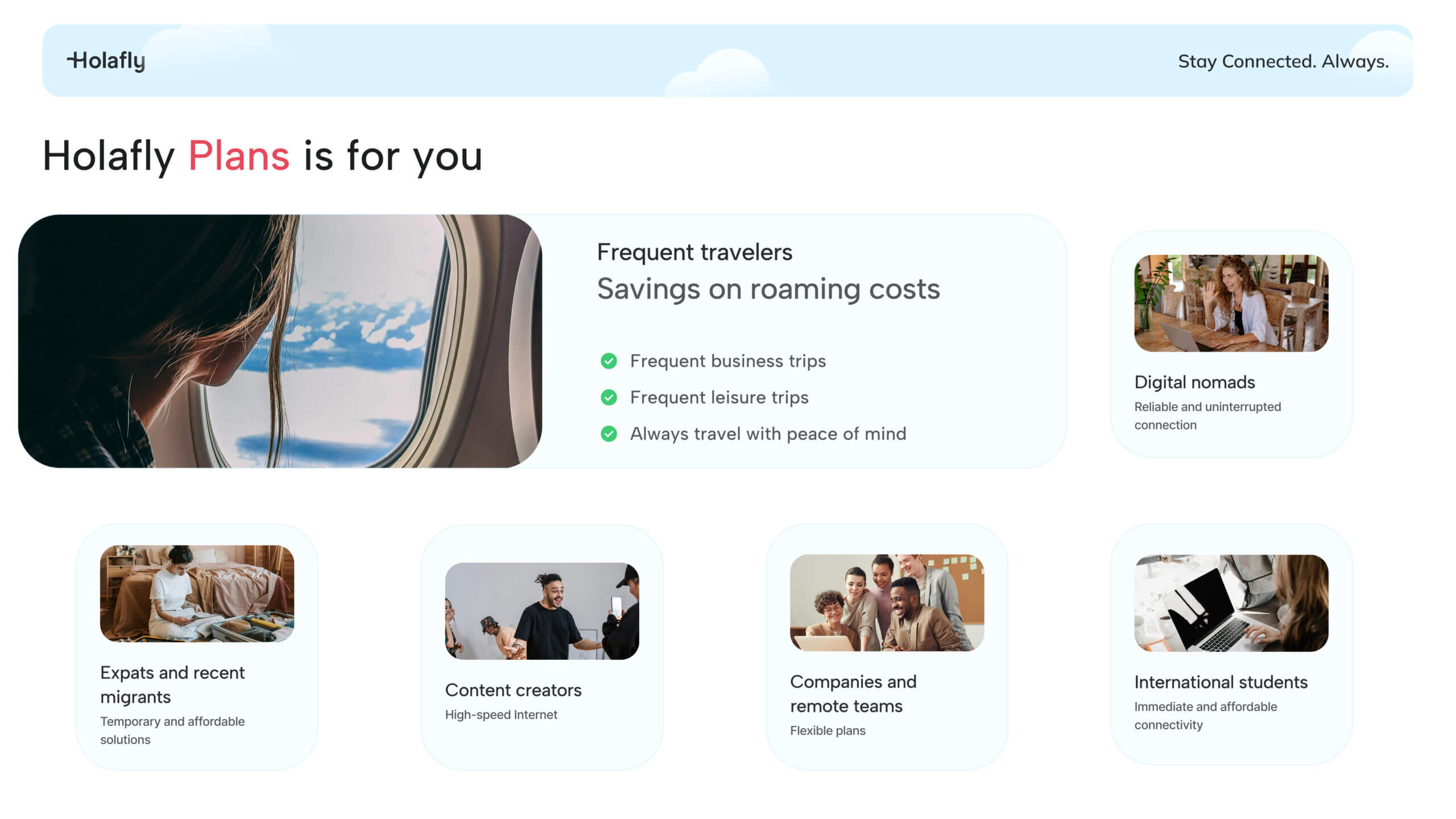
Holafly offers the subscription in two primary tiers: Light and Unlimited. The Unlimited Plan features unthrottled data allowances alongside an unrestricted mobile hotspot capability, enabling users to tether laptops and secondary devices while on the move. This tier is marketed toward digital nomads, content creators, and professionals who handle high-volume data tasks such as video conferencing, large file uploads, and continuous remote work. Additionally, the Unlimited tier includes a local telephone number originating from the United States, the United Kingdom, or Canada, facilitating the receipt of SMS verification messages and calls.
The Light Plan provides a monthly allocation of 25GB of high-speed data while maintaining hotspot capabilities and full coverage across the same roster of more than 160 destinations. This option targets travelers whose digital consumption primarily centers on navigation applications, messaging platforms, and moderate social media usage.
Both subscription tiers include a permanent feature designated as "Always On." Once a plan is activated, users receive a complimentary 1GB backup data allotment each month for life. This safety net remains functional even if the subscriber eventually chooses to terminate their paid subscription entirely. Pricing varies by region and currency, but as an illustration, the unlimited tier is priced at approximately $55 per month for an annual commitment. This rate undercuts standard international roaming packages offered by major domestic carriers in markets like the United States.
Classic eSIMs Versus Ongoing Plans
The introduction of Holafly Plans creates a distinct operational division between traditional single-trip digital SIMs and standing global subscriptions. Classic Holafly eSIMs remain optimized for isolated vacations or short-term travel itineraries. For a traveler taking a brief two-week trip to a single country, purchasing a localized, single-use eSIM remains the simpler and more cost-effective approach. These one-and-done purchases are well-suited for consumers who take only a limited number of international trips each year.
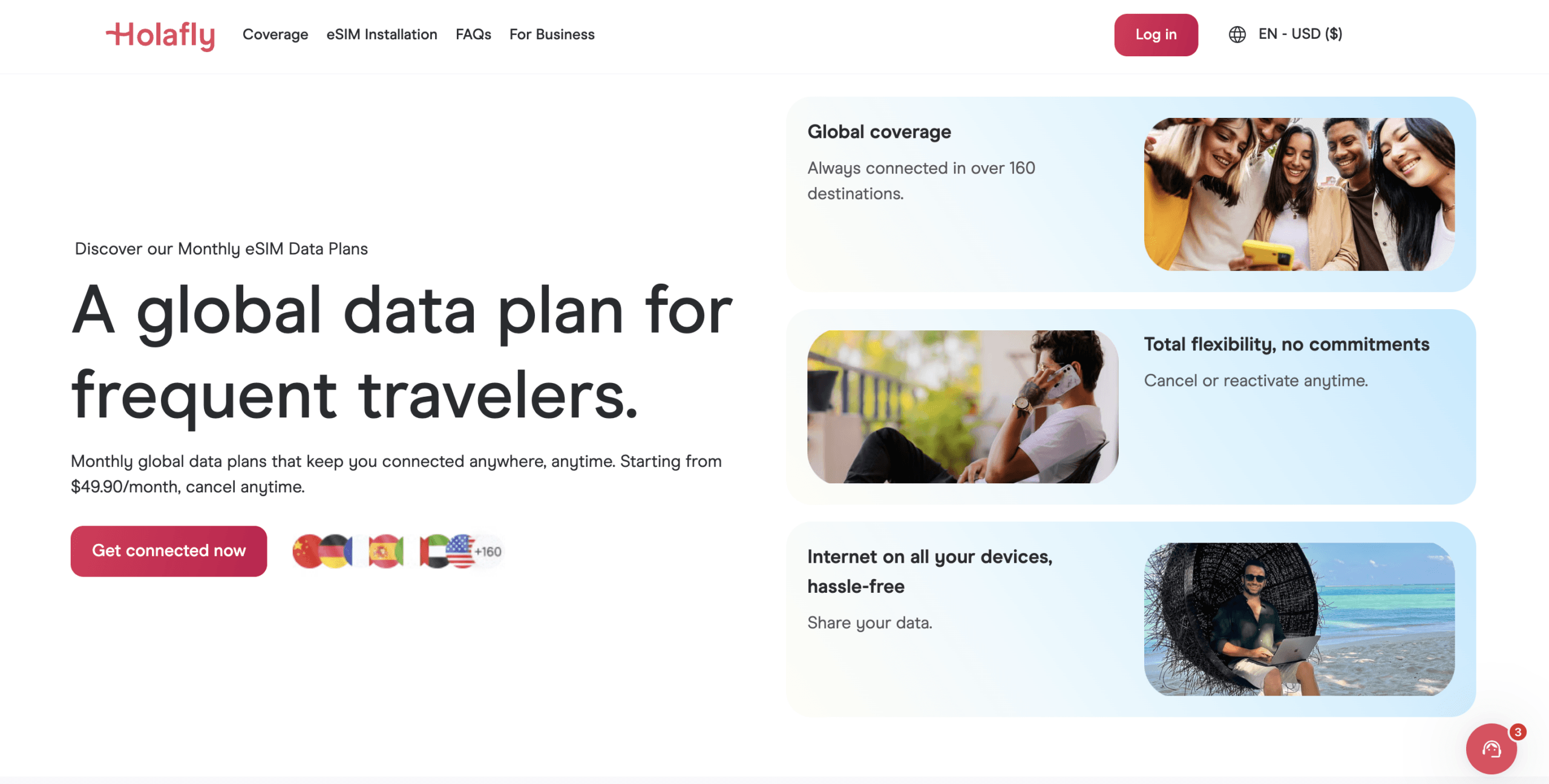
Conversely, the subscription model targets individuals who spend the majority of the year outside their home countries and transition frequently between multiple international jurisdictions. Rather than purchasing separate data packages every time an itinerary shifts, subscribers maintain a single phone number, a unified connection, and a continuous billing cycle that accompanies them across borders indefinitely.
Major domestic carriers in markets such as the United States frequently charge over $100 per month for international roaming packages that enforce data caps or throttle connection speeds after a designated threshold. Holafly Plans aim to undercut these legacy carrier rates while providing higher data ceilings and integrated hotspot functionality without additional surcharges.
Subscription Logistics and Market Positioning
Getting started with the new subscription service requires a compatible smartphone equipped with built-in eSIM hardware. Activation is handled directly through the provider’s application or by scanning an initial setup code, completing the provisioning process within minutes. To assist users during setup or transit, the company maintains round-the-clock customer support staffed by live representatives.
The product is not positioned as a universal replacement for all travel connectivity needs. Short-term vacationers taking isolated trips will continue to find standard destination eSIMs more economical. However, frequent travelers navigating multiple countries within compressed timeframes, as well as remote professionals requiring dependable, high-capacity ongoing connectivity, represent the core demographic for the subscription service.
To incentivize adoption, the company has introduced promotional discounting, allowing customers using specific partner codes to receive percentage reductions on both the new subscription plans and standard legacy eSIM offerings. The service is backed by a refund policy, providing financial recourse for subscribers who determine the ongoing global model does not align with their travel patterns.