
Reflecting on the grueling and rigorous selection process, Mary Beard, Chair of the Booker Prize 2026 judges, offered insight into how the final six titles were chosen from a deeply competitive field. In the official announcement, Beard emphasized that the panel approached their task without any preconceived notions or structural quotas regarding representation.
"We did not start out with a checklist of the different types of book we wanted to see represented in the final six, or the kinds of authors or subject matter," Beard stated.
Despite the absence of a formulaic checklist, Beard noted that the final outcome felt profoundly organic and deeply satisfying once the selections were placed side by side. When the panel stepped back to look at the lineup of their shortlist, neatly propped up against one another and almost glowing with literary vitality, they felt a profound sense of pride. They realized they had successfully showcased many of the most compelling strengths defining contemporary English-language fiction today.
The selected novels defy easy categorization, spanning a broad emotional and stylistic spectrum. According to the judges, these works range from the hilarious to the discomfiting, from the frighteningly strange to the alarmingly domestic, and from the powerfully shocking to the intriguingly understated. In flipping through their pages, readers encounter an expansive tapestry of humanity, meeting characters drawn from different countries and entirely different centuries. This diverse array of narratives has been brought to life by a fascinating generational mix of creators—authors whose publishing careers span a full forty years apart, successfully bridging the gap between celebrated literary heavyweights and exciting new talent.
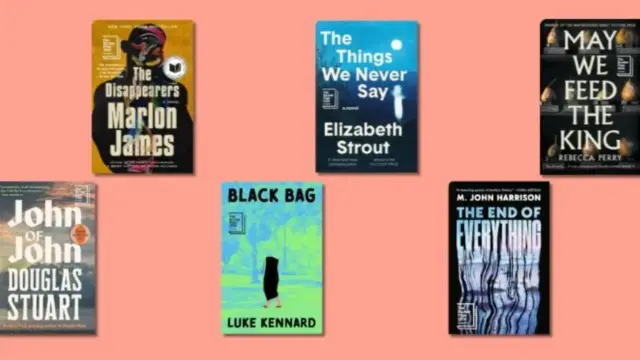
The six titles and authors comprising the 2026 Booker Prize shortlist showcase a remarkable breadth of creative vision. Leading the lineup is M. John Harrison with The End of Everything, a novel that promises the trademark philosophical depth and stylistic innovation characteristic of his celebrated career. He is joined by Marlon James, who returns to the literary spotlight with The Disappearers, bringing his visionary storytelling back to the forefront of international fiction.
The shortlist also highlights contemporary anxieties and stylistic daring through Luke Kennard’s gripping work, Black Bag. Rebecca Perry secures a coveted spot with May We Feed the King, introducing readers to her distinct and captivating poetic and narrative sensibilities. Rounding out the final six are two titan authors of contemporary domestic and emotional realism: Elizabeth Strout with The Things We Never Say, and Douglas Stuart with John of John, both of whom bring their renowned mastery of character-driven storytelling back to the Booker stage.
Behind this carefully curated selection is a diverse and accomplished panel of judges tasked with evaluating the very best of English-language literature for 2026. Alongside Chair Mary Beard, the panel brings together a rich mosaic of cultural perspectives, including poet and educator Raymond Antrobus, musician and cultural icon Jarvis Cocker, writer and critic Rebecca Liu, and acclaimed novelist and poet Patricia Lockwood. This eclectic group has spent months reading, debating, and ultimately narrowing down the eligible pool to arrive at the final six contenders.
As the literary world turns its attention toward the autumn season, anticipation continues to build across the publishing industry, bookstores, and reading groups alike. With the shortlist now out in the open, readers have ample time to dive into all six remarkable works before the winner’s crown is formally awarded. The journey that began with the longlist in July reaches its climax on November 9, when the winner of the 2026 Booker Prize will be announced during the celebratory ceremony in the UK.