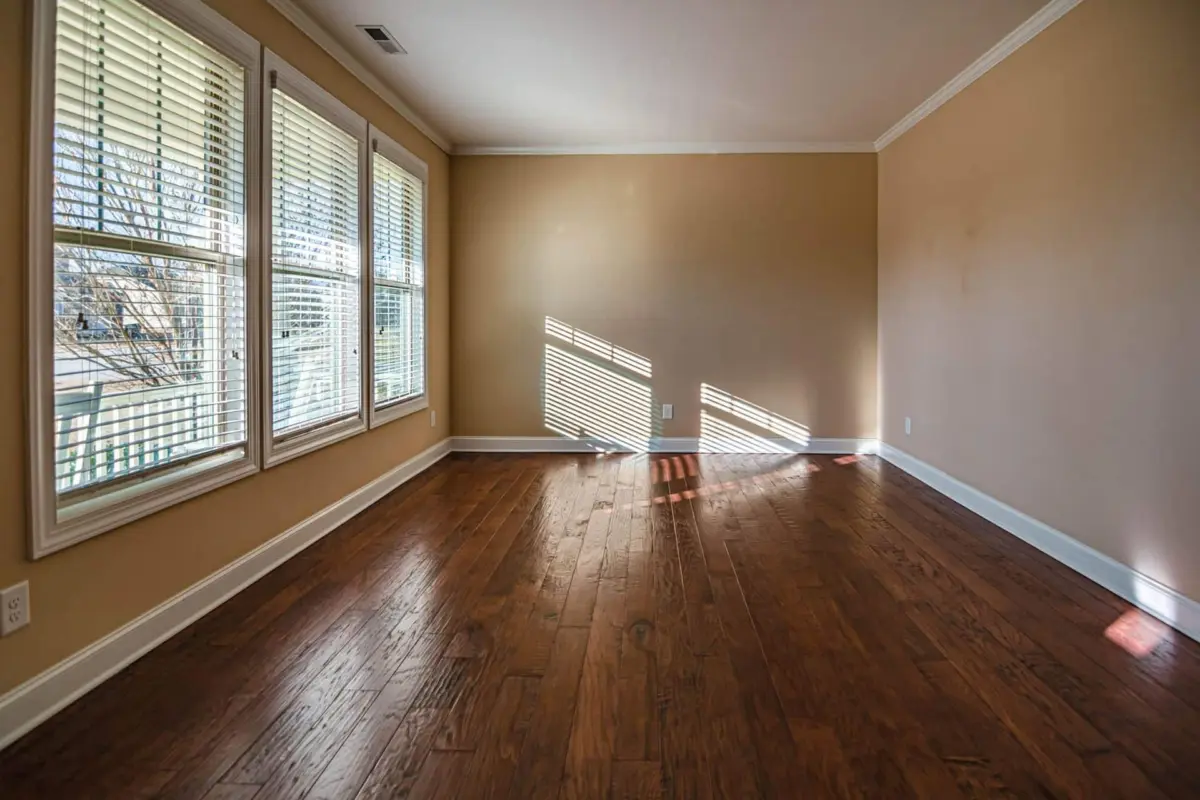
Renting a sparsely furnished apartment designed for a simple transition, Mia arrived with only three square feet of belongings to distribute among the minimalist stock furniture provided by the landlord. Living in a spare, unfamiliar space has since offered unexpected insights into the psychology of clutter, the nature of minimalism, and the profound effects of environment on human health and productivity.
The move forced an immediate confrontation with the accumulation of everyday items. When settling into a temporary furnished space, tenants are often left with hotel-sized portions of toiletries and cleaning supplies. Having brought her own essentials, Mia viewed these remnants as extraneous extras. In the past, a default hoarding mentality might have prompted her to save the miniature products for a hypothetical future occasion. Instead, she chose a philosophy of immediate consumption. Recognizing that these were the lowest-quality versions of everyday goods and that saving them would add no value to her life, she resolved to use them up first. By rapidly depleting these items, discarding the containers, and moving on, she reduced the physical and mental real estate occupied by clutter. The experience transformed her into an even stronger advocate for intentional depletion decluttering than she had been before the move.
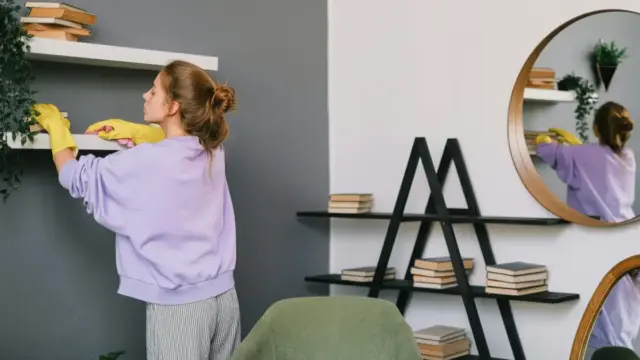
Being a self-described homebody, adapting to an environment devoid of her personal belongings proved challenging. To bridge the gap, Mia integrated her few carried-over mementos into the living space through functional decor. Rather than folding away her colorful throw blanket or stacking her books neatly out of sight on a bedside table, she draped the blanket over the couch and propped her books throughout the apartment. By allowing functional items to serve a dual purpose—providing both utility and a comforting, homier aesthetic without introducing extraneous clutter—she warmed up the sparse interior.
The role of personal items in a minimalist environment is further highlighted by a simple birthday gift from a visiting friend: a small wooden spoon. Managing sensory issues that make the clinking sound of metal silverware nearly nauseating, Mia had initially relied on saved plastic takeout cutlery to avoid using the metal utensils provided by the apartment. The gift of a perfectly sized wooden spoon changed her routine entirely. Combined with a single pair of chopsticks, the spoon rendered the remainder of the apartment’s utensil drawer completely useless. The experience reinforced a core minimalist principle: possessing a single item that serves its purpose perfectly yields far greater satisfaction than maintaining a drawer full of unused alternatives.
Beyond physical possessions, the relocation drastically altered Mia’s social landscape. With a local social calendar vastly reduced compared to her life back home, her schedule opened up considerably. While acknowledging a deep affection for her friends and a natural human contradiction between craving social connection and fighting against the effort required to maintain it, she discovered that the resulting alone time proved remarkably energizing.
Freed from extensive social obligations and unburdened by a complex living space, daily routines became effortless. Morning gym walks, maintaining a spotless apartment, and preparing healthy meals all fell naturally into place. Furthermore, the newfound mental space allowed her to get significantly ahead on professional responsibilities, including managing a business acquisition she completed a few months prior, which had previously kept her quiet. Although she intends to reintroduce social activities—such as game nights with old friends and resuming fight training now that her energy has returned—the period of isolation demonstrated the profound productivity and energy unlocked by solitude.
Yet, the experiment also highlighted the relentless velocity at which possessions accumulate in modern life. Within just three weeks of arrival, the subtle threat of creeping clutter became apparent. Following a recent birthday, new gifts—including a small trampoline positioned nearby while she types—quickly claimed physical space. A kitchen cabinet filled rapidly with saved plastic food storage containers accumulated in just weeks. Observing this dynamic underscored a fundamental reality of domestic life, particularly within the United States: the natural flow of items is perpetually directed inward into the home. Without establishing an equally deliberate flow outward, belongings inevitably pile up indefinitely. Consequently, she has resumed active decluttering practices, leaning on passive techniques that have proven remarkably effective when applied early.
As for the core question driving the experiment—whether relocating would alleviate her persistent health issues—the early results are promising. The change of environment has produced the first genuine improvement in her health in years. However, the revelation carries complex implications, confirming that her primary residence was likely the source of her physical struggles. That realization presents a new challenge to address utilizing the mental clarity gained during her time away.
While the experiment continues, plans are already underway for upcoming community initiatives, including a holiday decluttering challenge for her audience. For now, Mia remains settled in her temporary surroundings, continuing to process the lessons learned from a Prius trunk full of belongings, a single wooden spoon, and the restorative power of space.