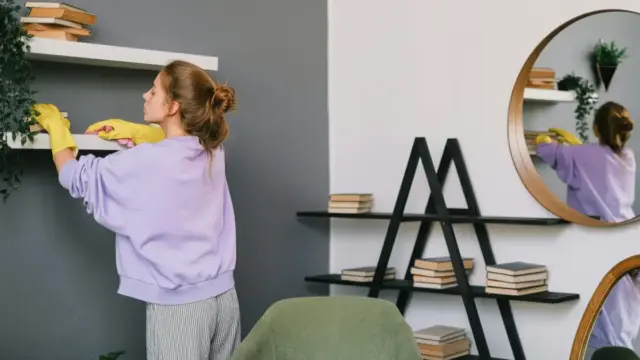

Settling into a sparsely furnished rental apartment designed for a seamless transition, Mia spent her first afternoon integrating her minimal personal belongings among the stock furniture provided with the unit. Living in such a stripped-down, spare environment immediately drew parallels to her previous experiences with cluttered spaces, offering a fresh lens through which to examine daily habits, consumer accumulation, and the mental weight carried by physical possessions.
The initial phase of the relocation required an immediate confrontation with deeply ingrained consumption patterns. Rather than succumbing to a traditional hoarding mentality—which often prompts people to save hotel-sized toiletries or minor conveniences for hypothetical future scenarios—the move forced a pragmatic shift toward simply consuming what was readily available. By using up subpar everyday items and discarding the empty containers immediately, she eliminated unnecessary visual clutter and mental distraction, reinforcing a philosophy of active consumption rather than passive accumulation.
Being a self-described homebody, adapting to unfamiliar surroundings also demanded creative approaches to interior comfort. By displaying the few cherished personal items she brought along—such as draping a colorful throw blanket over the couch rather than tucking it away, or scattering books throughout the living space instead of stacking them on a bedside table—she transformed a sterile rental into a welcoming environment. This integration of functional decor allowed everyday items to serve a dual purpose, warming the space without introducing redundant clutter.

Personal accommodations extended to daily routines and sensory management. Addressing personal sensory sensitivities—specifically an aversion to the clinking sound of metal silverware that often triggers nausea—led to a reliance on disposable plastic cutlery during her first days in the apartment. However, the situation improved significantly when a visiting friend gifted her a small wooden spoon for her birthday. Paired with a set of chopsticks, the single utensil perfectly suited her needs while carrying sentimental value, rendering an entire drawer of traditional kitchen silverware entirely obsolete and demonstrating the superiority of a single, highly functional item over a collection of unused alternatives.
The relocation also brought a dramatic, albeit initially jarring, shift in social dynamics. With a local social circle significantly smaller than the one left behind, Mia found herself navigating a sparse social calendar. While acknowledging a deep appreciation for her friends back home, she noted that the quiet atmosphere proved surprisingly energizing. This abundance of solitude supported a frictionless daily routine, featuring effortless morning walks to the gym for workouts, a consistently spotless living space, and dedicated time for preparing wholesome, nourishing meals.
The newfound mental space and streamlined schedule also accelerated professional obligations. Having acquired a business a few months prior, the resulting tranquility allowed her to catch up substantially on operational tasks while finally carving out the bandwidth to document her experiences. While plans are already underway to reintegrate social activities and physical training into her routine now that she is fully settled, the initial period of isolation highlighted the profound productivity and restorative power of intentional alone time.
Yet, the experiment also underscored how rapidly physical accumulation can occur, even within a minimal framework. Just three weeks into the stay, the subtle influx of new items—including birthday gifts, a trampoline, and a collection of saved plastic food containers gathered in the kitchen cabinets—illustrated the relentless, natural inward flow of goods characteristic of modern households. Without a conscious, counterbalancing outflow, possessions quickly accumulate, reinforcing the ongoing necessity of passive decluttering strategies to maintain a manageable environment.
Most importantly, the relocation experiment has yielded tangible results regarding her chronic health concerns. The tentative findings indicate a genuine alleviation of symptoms, marking the first substantial health improvement observed in years. While the realization that her permanent home may be contributing to her physical distress introduces complex logistical challenges, the newfound mental clarity gained during the experiment provides a solid foundation for addressing the issue. As she prepares for upcoming seasonal projects, including a planned holiday decluttering challenge, the temporary relocation has proven to be both a successful health intervention and a valuable exercise in intentional living.