
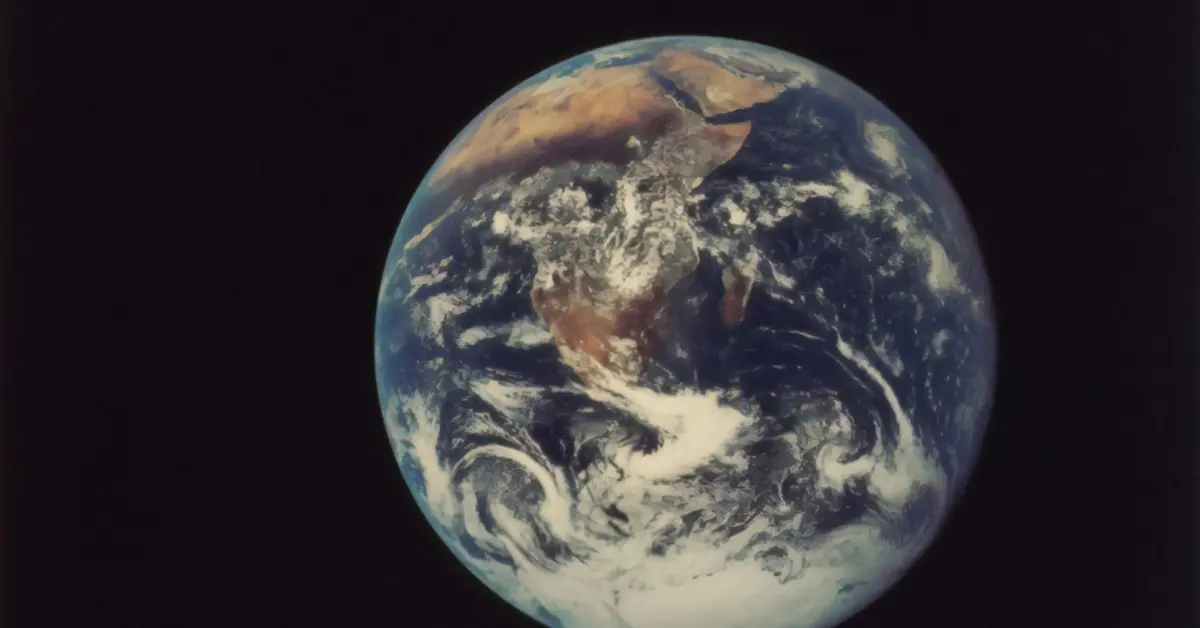
Yet, zoom back into the terrestrial reality, and that illusion of universal harmony shatters instantly. A close-up view reveals a heartbreaking paradox: intense violence directed at individuals purely because of where they live, the systematic destruction of homes, schools, and communities, and human beings killing human beings.
It is all a matter of perspective.
For the vast majority of human history, people lived in small, localized groups, relying on families, clans, and tribes for survival. The modern concept of a global sense of belonging may have held little practical meaning for populations whose entire lives were anchored close to their birthplaces. Pre-industrial humans naturally maintained a limited footprint, leaving a relatively modest impact on their planetary home and its fellow inhabitants. Even so, an intimate sense of belonging to the earth itself was likely high for people who were exposed daily to both the providence and the cruel indifference of their natural surroundings. In those eras, the Earth was simultaneously a protector and a threat; living disconnected from the natural world simply was not an option.
Looking back through the historical record, however, humanity is met with long, recurring chapters of belonging disruption, displacement, and dispossession. Modern society’s ongoing struggles with inclusion and exclusion are far from novel. Indeed, human history demonstrates that belonging intensely to one specific group has frequently carried the dangerous psychological corollary that another group must be opposed or destroyed.
This paradox of human attachment is explored in depth by researcher Dr. Kelly-Ann Allen in her forthcoming chapter, "Global Belonging: From Conflict and Exclusion to Untapped Potential," set to be published in the 2026 volume The Self in Context: Pathways to Flourishing, Learning, and Well-being. Writing on the complex social tensions that plague modern societies, Allen observes that conflicts and violence of this nature often arise from individuals who feel an exceptionally strong, exclusionary sense of belonging to their own tribe, rather than from those who lack a sense of belonging altogether, as one might casually assume.
Feeling Ourselves as Part of the Earth
Those who study the psychological mechanics of belonging cannot simply operate under the comforting assumption that strengthening in-group ties will automatically make people’s lives better, safer, or happier. Traditional psychological research has largely tended to examine belonging through dyads, triads, and localized groups or formal organizations. But what happens if scholars expand that lens to consider our ultimate collective home, the Earth itself? Does the mere fact of sharing a physical planet inherently translate into a feeling that we all belong to it together?
True global belonging requires experiencing ourselves as an integral, living part of the Earth. It is the deep-seated psychological feeling that the entire planet is somewhere we fundamentally belong. Cultivating a robust sense of belonging to the Earth should naturally encourage active care for the planet and our fellow human beings. Furthermore, it should help engender a genuine concern for the safety, dignity, and belonging of others, even in circumstances where our own personal security remains entirely unthreatened.
Importantly, feeling a part of the Earth does not require people to displace or abandon their existing attachments to a nation, culture, or local community. These traditional cultural and national ties remain deeply important to human identity. However, the terrestrial atmosphere does not discriminate; it does not care where carbon dioxide emissions originated. At a fundamental, existential level, humanity must urgently strengthen its overarching sense of global belonging, regardless of what political factions or demagogues preaching fracture and social disruption would have the public believe. Our very survival as a species depends upon it.
The Overview Effect
To understand how this expansive mindset might be unlocked, researchers often point to a unique psychological phenomenon experienced by those who leave the confines of the atmosphere entirely. Zooming out far enough to see the Earth as a whole reveals a profound perceptual shift. Astronauts consistently describe feeling a radical, lasting surge of connection to the Earth and its inhabitants after viewing the planet from the vantage point of space. These transformative connections offer a powerful blueprint for how to imagine the planet as a place where everyone truly belongs.
This cognitive shift has a well-established name. In her research, Allen highlights the concept termed the "Overview Effect" by writer Frank White in 1987, a term coined after White conducted extensive interviews with spacefarers. The Overview Effect describes the sudden, profound awareness that emerges from viewing Earth as a single, shared home. This extraordinary experience has been repeatedly linked to lasting changes in personal values, heightened environmental concerns and pro-environmental behaviors, and an expanded psychological identification with humanity as a whole and with the planet itself.
Despite the power of the Overview Effect for astronauts, behavioral researchers still do not fully know whether this specific type of expansive belonging can be successfully cultivated in everyday life, or whether brief exposures to global imagery can create an enduring, resilient sense of global belonging. Moving forward, researchers will need to rigorously examine whether fostering global belonging can genuinely influence the difficult choices societies make, particularly during periods of war, geopolitical conflict, and widespread human suffering.
Ultimately, traditional forms of belonging—to family, culture, and country—can safely coexist with the higher-order understanding that those outside our immediate social constructs also belong to our shared humanity. Exclusionary nationalism and sectarian politics, for instance, far too often come at the heavy cost of ignoring how others can and should belong in the exact same spaces. The world does not need every individual to agree on every issue or share the exact same political beliefs.
When viewed from above, humanity still looks remarkably like a collective, cohesive ant colony. Yet, zooming back into the ground level reveals real people whose global belonging is not only constantly threatened, but in many cases entirely annihilated. This stark contrast raises a fundamental question for the future of civilization: What could the world truly look like if humanity cared enough for itself not to destroy the world or the people living within it? And would that not be the exact type of peaceful, inclusive world that the vast majority of people would ultimately choose to live in?