
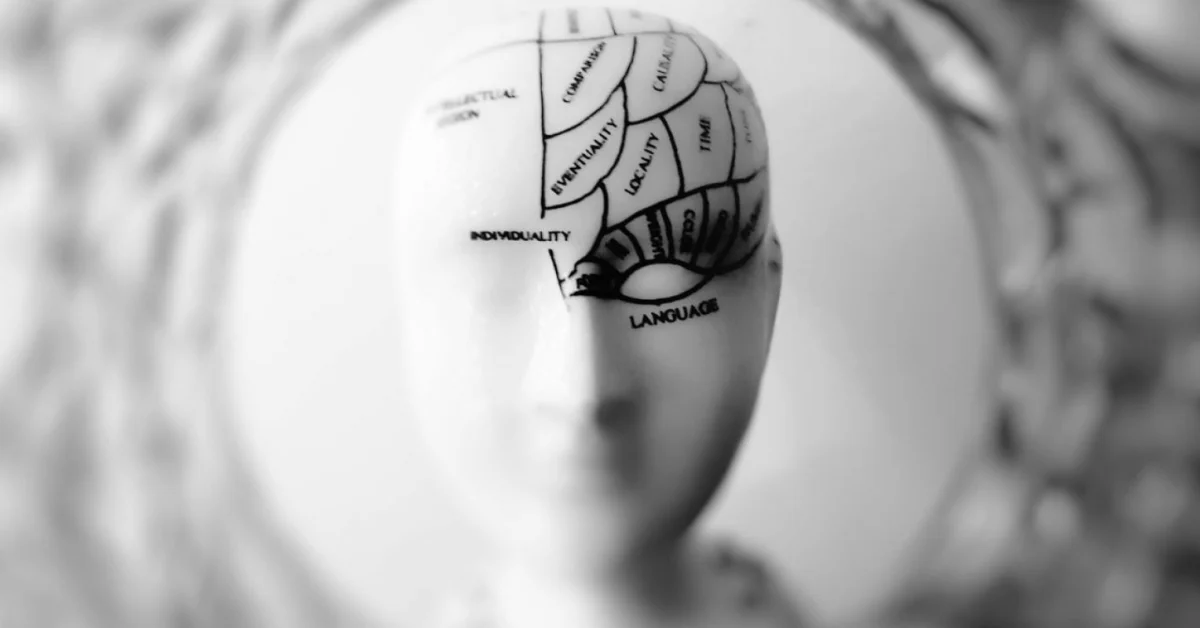
In the modern age, advanced medical imaging has brought the brain into the public eye like never before. Many people have seen vibrant fMRI scans or glowing PET images of their own or others’ heads flashing across computer screens or medical textbooks. However, as striking as these colorful scans are, they remain simplified pictures rather than the tangible reality of living biology. They do not show the microscopic fats and vital proteins, the delicate glial cells, or the firing networks of neurons that truly power human consciousness.
Enter neuroscientist Eric H. Chudler and his new book, Neuropedia, a compact mini-encyclopedia dedicated to all things related to the brain. Spanning just 150 pages and brought to life through the illustrations of Kelly Chudler, this small-format book successfully elucidates complex brain structures, essential biological functions, and various neurological conditions. Alongside these anatomical and physiological breakdowns, the book features insightful entries dedicated to the luminaries of neuroscience history, all written in clear, accessible prose designed for the general public.
As Chudler explains of his core philosophy behind the project, he has deliberately tried to include entries that will stimulate intellectual curiosity, help everyday readers become comfortable and familiar with the fundamentals of neuroscience, and ultimately motivate them to learn more about the biological engine of the mind. The overarching aim of the publication is to introduce lay readers to crucial scientific concepts while maintaining strict factual accuracy and infusing the material with a healthy dash of wonder and fun.
Naturally, a book of this size makes no claim to be a comprehensive or exhaustive account of the entire field. As Chudler explicitly notes, his primary intention is to open a window to the ongoing process of discovery that occurs inside research laboratories every single day, bringing the excitement of active science directly to the bookshelf.
The book’s illustrations range widely, shifting seamlessly from the strictly instructive to the whimsical and fanciful. In doing so, they actively invite readers to combine academic curiosity with the profound wonder that naturally arises when contemplating those elusive three pounds of biological tissue that manage to animate our entire existence, enabling us to live, perceive, and function in a complex world.
Explaining the Corpus Callosum and Redundancy in the Brain
To understand how the book bridges the gap between complex biology and accessible reading, one need look no further than its anatomical entries. For example, Chudler describes the corpus callosum simply and effectively as a "large collection of axons that connect the left and right hemispheres of the brain." This vital biological structure contains approximately 200 million individual axons crossing continuously from side to side, working tirelessly to help coordinate complex sensory processes and higher cognitive functions between the brain’s two halves.
Observations about human anatomy like this one, however, rarely stay purely medical for long; they can quickly turn deeply philosophical. Statistically, about one in every 4,000 people is born completely without a corpus callosum, a congenital condition known as agenesis. Remarkably, some individuals born with this missing structural bridge experience no noticeable symptoms at all during their lifetimes, while others face significant difficulties with vision, language processing, or motor coordination.
This clinical reality leads directly to a fascinating discussion about redundancy in the brain. If a person can live an entire life missing what Chudler aptly calls a "neural superhighway" without ever displaying noticeable symptoms, there must inherently be other, generally redundant neural pathways performing similar functions behind the scenes.
This built-in adaptability is the case with many different brain structures, and it stands as the primary physiological reason why individuals who suffer traumatic brain injuries are often able to eventually restore lost functions. Other healthy areas and structures can gradually adapt to take over the workload of damaged regions.
This phenomenon immediately raises a profound philosophical question: What is the exact relationship between our physical physiology and our subjective conscious experience? Modern neuroscience is only just beginning to hazard tentative answers to this ancient riddle, and those emerging answers inevitably lead to even deeper philosophical questions about the nature of the mind.
That is precisely where academic and philosophical resources, such as the Stanford Encyclopedia of Philosophy, become extraordinarily useful. In a detailed entry focused on the phenomenon of split brains, the encyclopedia explains that corpus callosotomies—surgical procedures generally conducted to treat the debilitating symptoms of severe seizure disorders—can result in a dramatic splitting of human consciousness, sometimes occurring entirely without the patient realizing it.
To illustrate this strange consequence, imagine presenting the compound word “TAXABLE” on a visual screen directly in front of a split-brain patient in such a way that the syllable “TAX” appears only to their left visual field and the syllable “ABLE” appears only to their right. When the patient is asked to verbalize out loud what word they are currently being shown, their verbal response—which is typically controlled predominantly by the left hemisphere of the brain—will reliably be "ABLE."
However, if that same patient is simultaneously instructed to write down what they see using their left hand, which is controlled predominantly by the right hemisphere, they will typically and spontaneously write down "TAX." What, then, are the long-term implications for the personal identity of an individual whose unified consciousness has been fractured in such a profound way?
Comparing Neuropedia and Online Educational Resources
Books like Neuropedia provide the essential baseline concepts, leaving curious readers well-equipped to follow up on complex questions that bridge both neurology and philosophy. For deeper dives, readers can turn to dedicated digital platforms like Stanford’s online repositories or Neuropedia.net, an open-access educational platform designed specifically to provide structured scientific content through a formalized curriculum.
Yet, digital resources of this nature can occasionally feel overwhelming to the casual learner, given their vast wealth of hyperlinked information spanning disparate and interconnected topics. In stark contrast, the analog, physical nature of Chudler’s book makes for an entirely different kind of learning experience. The information it provides is contained, quite literally and definitively, between its protective front and back covers.
While the book may spark immediate curiosity and offer brief, digestible explanations, if a reader ultimately decides they want to learn more about a specific topic, it provides a solid foundation that can help focus a subsequent internet search. Nonetheless, the book’s lively prose and elegant, hand-crafted illustrations make for an analog reading experience all its own. It serves as a welcome antidote to the modern fatigue of endless clicking through the vast, often contradictory, and occasionally unreliable expanse of the internet.
In an era dominated by digital distractions, this is a book that actively invites its readers to focus, slow down, and reflect, rather than simply click and scroll through fleeting information feeds.
With rapid advances in neuroscience frequently making headlines in the news and finding their way into a wide array of contemporary movies and television shows, modern audiences are increasingly surrounded by the specialized language of brain science. Yet, amidst this cultural saturation, the underlying question remains: What does it all mean for our daily lives?
Eric Chudler’s spare, carefully crafted compendium serves as a uniquely useful guide to understanding that specialized language. It will almost certainly prove more accurate and lead to a much greater depth of understanding than the vast majority of pop culture representations of the human brain found in mainstream entertainment today.