
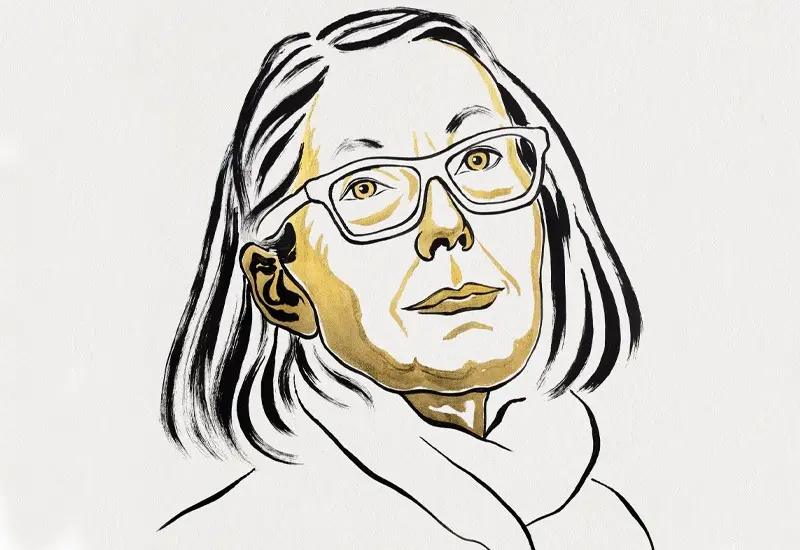
True to her unconventional persona and deeply poetic engagement with the natural world, the permanent secretary of the Swedish Academy reached Carson by phone to deliver the life-changing news while she was in Iceland. True to form, the notoriously private and singular writer was simply "listening to the wind" when the call came through—a detail that immediately resonated with admirers and scholars worldwide as a quintessential moment for an author whose work so frequently bridges the ancient elements and the modern mind.
Trained deeply as a classicist, Carson has long balanced her academic pursuits with her literary output, maintaining a biography that famously and simply states she "teaches ancient Greek for a living." Over a decades-long career, she has published a vast and varied array of books of poetry, criticism, and translations that continually challenge the boundaries of how literature is read, packaged, and experienced. Her recent works include Wrong Norma, published by New Directions in 2024, which earned widespread critical acclaim as a finalist for the National Book Award and a winner of the National Book Critics Circle Award.
Her bibliography is marked by landmark publications that have redefined contemporary verse and narrative. Among them are Float, published by Alfred A. Knopf in 2016; Red Doc>, released by Knopf in 2013; and The Beauty of the Husband: A Fictional Essay in 29 Tangos, published by Knopf in 2001, which earned her the prestigious T.S. Eliot Prize for Poetry. However, her breakthrough into the broader cultural consciousness arrived with her 1998 novel in verse, Autobiography of Red, also published by Alfred A. Knopf. The work remains a touchstone of modern literature, celebrated not only for its lyrical brilliance but also for its unexpected humor and emotional resonance in reimagining the ancient myth of Geryon and Herakles.
In addition to her original poetry and essays, Carson has made significant contributions as a translator from classical Greek, bringing ancient voices into sharp, modern relief. Her notable translation work includes If Not, Winter: Fragments of Sappho, published by Knopf in 2002, which captured the fractured, haunting beauty of the ancient Greek lyric poet with unmatched precision. Furthermore, her critical work, such as the long-form essay Eros the Bittersweet, published by Princeton University Press in 1986, has long served as an essential text for students and writers exploring the complexities of desire, longing, and classical philosophy.
Carson’s writing is widely recognized for its playful and frequently ironic tone, characterized by a relentlessly experimental spirit that crosses traditional boundaries. Her books are not merely genre-bending; they are form-bending artifacts that challenge the physical and visual conventions of the book format itself. A prime example of this radical approach to publishing is Nox, released by New Directions in 2010. Presented as a unique box containing an accordioned, sprawling elegy dedicated to her estranged brother following his death, Nox combined photography, collage, translation, and handwritten notes to create an entirely physical mourning process translated onto the page.
For readers seeking an entry point into Anne Carson’s expansive and intellectually rigorous literary universe, critics and booksellers frequently point toward Autobiography of Red. Despite its mythological foundations and poetic structure, the novel in verse offers an unexpectedly funny, deeply human, and accessible narrative that showcases the author’s unique ability to merge antiquity with contemporary emotional landscapes. With this 2026 Nobel Prize in Literature, the Swedish Academy has cemented Anne Carson’s legacy as one of the most vital, inventive, and enduring voices of our time.