
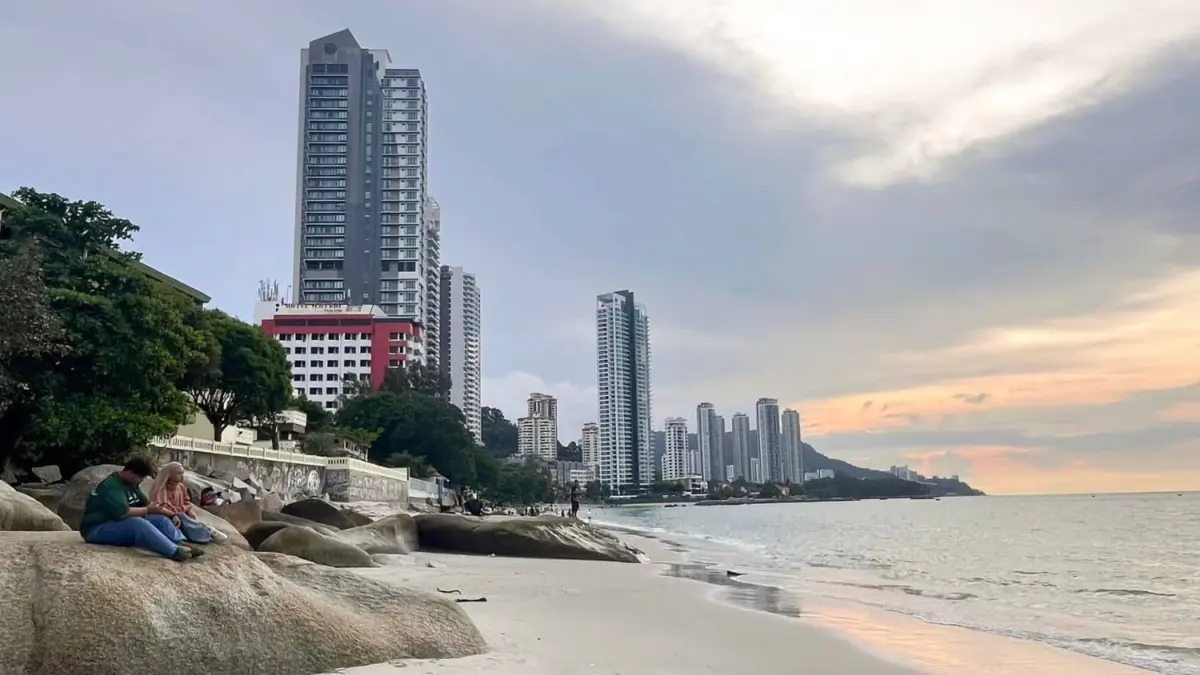
That, according to seasoned property specialists, is precisely the moment to turn around and walk back inside.
This caution is not born of cynicism, nor is it meant to suggest there is anything inherently wrong with desiring a beautiful view. After all, retirement should rightfully contain elements that bring daily pleasure and reward a lifetime of labor. However, real estate veterans emphasize that almost everything which determines whether a foreign property will remain a practical, comfortable home in ten or twenty years lies behind the buyer, not in front of them. It depends entirely on mundane realities: how easy the building is to physically access, whether daily errands can be accomplished on foot, precisely where the nearest emergency medical facility is located, and—eventually—who else will step forward to purchase the asset when the time comes to exit the market.
These hard-nosed considerations surface repeatedly in conversations with property professionals operating on opposite sides of the Southeast Asian region. Serena Tan of PG Property Angel, a registered estate agency in Malaysia, and Andy Dyett of Hua Hin Property, who has spent more than two decades navigating the intricacies of the Thai property market, both report that overseas buyers routinely allow emotional first impressions to eclipse long-term operational and legal realities.
Try an Ordinary Tuesday
Part of the underlying difficulty with purchasing property abroad stems from the inherent nature of the inspection trip. Prospective buyers almost always experience a destination at its absolute best: the weather is idyllic, schedules are flexible, and an accommodating agent is driving them in an air-conditioned car between attractive, master-planned developments. That curated experience bears little resemblance to what actually living there on an ordinary Tuesday will feel like.
To counter this psychological bias, real estate experts advise prospective buyers to step away from the shimmering pool and the sunset for at least an hour and force themselves to engage in mundane, everyday tasks. A buyer should attempt to locate a local pharmacy, walk somewhere to figure out lunch logistics, and seriously evaluate how they would manage getting home loaded down with groceries in a torrential tropical downpour.
Furthermore, neighborhood assessments should never be confined to dry, sunny afternoons. Buyers are urged to investigate what happens after several hours of heavy monsoon rains, whether the access road outside floods, and whether emergency services or grocery runs remain unimpeded during severe weather. Finding the nearest major hospital—rather than lazily assuming the wider city possesses good healthcare infrastructure—is a critical step. Crucially, buyers are encouraged to mentally simulate performing all of these daily routines while dealing with physical limitations, such as a bad knee or reduced mobility.
This exercise is not about morbidly assuming an individual will inevitably be frail by the age of eighty; plenty of retirees maintain remarkable vigor and active lifestyles well into their later years. Instead, it is an acknowledgement that a home purchased at age sixty may need to comfortably accommodate several distinct phases of life: today’s energetic version of the buyer, an older version who might prefer not to drive after dark, and possibly, eventually, an individual living there entirely alone.
The Location That Looks Fine on a Map
In Malaysia, Serena Tan sees these location compromises play out frequently in Penang. Expatriate demand has historically concentrated tightly around established enclaves such as Tanjung Bungah, Tanjong Tokong, Gurney Drive, and George Town, alongside newer additions like the Andaman Island development. Further south on the island, buyers can generally find a wider array of options and higher-density developments, though some of these southern pockets are considerably less walkable to everyday amenities and sit well outside the traditional expatriate comfort zones.
Even locations that boast obvious visual charm can present hidden logistical traps. Batu Ferringhi offers the quintessential sea views that many international buyers picture when dreaming of a Malaysian retirement, yet depending on the exact positioning of a property, the driving time to a major regional hospital can easily stretch to thirty or forty minutes. That distance may feel entirely trivial to a healthy sixty-year-old, but it assumes critical importance two decades later.
A similar strategic trade-off is currently unfolding around Penang’s heavily anticipated, planned Light Rail Transit (LRT) line. Market interest in the surrounding neighborhoods is undeniably rising, and Tan fields an increasing volume of enquiries as a result. However, her practical experience shows that foreign buyers often investigate these transit zones closely, only to decide against purchasing there. Infrastructure that makes sound economic sense to an investor does not automatically translate into a suitable, peaceful environment for a retiree.
While most modern condominiums are equipped with elevators, genuinely age-proofed housing involves considerably more than vertical transport. Essential features such as step-free access across all thresholds, wider interior doorways, and adaptable bathrooms remain difficult to source outside of premium developments. This reality is precisely why Tan believes an effective estate agent should occasionally challenge a buyer’s preconceived notions rather than merely facilitating a quick sale.
The Legal Structure Matters Too
While physical logistics present one category of challenge, legal structures introduce an entirely different dimension of risk. In Thailand, where Andy Dyett operates, property ownership laws are substantially more restrictive for foreign nationals than they are in Malaysia.
Foreign buyers can generally own qualifying condominium units on a freehold basis, subject strictly to the statutory foreign ownership quotas that govern apartment buildings, and they can also legally own the physical structure of a house or villa. What foreign nationals generally cannot own is the underlying land itself, which is typically secured through a long-term leasehold arrangement. Over the years, some foreign buyers have attempted to bypass these land-ownership boundaries by utilizing complex nominee corporate structures.
Thai regulatory authorities have noticeably widened their crackdown on suspected business nominee arrangements, a matter of public record that underscores the tightening regulatory environment. Dyett’s primary concern centers on how foreign buyers weigh the mechanics of holding property in Thailand. He emphasizes that the critical distinction lies between fully legitimate foreign ownership structures and arrangements where a local individual or entity effectively stands in as a proxy for the actual foreign owner. In his view, it is entirely insufficient to merely confirm that the paperwork appears technically sound on the surface; buyers must carefully examine the underlying spirit of the law.
Additionally, Dyett anticipates further regulatory guidance and scrutiny surrounding leasehold arrangements. While distinct from nominee ownership issues, lease terms are vital for retirees because a contract that appears perfectly adequate at age sixty requires a completely different calculus when exit strategies, estate inheritance, and resale values twenty years down the line enter the equation.
His broader message is not a blanket warning against purchasing real estate in Thailand, but rather a narrow cautionary note: the historical prevalence of a particular holding structure does not guarantee that it will withstand future regulatory oversight. Commenting on the heightened local attention directed at ownership frameworks, Dyett notes that conditions are shifting rapidly in Hua Hin, though he still considers that market relatively stable compared to some of Thailand’s more informal island destinations, where land restrictions and verbal arrangements are notoriously difficult to unravel.
The Exit You Are Not Planning For
Both property specialists note that conversations inevitably circle back to the topic of resale—the precise phase of the property journey that most international buyers tend to gloss over entirely. Tan observes that foreign purchasers routinely operate under the comforting assumption that they will easily be able to liquidate their assets when the time comes, without ever stress-testing that hypothesis against market realities.
This liquidity equation is rarely a simple matter of contrasting large properties with small ones. For instance, ultra-large condominiums spanning three thousand square feet or more represent a distinct market niche; while they attract a severely restricted pool of potential buyers, their overall supply is likewise genuinely limited, proving that a niche asset does not automatically equate to an illiquid one. Successful resale planning requires weighing both sides of that supply-and-demand ledger rather than relying on intuitive assumptions formed in a home country’s domestic housing market.
A Good Decision Without Necessarily Being a Great Investment
Navigating these complexities does not imply that purchasing property overseas is inherently flawed, nor does it mean that destinations like Penang and Hua Hin are anything less than wonderful places to reside. If an individual purchases an apartment at age sixty, wakes up to an inspiring coastal view for twenty consecutive years, builds a vibrant social network, and eventually sells the property for roughly what they paid for it, was that a bad financial investment? Perhaps from a strict spreadsheet perspective. But was it a bad life decision? Not necessarily, as a home provides returns in lifestyle and well-being that defy traditional accounting.
The fundamental error lies in treating today’s emotional pleasure as definitive proof that a property will indefinitely suit future needs, or in assuming that because a buyer fell instantly in love with a location, subsequent buyers will inevitably do the same.
When those balcony doors finally slide open and the sea breeze carries the promise of morning coffee, it is entirely appropriate to enjoy the moment. But before signing on the dotted line, buyers would do well to inspect the elevator reliability, the condition of the access road, the physical effort required to walk to local shops, and the actual transit time to emergency healthcare. The ideal retirement property is not simply the one that commands an immediate emotional surrender at age sixty, but the one engineered to comfortably sustain its occupant decades later.