The culmination of that covert journey is captured in her riveting new book, Marshmallows Are Their Favorite: Undercover at a Primate Lab. In the text, Oliver details the daily realities of life inside a primate lab, offering a unique and largely untold narrative that centers both on the facility’s nonhuman residents and the complex, often conflicted humans who work alongside them. Recently, researcher and author Marc Bekoff sat down with Oliver to discuss the motivations behind the book, the emotional toll of undercover investigations, and the broader implications of animal research.
Why Lindsay Oliver Wrote ‘Marshmallows Are Their Favorite’
When asked about the genesis of her book and its striking title, Oliver explained that her primary motivation stemmed from a profound sense of obligation.
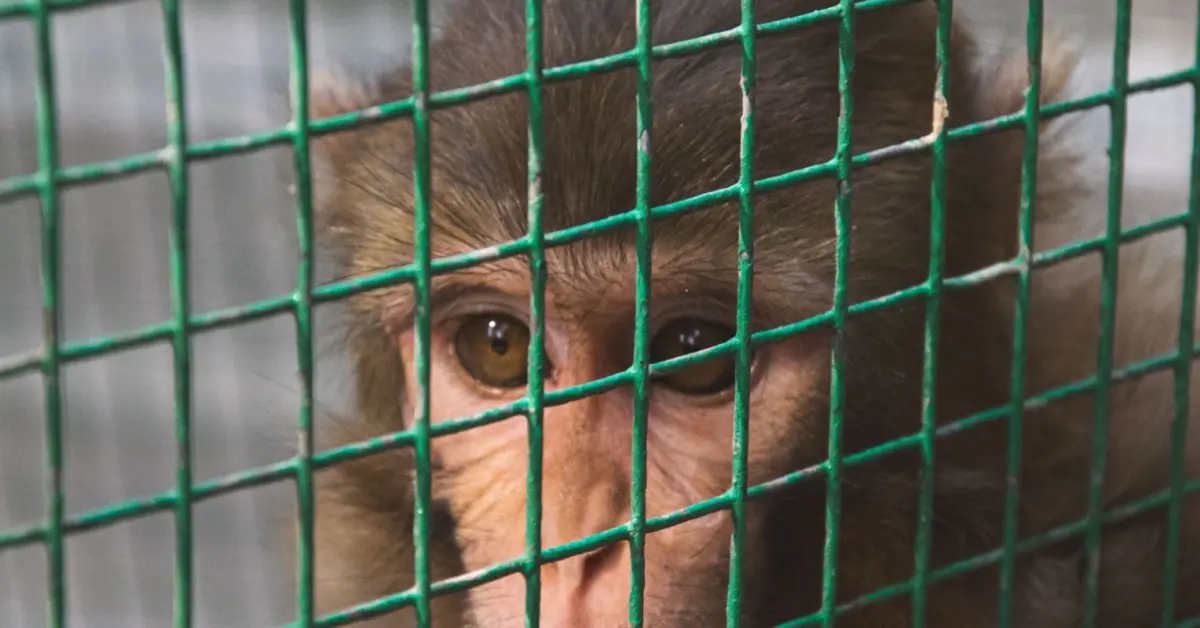
"Honestly, I wrote this book because I owe it to the monkeys," Oliver said. "When I first walked into that facility and saw cages lining the cinderblock walls, with monkeys watching me through the bars, I knew almost immediately that I need to write about it. Most people will never be allowed inside a primate lab, and I felt a heavy responsibility to tell these stories."
The title itself was chosen with deliberate care to humanize the animals before a reader even opens the cover. Oliver noted that everyone has personal favorites, and introducing the concept through a preference for marshmallows immediately signals that the animals are sentient individuals with distinct personalities, opinions, and things they look forward to in their restrictive environments.
From Childhood Veterinary Aspirations to Undercover Work
Oliver’s path to becoming an undercover investigator was shaped early in life by a traditional love for animals. Like many children, she aspired to become a veterinarian. However, her collegiate studies provided her with a jarring first exposure to the realities of animal testing and the mandatory practices required for veterinary careers.
Recalling her early experiences, Oliver noted the dissonance she felt as a teenager who had once walked out of a high school science class to protest dissecting a frog. Finding herself unable to reconcile the demands of traditional veterinary medicine with her ethical stance, she walked away from that career path entirely and pivoted toward undercover animal cruelty investigation. Marshmallows Are Their Favorite chronicles her very first laboratory case—an environment where she ultimately formed deep and unexpected connections with the animals confined behind locked doors.
Reaching a Diverse Readership
When considering the audience for her book, Oliver aims to transcend traditional ideological divides. While acknowledging that "everyone" might sound like an ambitious answer, she believes the monkeys deserve a wide-reaching narrative. She hopes to engage readers who would never naturally pick up a book about animal testing, drawing them in through the gripping elements of an undercover operation: covert cameras, the maintenance of a dangerous double life, close calls with detection, and the surprising relationships she forged with her coworkers.
Crucially, Oliver also hopes the book resonates with individuals currently working inside research facilities. This includes workers who feel privately conflicted about their duties or who have been discouraged by colleagues who claim that empathy makes them ill-suited for the job. She pushes back against that notion, while also addressing readers who might find the subject matter too emotionally heavy to confront, encouraging them to view the book as an accessible entry point into a difficult conversation.
The Normalization of the Unimaginable
One of the central themes explored in the book is the psychological phenomenon of what happens when a profoundly wrong situation becomes entirely ordinary. The facility where Oliver worked was situated in the middle of a typical town, surrounded by everyday conveniences like a Target on one corner and a Starbucks on another—yet just steps away, thousands of monkeys remained locked in cages.
Inside the lab, the atmosphere mirrored a conventional workplace, a juxtaposition Oliver found surreal. Employees clocked in, complained about schedules, gossiped, flirted, and planned their weekends while monkeys screamed and pounded on their cage walls. What felt like an extraordinary and disturbing environment to an undercover investigator was treated by staff as just another Tuesday on the job.
This normalization is sustained, in part, by systemic depersonalization, such as identifying the primates by numbers or clinical "subjects." Yet Oliver emphasizes that these are highly intelligent, sensitive beings with complex inner lives. She recalls individual animals like Bo, who eagerly consumed everything offered to him except pretzels, which he would reject by throwing them to the ground as if personally offended. It is through these granular, everyday moments that the true identities of the animals emerge, fundamentally altering anyone who witnesses them.
Similarly, the human employees defied simplistic categorization. While some workers fully embodied the clinical detachment required by the industry, many others cared deeply for the animals, finding subtle ways to improve their daily existence or privately struggling with the moral weight of their jobs.
Oliver also sheds light on the unglamorous reality of undercover investigations. Moving far beyond the sleek portrayals found in spy fiction, her work involved dingy hotels, repetitive microwave meals, and technical equipment that frequently refused to remain covert. Her goal is to bring readers directly inside those doors, allowing them to encounter the animals and workers firsthand and ultimately question how such an environment became normalized in modern society.
A Story from the Inside
Distinguishing her work from conventional literature on the subject, Oliver noted that many existing books analyze animal experimentation through the lenses of science, ethics, or public policy. While those academic and regulatory perspectives remain vital, Marshmallows Are Their Favorite provides an experiential, ground-level view through the employee entrance.
By embedding herself as an inexperienced new technician, Oliver learned facility routines, operated hidden cameras, forged workplace friendships, and attempted to aid the animals without compromising her cover. Readers experience the facility chronologically alongside her, from the initial hiring process down to her final shift. By framing the account as a narrative rather than a sterile report, Oliver highlights the close calls, bizarre workplace dynamics, moments of humor, and complex human relationships that define life inside the testing industry.
Questioning the Scientific Narrative and Future Outlook
Reflecting on whether her book might shift public perception, Oliver expresses optimism that increased awareness will prompt a critical re-evaluation of animal use in research. Before working in the lab herself, she knew very little about the day-to-day operations of animal testing, and the experience impacted her on a profound level.
While acknowledging that the debate often centers on scientific failures, Oliver points out that the foundational justification for the industry—that animal testing is a necessary evil for life-saving medical progress—is increasingly at odds with official data. She highlights the U.S. Food and Drug Administration’s 2025 roadmap for reducing animal testing, which explicitly notes that over 90 percent of drugs appearing safe and effective in animal trials fail to receive FDA approval in humans, primarily due to safety or efficacy shortcomings.
Oliver argues that continuing to rely on predictive methods that fail to accurately reflect human biology ultimately harms animals while delaying genuine medical cures. As scientific methodologies evolve and regulatory bodies like the FDA and the National Institutes of Health begin prioritizing human-biology-based technologies, the central challenge lies in translating progressive policies into everyday practice. Ultimately, Oliver hopes that introducing readers to the individual monkeys behind the numbers will provide the impetus needed to turn awareness into action.