
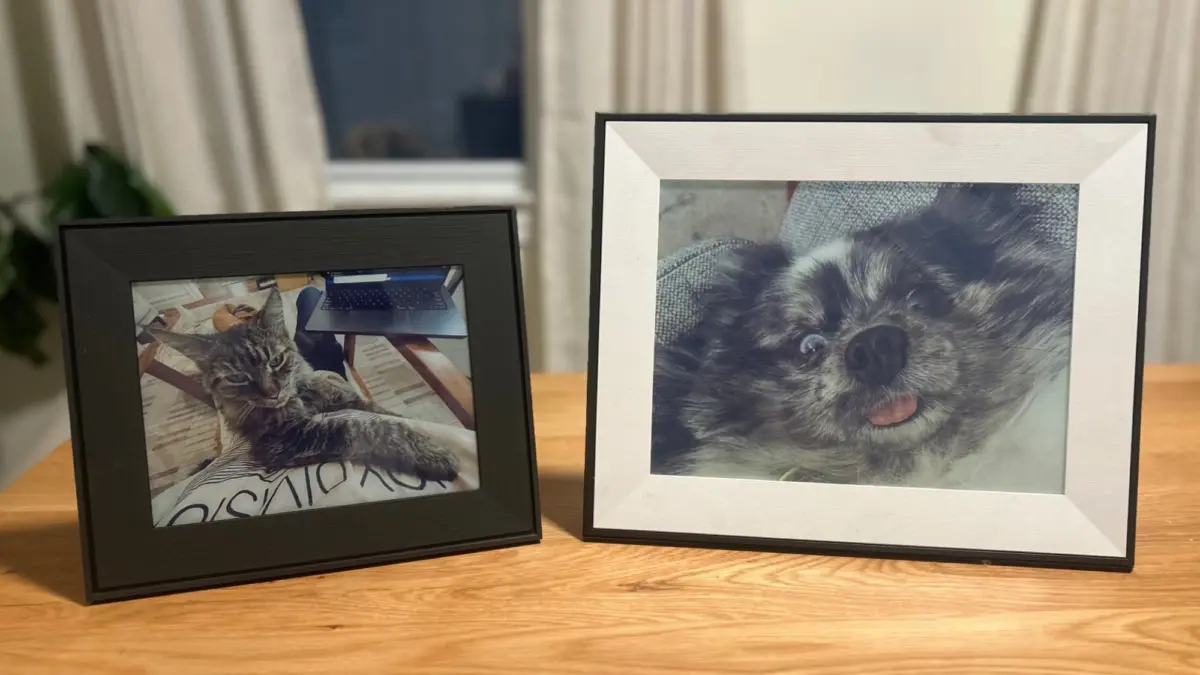
The debut of the original 13-inch Aura Ink marked a notable departure from conventional digital photo frames. While traditional market options rely on vibrant LCD screens that closely resemble wall-mounted tablets, the Aura Ink embraced e-ink technology. This approach mirrors the low-power screen variants found in modern e-readers such as the Kindle Colorsoft, trading aggressive backlighting and high saturation for a matte, paper-like aesthetic.
When reviewing the initial 13-inch model, industry analysts acknowledged its unique appeal while noting several major reservations regarding performance and usability. The second-generation 10-inch iteration addresses some
of those initial pain points, most notably by lowering the barrier to entry with a more accessible price point of $350 while offering a more compact physical footprint that fits more easily into standard home decor.

To understand the appeal of the Aura Ink series, buyers must weigh the fundamental benefits of e-ink technology against its distinct trade-offs. Most standard digital photo frames function essentially as decorative tablets, requiring a permanent connection to a wall outlet and emitting the steady glow typical of LCD panels. While these devices excel at rendering hundreds of vivid, high-saturation images with instantaneous transitions, they do not appeal to everyone who prefers the softer, non-intrusive look of a physical print.
An e-ink frame changes that dynamic entirely. Because electronic paper relies on ambient light rather than emitting its own, images take on a muted, organic quality that closely resembles a traditionally developed photograph resting on a shelf or hanging in a hallway. Furthermore, the technology is remarkably energy-efficient. Instead of drawing continuous power to illuminate a pixel-dense panel, an e-ink display only consumes battery power when the image actually changes. As a result, the Aura Ink frees users from the clutter of visible power cords, requiring a full battery charge only once every few months under normal usage conditions.
The device also integrates smoothly into the broader ecosystem established by Aura’s software platform. Users maintain access to the versatile Aura app, which allows them to curate and load photos from virtually anywhere, with the added convenience of being able to text images directly to the frame for immediate display.
At the same time, prospective buyers must navigate the inherent compromises of electronic paper technology. Unlike liquid crystal displays that transition instantly at the swipe of a finger, the Aura Ink operates at a much more deliberate pace. Switching from one photograph to another takes approximately 45 seconds, a sluggish refresh rate dictated by the physical movement of microcapsules within the e-ink screen.
Color reproduction also presents a unique challenge. While an LCD panel can match digital image colors precisely, e-ink relies on a dithering algorithm to blend tiny colored pixels together to simulate a wide spectrum of hues. Aura claims the technology is capable of rendering millions of colors, but up close, the resulting images retain a noticeable graininess, and colors lack the punchy brilliance found on a smartphone screen.

In addition, because color e-ink screens do not reflect light efficiently on their own, the frame incorporates an internal light source to prevent pictures from appearing excessively dark. This auxiliary light is carefully calibrated to support visibility without destroying the paper-like illusion, but it remains a secondary mechanism compared to traditional backlighting.
The introduction of the new 10-inch model addresses several aspects of the original 13.3-inch device, providing a more manageable physical scale and a more palatable price point for households hesitant to invest in higher-end home tech accessories. The smaller display size enhances the frame’s versatility, allowing it to blend seamlessly into crowded bookshelves, mantelpieces, and side tables where a larger 13-inch frame might dominate the visual space.
Industry observers who track the evolution of e-ink hardware frequently emphasize that these devices serve a specific purpose and require careful consideration before purchase. Technology commentators routinely advise consumers to understand the functional boundaries of e-ink displays before committing their money, particularly when dealing with color implementations. The Aura Ink will never replicate the luminous color fidelity of an LCD display, nor is it designed for users who expect rapid slideshows or multimedia playback. To maximize battery longevity and preserve the stability of the e-ink medium, Aura explicitly recommends limiting photo transitions on the Aura Ink to no more than twelve times per day.
For consumers whose primary goal is to display family portraits and personal snapshots with the quiet charm of a classic framed photo—all without managing unsightly power cables or tethering a decorative object to an electrical outlet—the updated 10-inch model represents a compelling option in a market otherwise saturated with glowing tablets.