1. Envy: A Theory of Social Behaviour by Helmut Schoeck
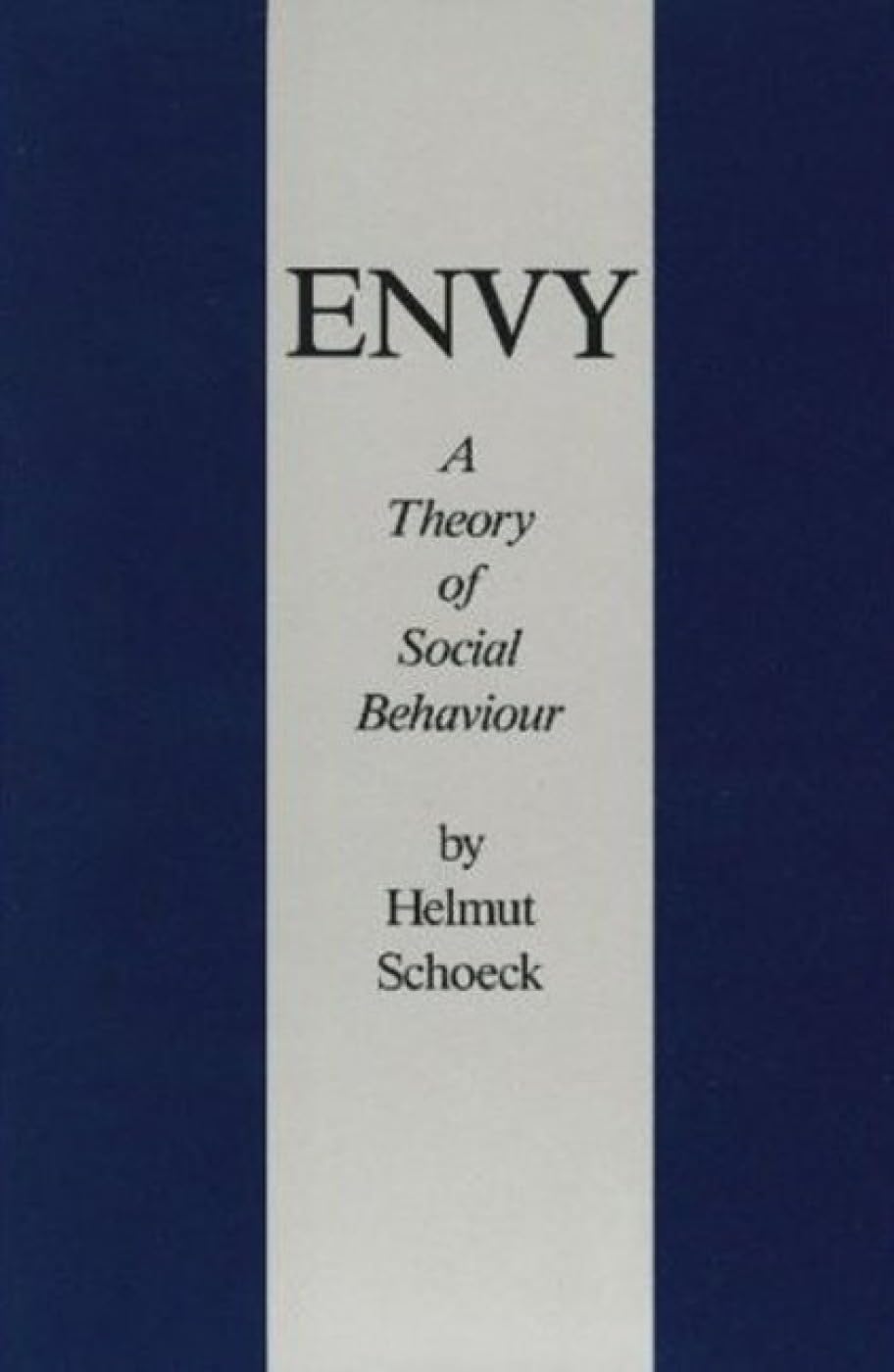
Part sociological analysis and part political tirade, Helmut Schoeck’s Envy: A Theory of Social Behaviour offers a provocative examination of a foundational yet deeply corrosive human emotion. Schoeck posits that envy is inherently caustic and that all functional societies must learn to suppress it to maintain stability. By discouraging individual effort and achievement, unchecked envy stifles not only productivity and wealth generation but also ordinary civic virtues, as individuals grow fearful of attracting the "evil eye" of their neighbors’ jealousy.
Schoeck further challenges conventional political thought by arguing that envy does not operate the way class-conscious political organizers might hope. Humans are statistically and psychologically far more envious of small, perceptible differences among close associates than they are of vast, abstract wealth gaps separating them from elites far away. This dynamic is vividly illustrated by historical events like the Cultural Revolution in China, where the brunt of local malice was directed not at distant ruling elites, but at schoolteachers, small landowners, and ordinary citizens who were only marginally better off than their peers.
Although Schoeck’s primary critiques target left-wing politics, readers can easily draw parallels to contemporary right-wing populism sweeping the globe. Despite modern pretensions of having evolved into a culture capable of nuanced debates surrounding growth, equality, and environmental trade-offs, Schoeck’s work serves as a potent reminder that human society often remains fundamentally akin to children upset that a peer has a slightly better toy.
2. Infinite Powers by Steven Strogatz
Shifting from human behavior to the architecture of the universe, Steven Strogatz’s Infinite Powers explores the rich history of calculus, one of mathematics’ crowning achievements. Known for his engaging public lectures and educational resources on complex subjects like chaos theory, Strogatz brings the same clarity and enthusiasm to the genesis and evolution of calculus.
While the book is a masterclass in science writing, it does present a minor stylistic curiosity. Strogatz occasionally bends over backward to convince readers of the absolute importance of calculus, leaning heavily into practical examples to maximize broad appeal. This earnest advocacy can feel slightly redundant, as it is difficult to imagine an audience whose eyes naturally glaze over at advanced mathematics voluntarily picking up a history of calculus in the first place, rendering the overt hype largely unnecessary.
3. The Fragility of Goodness by Martha Nussbaum
Life is inherently precarious, and humans frequently fail to execute the right course of action or secure their desired outcomes. Yet, philosopher Martha Nussbaum pushes this inquiry further in The Fragility of Goodness, asking whether there are situations in life where doing the right thing is structurally impossible—moments where individuals are confronted with no good options and must inevitably sacrifice a dearly held value.
Nussbaum argues that such tragic binds do exist, a reality deeply understood by ancient Greek dramatists. Their works are defined as true tragedies not merely because bad things happen to good people, but because individuals are cornered into positions where they have no choice but to act imperfectly—damned if they do, and damned if they don’t. This perspective stands in stark contrast to philosophical traditions spanning from Plato onward, which have sought to reorganize human interior life to eliminate such moral dilemmas. Whether through Socrates’ retreat into the realm of pure ideas or Jeremy Bentham’s utilitarian calculus measuring all human values with a single metric, these traditions have long chased a systematic way to rid human existence of the painful reality that many fundamental problems simply lack a clean, optimal answer.
4. Who We Are and How We Got Here by David Reich
Recent breakthroughs in genetic science have revolutionized the study of human ancestry, allowing researchers to extract and sequence ancient DNA from prehistoric skeletons. By cross-referencing these genetic profiles with archaeological findings and modern populations, scientists are painting a drastically more complex picture of human history than previously understood.
In Who We Are and How We Got Here, David Reich tackles the common tendency to view our current cosmopolitan era as a historical aberration. Many assume that until recently, human populations remained largely static in the regions where they settled following initial migrations out of Africa—that modern Chinese populations originate exclusively from China, Europeans from Europe, and Indigenous populations in the Americas from the initial crossings of the Bering Strait tens of thousands of years ago. Reich’s genetic analysis shatters this static view, demonstrating that the human past was defined by frequent, massive migrations, continent-scale conquests, and repeated genetic mixing long before the advent of written historical records.
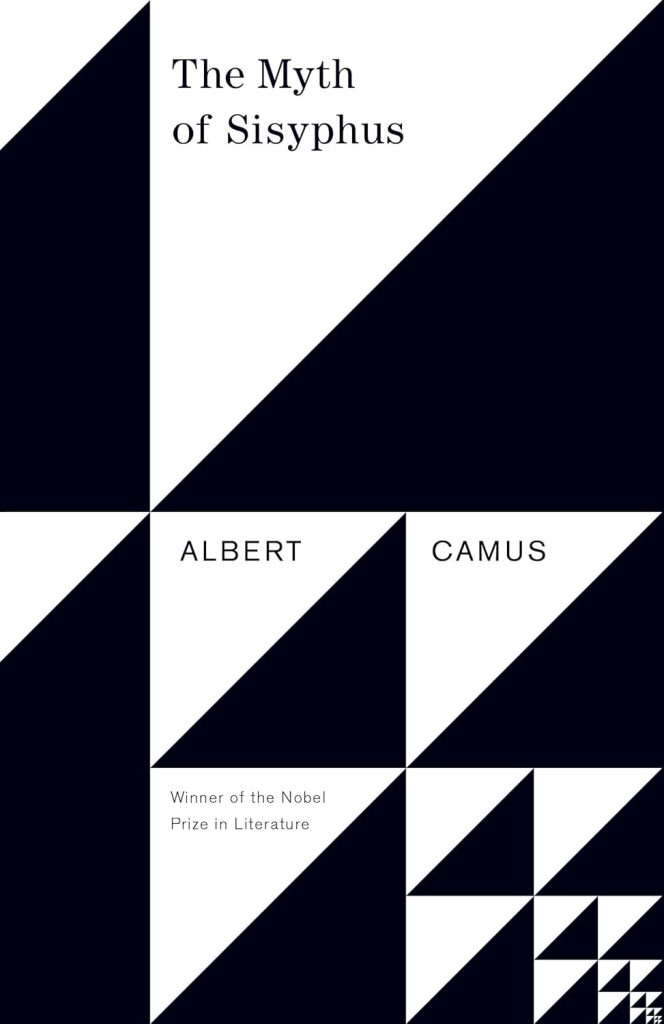
5. The Myth of Sisyphus by Albert Camus
"There is but one truly serious philosophical problem, and that is suicide." With this striking opening, Albert Camus confronts the fundamental absurdity and meaninglessness of existence in The Myth of Sisyphus, questioning whether an intrinsically meaningless life remains worth living.
Camus answers in the affirmative, drawing comparisons to the creation of art that ultimately holds no cosmic significance. He advocates for a philosophy of experiential gluttony—maximizing human experiences and treating daily existence as an act of deliberate rebellion against an indifferent cosmos. Using the mythological figure of Sisyphus, condemned by the gods to endlessly roll a boulder up a hill only to watch it roll back down, Camus suggests that Sisyphus achieves true freedom through a clear, unillusioned understanding of his plight.
While Camus’s thesis is deeply provocative, his proposed solution can feel psychologically implausible. Humans are fundamentally teleological, goal-oriented creatures for whom living entirely without purpose is deeply unnatural. Rather than attempting to reform our innate psychology to accept total purposelessness, a more sustainable philosophical evolution involves redefining the concept of meaning so that it can comfortably coexist within a universe that does not hand-deliver eternal grand designs.
6. The Perfectionists by Simon Winchester
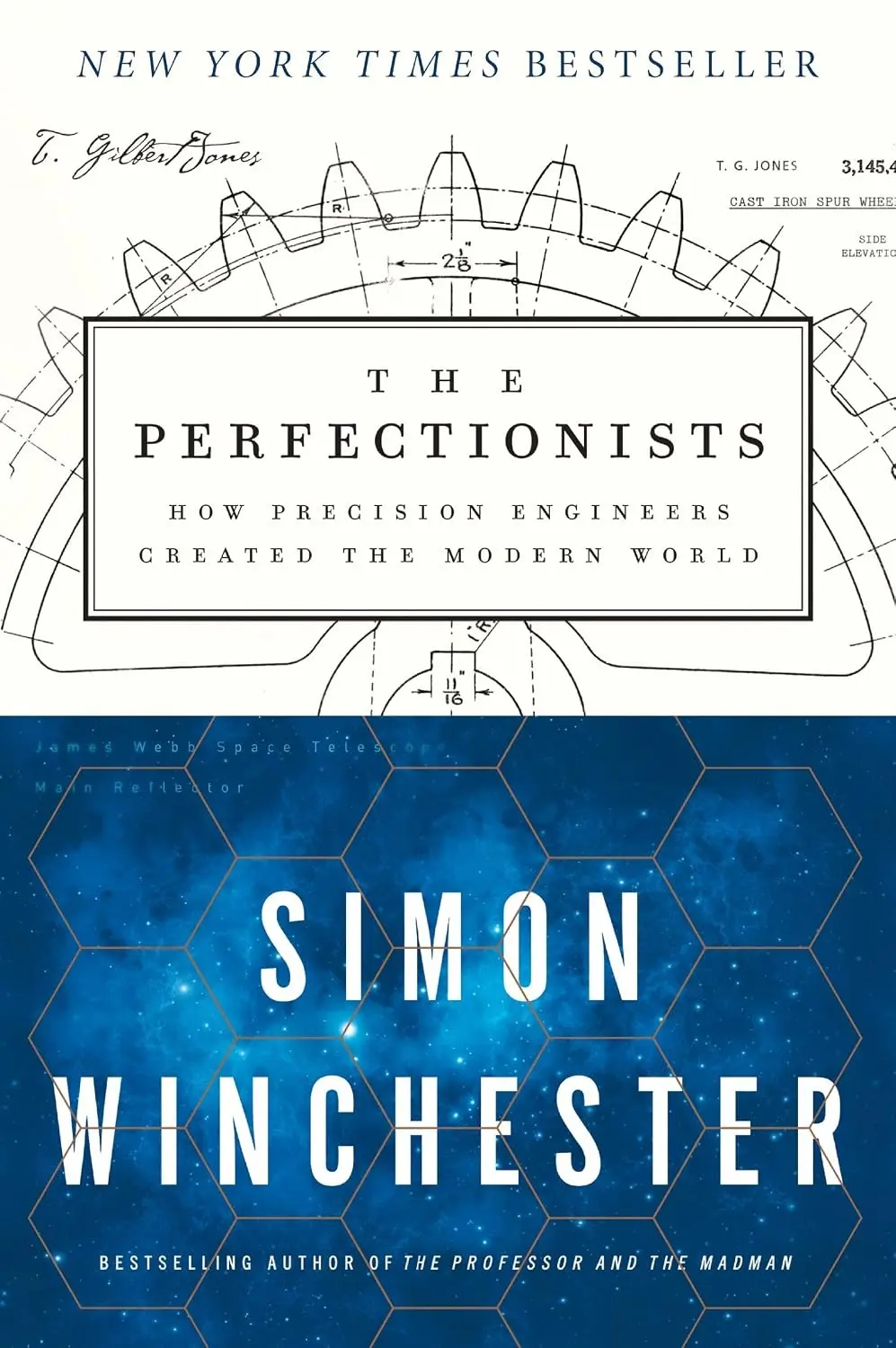
The modern industrial world is constructed upon a single, transformative concept: precision. By refining manufacturing tolerances to exact standards, engineers have solved technological challenges that were once confined to the realm of fantasy. In The Perfectionists, Simon Winchester guides readers through the chronological evolution of precision, beginning with early machined cannons accurate to the width of a coin and culminating in the lithographic processes required to manufacture modern computer chips with atomic-level precision.
One of the book’s most compelling narratives contrasts the production philosophies of Rolls-Royce and Ford. While Rolls-Royce earned legendary status for exquisite hand-crafted artisanship, it was Henry Ford’s Model T that achieved a genuinely higher level of precision. Ford’s operational necessity required manufacturing vehicles entirely with identical, interchangeable parts. Because workers were prohibited from filing or fitting components by hand until they aligned, every single part had to be manufactured to an absolute standard of perfection that hand-crafted vehicles rarely demanded.
7. The Marginal Revolution by Tyler Cowen
In The Marginal Revolution, economist Tyler Cowen offers both a historical survey and a theoretical examination of marginalism—the economic principle that the true cost and value of a decision should be evaluated based on the incremental impact of doing "one more" of something, rather than through broad, aggregate averages.
Cowen illustrates this through the classic diamond-water paradox. Water is essential for human survival, granting it immense total value, whereas diamonds are largely non-essential luxury items. Yet, water remains cheap while diamonds command exorbitant prices. Marginalism resolves this contradiction by clarifying that market price is driven not by total utility, but by marginal value—the worth of one additional unit. Because water is abundant, the marginal value of an extra glass is relatively low, whereas the scarcity of diamonds drives their marginal value sky-high.
Cowen observes that while marginal thinking has historically driven massive productivity and insight within economics, its central dominance within the discipline is gradually receding. Price theory, which places marginalist principles at its core, has increasingly taken a backseat to modern econometrics and complex mathematical modeling, suggesting that marginalist philosophy may itself be declining on the margin.
8. Catch-22 by Joseph Heller
Frequently cited as one of the funniest and most enduring satires of war and bureaucracy, Joseph Heller’s Catch-22 examines the absurd paradoxes of military life through the experiences of bomber pilots stationed in the Mediterranean during World War II. The novel’s eponymous logical trap encapsulates the inescapable nature of bureaucratic catch-22s: a pilot who expresses rational concern for his own safety in the face of immediate danger is deemed mentally sound, meaning he can be grounded only if he asks; but the moment he asks, he demonstrates sanity and is consequently required to continue flying combat missions.
Beyond its famous logical loop, the novel is packed with sharp, darkly comedic observations on human behavior, institutional dysfunction, and the preservation of personal autonomy in the face of systemic madness. Works of classic fiction such as Catch-22 serve as powerful reminders that literature functions not merely as passive entertainment, but as a vital catalyst for critical thinking and cultural reflection.