Yet, those who have experienced the profound restructuring of a long-term marriage understand that healing is rarely linear. Beneath the surface calmness often lie painful truths, unaddressed grief, and lingering emotions that demand attention long after the courtroom doors have closed.

The Emotional Takeover of an Outgrown Narrative
To cope with the heavy emotional waves that inevitably followed her own divorce, one sixty-year-old woman, mother to three adult children, found herself unconsciously constructing a rigid identity. She began to view herself through a lens of profound vulnerability: a betrayed woman facing a daunting new chapter without the financial cushions or emotional securities she had known for decades.
This internal narrative quickly took over. The home and family life she had spent a lifetime building had vanished, and for a long time, that storyline became her primary frame of reference. Whenever the normal, heavy grief of a post-divorce reality crept in, she retreated into that familiar tale to dull the sharp edges of her discomfort. Replaying the grievances generated a surge of defensive anger, which masqueraded as strength and provided a temporary, albeit artificial, sense of relief.

Before long, that mental loop transformed into an addictive trap. It locked her into a paralyzing pattern of feeling entirely stuck, robbed of the agency needed to author a new chapter of her life. While every divorce is unique—some individuals depart with fond memories of their former spouses while others experience profound bitterness—the universal challenge lies in processing those emotions without becoming permanently defined by them.
The Healing Power of Tactile Creation and Personal Agency
Recognizing the need to break the psychological loop, she discovered that true cognitive shifts often require engaging the physical body rather than relying solely on abstract thought. Raw materials, she realized, possess no memory of the past; they respond exclusively to the physical movement of hands in the present moment. Throughout her seven decades of life, creative handwork had repeatedly served as an anchor during times of uncertainty.

The immediate task was learning to view her prevailing personal story not as an absolute truth, but as a single, highly subjective version of her current reality. To break free from the mental paralysis, she needed to allow for the possibility that her circumstances could be interpreted through multiple lenses. Because logic alone could not process the depth of the transition, she developed a tactile, hands-on method to immerse herself in a sensory and physical experience.
By physically transforming raw materials from one state into something entirely new, the process offered a profound sense of empowerment. It was a modern adaptation of up-cycling, rooted in the traditional concept of alchemy—the metaphorical practice of turning straw into gold. Making the conscious decision to redesign her perspective on the future immediately pulled her out of stagnation and propelled her forward. This creative spark provided the exact mental shift required to reclaim her personal power.

Transforming the Narrative Through Physical Art
Rather than attempting to erase the past, the creative approach focuses on physical transformation. The process begins with the intentional selection of a solid foundation, such as a piece of strong wood, heavyweight cardboard, or mat board.
Before touching any physical art supplies, the process calls for setting a clear mental intention. Participants are encouraged to choose a small handful of adjectives that reflect the qualities they wish to embody in their next chapter, such as joy, freedom, or contrast.

The next step involves confronting the old narrative directly. On a clean sheet of white paper, the individual handwrites one of the recurring, unhelpful thoughts that frequently triggers emotional distress—thoughts centered on aging, loneliness, or self-doubt. Once committed to paper, those limiting beliefs are physically torn apart by hand. Tearing the paper into manageable pieces rather than tiny fragments allows for greater flexibility during the subsequent design phase. Some find comfort in silently releasing the thoughts as the paper is torn.
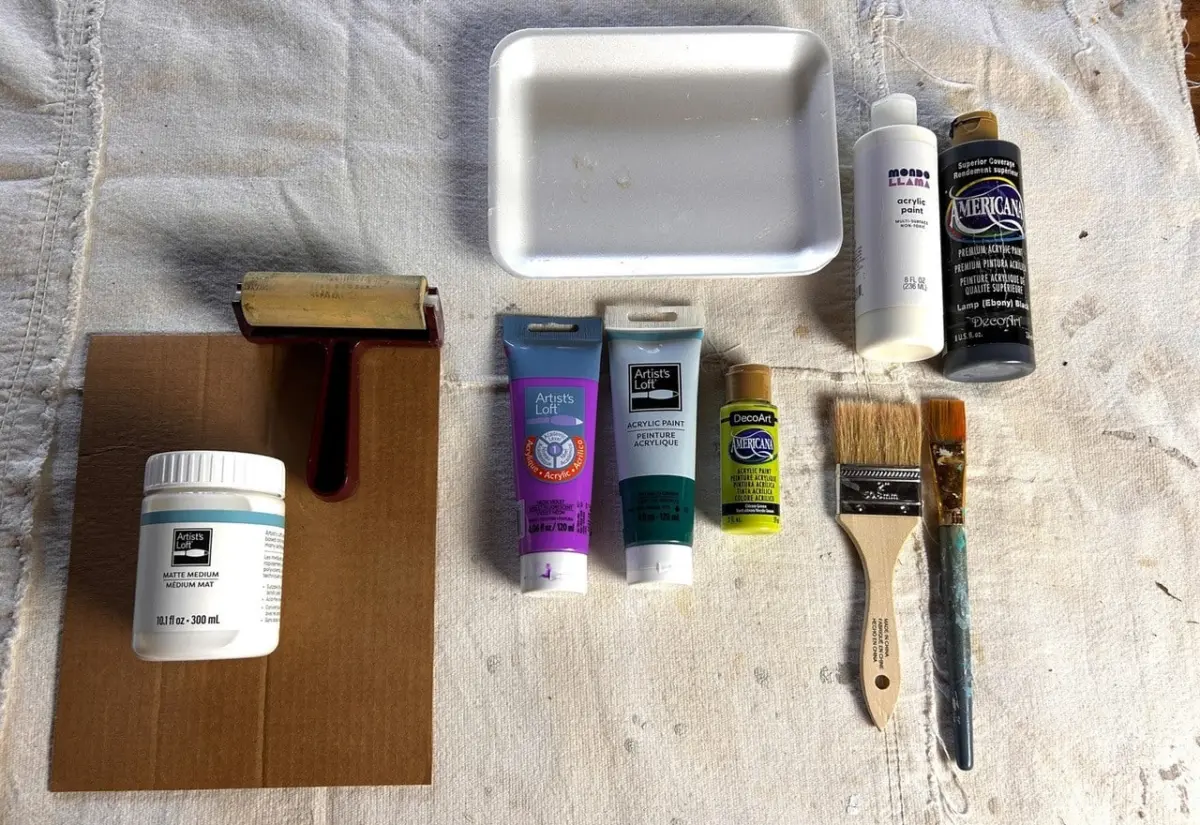
The torn fragments of the written story are then arranged intuitively onto the chosen base, prioritizing simplicity and free-flowing expression over rigid rules. Once the composition feels right, the pieces are completely covered with layers of paint until the original words are entirely obscured. After the paint dries thoroughly, the textured pieces are permanently sealed to the base using an adhesive medium like matte gel or watered-down PVA glue, with a brayer often used to smooth the surface.

Reflecting on a New Chapter
Standing back to view the finished piece reveals a powerful visual metaphor. The original words and the pain they represented have not been erased; they remain permanently embedded beneath layers of bright, vibrant color and expressive art. The torn edges of the paper add texture and complexity, serving as a reminder that the hidden fibers within could never have been revealed without the initial rupture.
While major life transitions take time and the old narrative may occasionally attempt to resurface, tangible reminders can provide powerful grounding. Holding the raw materials, working directly with paint and glue, and shaping a new creation with one’s own hands offers a lasting physical testament that resilience, beauty, and joy can ultimately emerge from profound life changes.