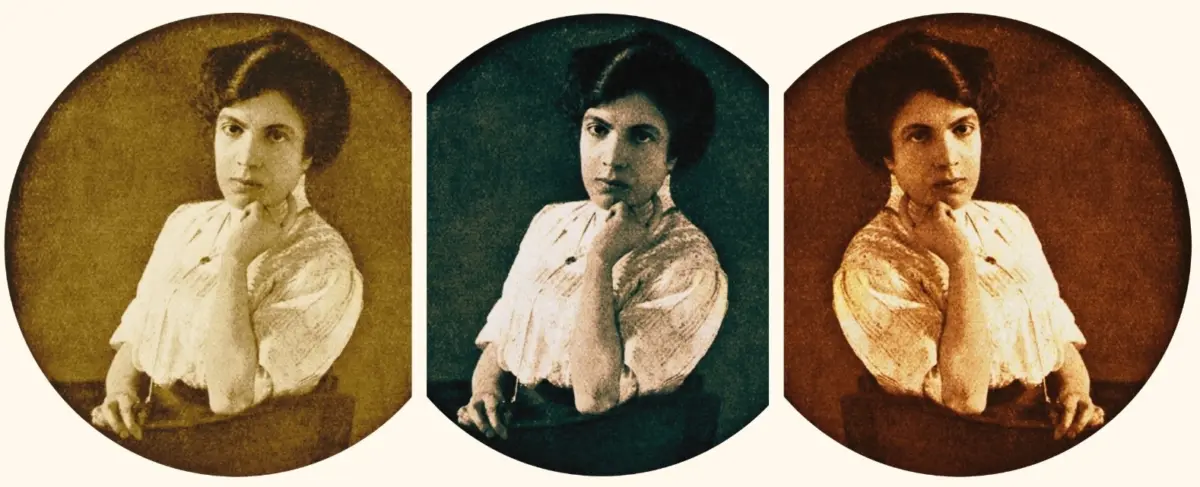
Now, approaching the milestone of her 1926 Nobel Prize for Literature, the powerful legacy of Deledda stands like a literary apparition, waiting once again for the English-reading world and American audiences to truly rediscover her vast and remarkable body of work.
Hailed in American newspapers in 1902 as the “George Sand of Sardinia”—though, notably, George Sand never won the Nobel Prize—Deledda’s distinct role in Sardinian literature occupied an entirely unique realm. Early American reviewers expressed a profound appreciation for her emergence, writing, “Why should anyone feel doubtful about the future of fiction, when young authors are rising every day, to show us the world as it appears.”
That world appeared very differently to a young woman writer coming of age in Sardinia around the turn of the twentieth century. Following her primary school education, and with the essential assistance of a private tutor, she began publishing stories as a teenager. This early literary pursuit met with considerable chagrin from her family, who viewed such creative work as a scandalous activity for a young woman of her standing. Yet, Deledda never looked back.
Her foundational first novel, Fior di Sardegna (Flowers of Sardinia), was published in 1892 when she was just twenty-one years old. A decade later, in 1902, she released After the Divorce, a pioneering work that began with a striking scene: “In the ‘stranger’s room’ of the Porru house a woman sat crying.” The novel directly interrogated the secret realities of Sardinian life for women, arriving five hundred years after Eleonora d’Arborea reigned as the de facto leader of the island, and standing as one of the very first European novels to tackle the complex theme of divorce.
Over the course of her prolific career, Deledda went on to write more than sixty works of fiction, nonfiction, and poetry. In 1926, her literary achievements were crowned internationally when she became the second woman in the world to win the Nobel Prize in Literature. According to the Nobel committee, the honor was awarded for her “idealistically inspired writings which with plastic clarity picture the life on her native island and with depth and sympathy deal with human problems in general.”
Despite this monumental global recognition, an American news story from the era noted that it was “strange” she continued to write about Sardinia after she eventually relocated to Rome. The contemporary commentary added patronizingly that “Sardinia holds very little interest for the world in general. It is not rich in artistic treasures as is most of Italy. Sardinia’s charm, perhaps, is its isolation; civilization has not as yet dulled it or cut it down to the standardized pattern.”
Such dismissals of Sardinia and its rich ancient and modern contributions to Mediterranean and Italian literature would plague the reception of Deledda’s work for her entire life. Fellow Sardinian literary giants, such as Antonio Gramsci, Emilio Lussu, Salvatore Satta, and contemporary writer Michela Murgia, would encounter similar cultural marginalization.
This external fascination with Sardinia’s isolation took a different turn with the arrival of the notorious British novelist D.W. Lawrence in 1921. Lawrence spent less than a week on the island and famously declared that he took no notes. From his arrival in Cagliari—which he described as a “naked town rising steep”—he and his wife traveled by bus and train, first reaching Mandas, “where there is nothing to do,” and then Sorgono, which he characterized as being full of “degenerate aborigines, the dirty-breasted host,” and “sordid villagers.” They eventually crossed the mountains until they arrived in Nuoro, the birthplace and home of Deledda, where he claimed “there is nothing to see.”
Upon returning to his temporary home in Sicily, where he similarly claimed to find himself without anything to do, Lawrence rapidly wrote Sea and Sardinia in just a few weeks, working from a single draft. The book had originally been titled Sardinian Films or Sketches in Sardinia. Though rushed, Lawrence injected his formidable novelist skills into the travelogue, conjuring beautiful scenes of natural splendor—particularly during the train ride through the Gennargentu mountains—and praising the Sardinians he encountered for being “downright” and “manly.” In many respects, however, Sea and Sardinia functioned as a stage for funny yet obnoxious character sketches, as if Lawrence were treating real human beings merely as rough material for an unwritten novel.
Lawrence’s book was first excerpted in Dial magazine in the United States, while The New York Times greeted it with high praise, asserting in its review that anyone wishing to travel to Sardinia “would find no better guidebook.” Even on its one hundredth anniversary in 2021, Sea and Sardinia remained the single best-known literary work concerning Sardinia in the English language—overshadowing the actual legacy of Grazia Deledda.
Yet, parallel to Lawrence’s travels, Deledda’s own artistic output continued unabated. In that same year of 1921, she published another major novel spanning three volumes, moving steadily toward her Nobel victory five years later. Her cultural footprint was already expanding across mediums; the legendary Italian diva Eleonora Duse had starred in the only silent film adaptation of Deledda’s work, Cenere, back in 1916.
Analyzing Deledda’s deep-rooted connection to her hometown, Sardinian literary critic and author Giulio Angioni coined the term “sardography” to describe the conjoined role of history and personal memoir in her stories. This unique lens—Sardinia seen authentically through the stories and psychology of Sardinians—represented a profound cultural splendor waiting to be discovered by outsiders.
The difficulty of that discovery for English speakers was long apparent. As social critic Todd Gitlin wrote in the Chicago Tribune in 1998, “To discover a prolific, but forgotten novelist is like stumbling upon a new species.” Gitlin recounted how his wife stumbled upon a novel by Grazia Deledda resting on a lonely pile in the corner of a New England bookstore. When he subsequently searched for the rest of her works, he found them available only through small and university presses. He declared that a “literary resurrection” of the once-famous writer, celebrated for the immense “emotional power” of her novels, was decades overdue. Ultimately, despite his extensive search, he was only able to locate five of her thirty-three translated novels.
Following her death on August 15, 1936, her grieving family members made a poignant discovery inside her desk: a carefully wrapped package tucked away in a drawer, containing the manuscript for Cosima, written neatly in ink on light-blue paper. Titled after her own middle name, Cosima serves as an autobiographical account chronicling a young woman’s fierce struggle to become a writer in the traditional mountain town of Nuoro, surrounded by the vivid characters of the village and the countryside.
Much like the protagonist of her final manuscript, Deledda consistently preferred to let her writing stand entirely on its own merits, shunning the trappings of celebrity. At her Nobel Prize award ceremony in Stockholm, she famously accepted the honor without delivering the traditional lecture.
Back home, the reception from her local community remained ambivalent. The primary newspaper on her native island, L’Unione Sarda, relegated its announcement of her historic Nobel win to a few brief lines at the bottom right-hand corner of the front page, echoing the early hesitation of her own parents regarding her writing career. Later, when the Italian dictator Benito Mussolini invited her to his office in Rome, Deledda paid little attention to his political overtures, using the meeting solely to request that he release a personal friend of hers from Nuoro from prison. Having secured that, she promptly left the building.
A century after her explosive rise and international triumph, the Nobel laureate’s enduring legacy remains an enigma to some, yet it stands undeniably as a magnificent literary treasury that continues to deserve a fresh, unvarnished read.