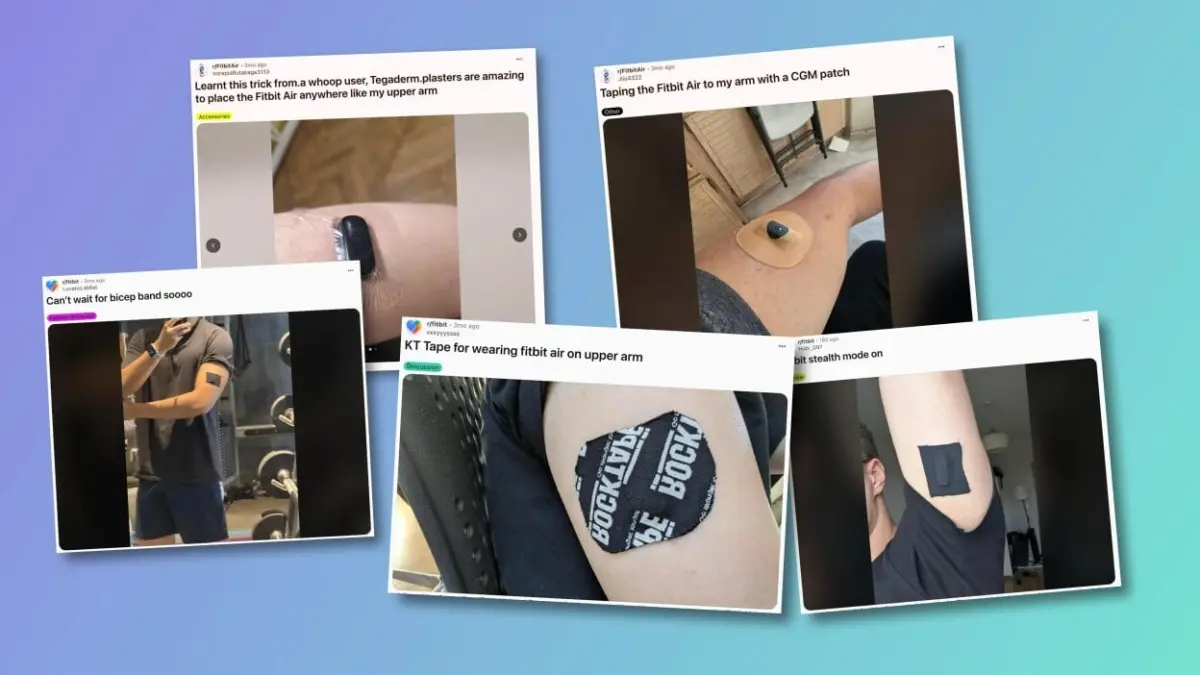
While companies like Whoop have successfully popularized bicep bands and alternative clothing integrations to get trackers off the wrist, major players like Google and its Fitbit ecosystem have been slower to offer official accessories for alternative placements. Faced with this gap in official hardware support, some creative users have begun taking matters into their own hands using heavy-duty medical tape and athletic adhesives to secure their devices to their upper arms.
This unexpected trend has steadily gained traction in online fitness communities, with users sharing screenshots and testimonials of their unorthodox placements. For athletes, weightlifters, and anyone annoyed by traditional wrist-based form factors, taping a fitness tracker to the body offers a seamless, set-it-and-forget-it alternative. To see whether the internet trend held up under real-world conditions, health and fitness experts have begun putting the method to the test, exploring both the practical benefits and the logistical hurdles of wearing a taped-on fitness tracker.
Why Are People Taping Fitbits to Their Arms and What Kind of Tape Works Best?
The primary motivation behind removing a fitness tracker from the wrist and taping it to the body is comfort and utility. For individuals who lift weights, wear restrictive wrist wraps, or engage in high-intensity functional fitness, a wrist-mounted device can easily become an annoyance. It can dig into the skin during heavy barbell cleans, get caught on clothing sleeves, or simply clash with traditional jewelry and accessories. By moving the tracker to the upper arm, users can eliminate these minor physical frictions entirely.
Beyond athletic utility, there is a psychological appeal to moving a health tracker out of sight. When a device is mounted securely on the back of the upper arm, it becomes remarkably easy to forget it is even there. Users no longer have to look at a glowing screen or feel a bulky plastic housing rubbing against their wrist bones throughout the day.
However, securing a gadget directly to the skin requires reliable adhesive materials, leading users to experiment with various tapes. Early adopters frequently turned to athletic tapes like KT tape, which athletes commonly use to stabilize joints and muscles experiencing minor strain or soreness. While popular, standard athletic tape presents durability challenges during intense physical exertion. A sweaty workout followed by a post-exercise shower can easily cause standard athletic tape or small strips of medical tape to peel prematurely. Because a small patch must work harder to secure a smooth electronic device compared to supporting a flexible muscle, standard short strips often lose their grip within a day or two.
To achieve long-term security, tech enthusiasts have increasingly gravitated toward continuous glucose monitor (CGM) overpatches. These specialized, medical-grade adhesive stickers are engineered to hold small, plastic medical sensors securely on the back of the upper arm for weeks at a time. Because CGMs typically remain in place through multiple showers, heavy workouts, and daily wear for up to two weeks, their associated overpatches provide more than enough holding power to secure a lightweight fitness tracker like the Fitbit Air for a standard battery cycle.

Does Taping a Fitbit to Your Arm Actually Work?
Moving a wearable sensor away from the wrist raises legitimate questions regarding data accuracy, particularly when it comes to measuring heart rate and physical activity. To evaluate the effectiveness of the trend, practical trials involving upper-arm placement during outdoor runs and workouts reveal a mix of reliable biometric data and minor tracking compromises.
When secured tightly to the back of the arm using a secure CGM overpatch, the device remains firmly anchored against the skin despite heavy perspiration. Heart rate readings captured during outdoor runs under these conditions match up surprisingly well against baseline data collected from alternative, traditionally worn monitoring devices. Furthermore, placing the tracker underneath a heavy-duty opaque patch offers a distinct advantage by blocking out ambient light, which can sometimes interfere with optical heart rate sensors when a wristband slips or sits too loosely.
Despite the stability of biometric data, activity detection mechanisms face noticeable hurdles. Modern fitness trackers rely heavily on algorithmic expectations of how a human wrist moves during specific types of exercise. When the device is strapped to an upper arm instead, its internal accelerometers do not register the same motion patterns. During casual road tests, auto-detection features frequently fail to recognize that a workout is underway, missing the exact beginning and end of a run unless the user manually starts the tracking session through the companion mobile application.
How a Week of Fitbit Taping Went in Practice
Living with a taped-on fitness tracker for an entire week provides a clear picture of the long-term trade-offs involved in abandoning traditional wristbands. For the most part, the physical presence of the tracker fades into the background. Users often go hours or even days without consciously remembering the device is there, only to be reminded when a smartphone notification chimes with a congratulatory message regarding daily sleep quality or step goals. In terms of passive 24-hour health monitoring, upper-arm placement easily rivals or surpasses traditional smart rings and wristwatches for sheer invisibility.
Yet, the experimental setup also highlights distinct inconveniences, particularly regarding battery management and device removal. Modern fitness trackers are designed to be popped off their bands and placed on a magnetic USB charger every few days when power runs low. When the device is permanently anchored beneath a heavy-duty medical overpatch, routine charging becomes significantly more complicated. Rather than pulling the device off on a whim, users are forced to wait out the final hours of battery depletion until it is convenient to remove the entire adhesive setup—typically timed to coincide with a daily shower.
A warm shower proves essential for breaking down the stubborn medical adhesive used in CGM overpatches. While the hot water successfully loosens the bond for safe removal from the skin, it introduces a secondary logistical challenge: managing the slippery, loose tracker itself. While a standard disposable bandage or medical sensor can be discarded immediately into the trash, a detached fitness tracker must be handled carefully within a wet environment to avoid misplacement or water damage while stepping out of the shower.
Ultimately, the experiment demonstrates that while taping a fitness tracker to the upper arm is entirely viable for users seeking to escape the confines of a wristband, it comes with a unique set of maintenance chores. Beyond the daily friction of managing adhesive removal from both skin and hardware, users must weigh the financial and logistical cost of purchasing weekly replacement patches. For those who harbor a strong dislike for traditional wriststraps, however, the added comfort and seamless invisibility of upper-arm placement may well justify the extra effort.