
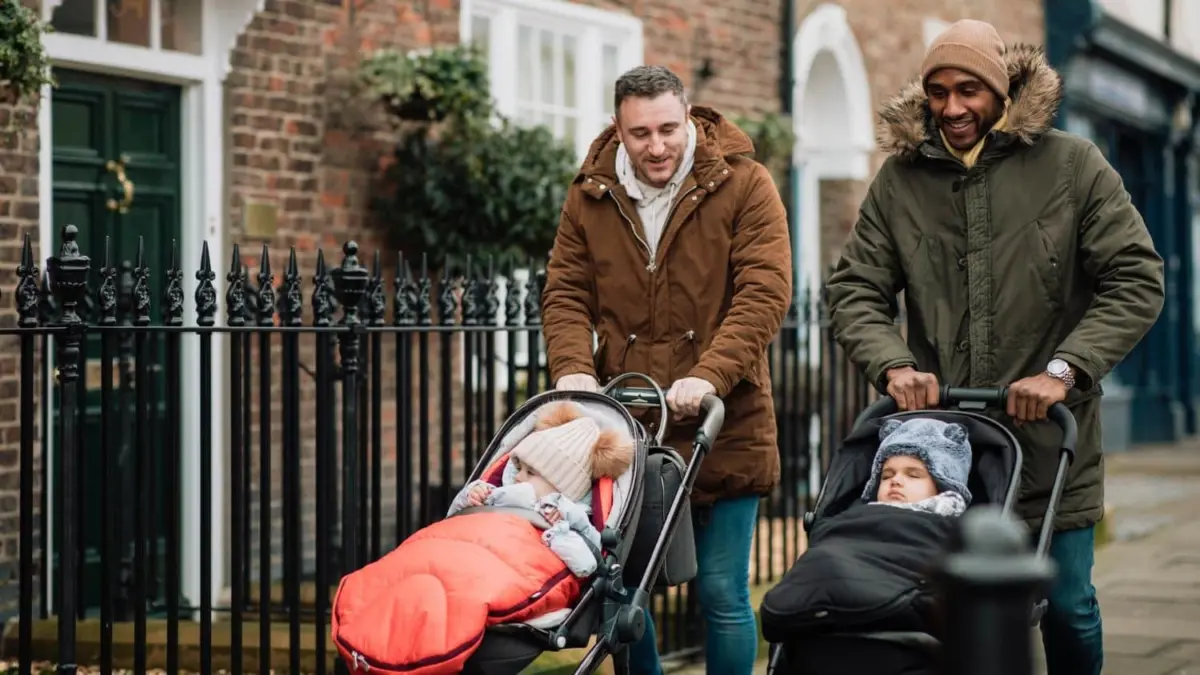
This modern parenting paradox—where mothers are surrounded by built-in village support while fathers often navigate the seismic shift of early parenthood in isolation—sparked a grassroots movement in southwest London. Out of this quiet void came the Walking Dad Club, an initiative founded by 37-year-old carpenter and joiner Luke Suddards, offering a simple yet transformative antidote to paternal loneliness.
New Moms Find New Moms, But Dads Are Left Searching
For generations, the infrastructure surrounding childbirth has naturally favored maternal networks. New mothers instinctively gravitate toward one another, and public health frameworks have long prioritized maternal-infant bonding spaces. Consequently, community centers, postnatal classes, and cafes bustle with mothers sharing the trials and triumphs of their new reality.
For fathers, however, breaking the ice is often more complicated. The grandmother, drawing from her decades of experience in community health, noted that while her son Max made a couple of connections through a prenatal "Baby Bump" class—including meeting Suddards—structured outlets for men were scarce.
Suddards, who lives in southwest London with his partner, Chelsea, found himself grappling with a sudden lack of male camaraderie after the arrival of their child. Having spent his twenties living in east London surrounded by a tight-knit circle of male friends, his relocation to the southwest quadrant of the city to build a life with Chelsea marked a major life transition.
Reflecting on the psychological and physical shift, Suddards explained that he had physically moved away from his regular support system of guy friends. Psychologically, he had also moved on from the lifestyle of his twenties—late nights, impromptu outings, and the carefree routines of young adulthood. Many of his east London friends were either younger or had moved out of the city entirely. While he deeply loved his new life with Chelsea, he acutely felt the absence of a casual community of men—peers he could meet up with on a whim to chat about everyday life.
When pregnancy entered the picture, establishing that male network was inevitably pushed to the back burner. Everything shifted toward the immediate demands of preparing for parenthood. Yet, a persistent thought lingered in the back of his mind: he was missing out on sharing the profound, overwhelming journey of early fatherhood with contemporaries walking the exact same path.
Recognizing that new fathers are notoriously exhausted and chronically short on time, Suddards knew any intervention had to feature a remarkably low barrier to entry. Fortunately, Chelsea owned a cafe situated right on the edge of Battersea Park—a sprawling, picturesque expanse ideally suited for prams and babies. The concept was straightforward, unpretentious, and entirely accessible: meet at the cafe, grab a complimentary coffee, and embark on a lap around the park together.
A Staggering Turnout and Immediate Paternal Flourishing
What began as a modest idea to connect with a few local fathers has rapidly blossomed into a thriving community. The Walking Dad Club now convenes on the first and third Sunday of every month, drawing a staggering turnout of men from across the region. The majority of attendees are complete strangers when they first arrive at the District Cafe near Battersea Park at 9:30 a.m., yet new faces continue to show up month after month, fueling the group’s steady expansion.
Both Suddards and Max, the founder’s son, have found their footing as fathers, experiencing a renewed sense of confidence and joy. While it is impossible to quantify the exact impact of the club alone, both men express genuine enthusiasm for their Sunday walks. Strolling beneath the park’s mature trees alongside other fathers and their infants has become a cherished ritual.
On any given club morning, park visitors frequently pause to capture photographs of the young fathers smiling, chatting, and laughing while managing their prams. The visual is striking and uplifting—a vivid representation of modern fatherhood redefined. These walks anchor the men in their local green spaces while simultaneously forging deep interpersonal connections at a critical juncture in their lives, helping them shape their enduring beliefs and mindsets about what it means to be a father today.
The Walking Dad Club Is a Play on "The Walking Dead"
Beneath the wholesome health benefits and social camaraderie lies a healthy dose of self-deprecating humor. The moniker "Walking Dad Club" is a direct, playful nod to the hit television and comic series The Walking Dead, chosen because Suddards recognized that it perfectly captures the physical exhaustion of early parenthood. As he frequently jokes with new participants, feeling like a sleep-deprived zombie is practically a prerequisite for the first year of raising a child.
The cultural reference resonates deeply with men of his generation, serving as an icebreaker that replaces sterile parenting jargon with relatable humor. For many, the name transforms an intimidating support group into an approachable, relaxed gathering where nobody is expected to have all the answers.
Viewed through a broader lens, the survival themes of resilience, adaptation, and finding meaning in ordinary moments—such as sharing a meal, enjoying a quiet walk, or finding camaraderie amidst uncertainty—mirror the daily reality of stepping into fatherhood. Suddards treats the club not as a formal organization, but as a passion project and a genuine hobby that brings him immense satisfaction.
Low Barriers, High Returns, and Green-Space Well-Being
For Max and dozens of other participants, a simple 45-minute stroll through a verdant park with a baby and a fellow father provides an invaluable reset. When asked what surprised him most since launching the initiative, Suddards pointed directly to the overwhelming demand. The steady influx of regulars returning week after week, paired with a continuous stream of newcomers, signals a vibrant, highly functioning community need that was previously going unmet.
The physiological and psychological benefits of these outings are well-documented. Extensive research into urban green spaces indicates that spending even a brief amount of time outdoors surrounded by trees can significantly elevate mood, restore energy levels, enhance cognitive clarity, and aid in stress reduction and problem-solving. When paired with meaningful social interaction and shared laughter among peers, these walks deliver a compounding positive effect on mental health and paternal well-being.
Looking toward the horizon, Suddards envisions a future where this low-barrier model scales far beyond southwest London. He pictures a global routine where, at 9:30 a.m. on a Sunday morning, fathers across continents wake up, dust themselves off, relieve their partners for some extra rest, and head out the door with their infants to meet local peers. Because the concept is exceptionally easy to execute and infinitely repeatable, it carries a universal positivity that could easily take root in neighborhoods anywhere in the world.
As these communities continue to grow and redefine the modern paternal experience, the core question remains: Do new dads need the same kind of organic community that new mothers naturally create, and what transformative power lies simply in taking a walk together under the trees?