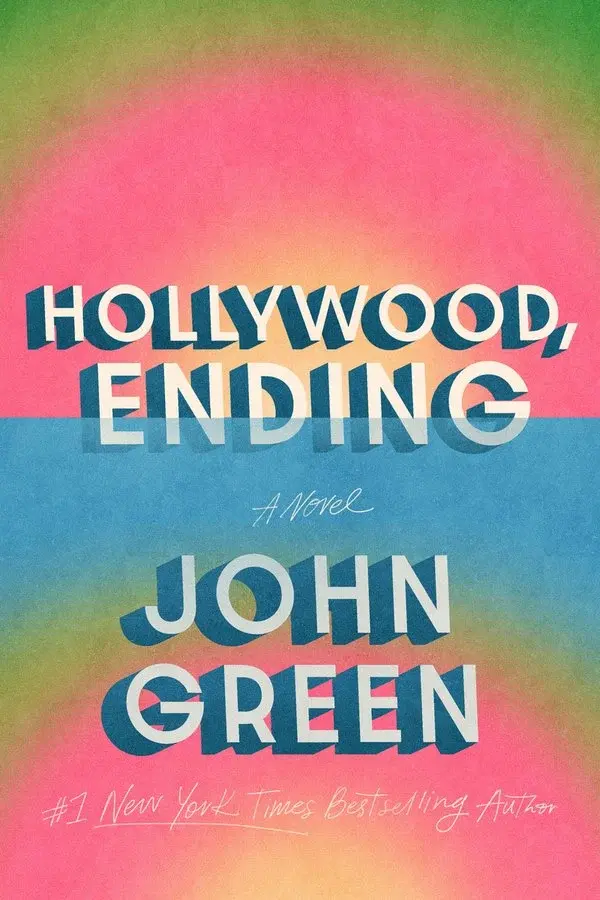
Hollywood, Ending arrives with significant anticipation from readers and critics alike, exploring as it does the collaborative and sometimes chaotic art of movie-making. Given the thematic focus of the novel, it is perhaps fitting that when asked who he most wishes would read the book, Green’s thoughts immediately turn to those who have navigated that exact terrain alongside him.
"Because Hollywood, Ending is a novel about the collaborative art of movie-making, I would love for the folks who worked on the movie adaptations of my books to read it," Green explains. "So many people pour so much of themselves into a film!"
While he holds a deep appreciation for the cast and crew members who have helped translate his previous literary works to the silver screen, Green is quick to identify his most vital and enduring sounding board. "My first and most valued reader is always my spouse, Sarah Urist Green," he notes, acknowledging the foundational role personal partnership plays in his creative life.
The transition from a young, nocturnal writer to an established novelist balancing family responsibilities has fundamentally reshaped Green’s daily routine. For many aspiring writers, the physical environment and the exact hour of the day are treated as sacred conditions for productivity. Green admits to having shared those rigid ideals earlier in his career, but time and parenthood have forced a pragmatic evolution.
"When I was young, I loved writing until late in the night, but now that I have kids, I mostly write while they are at school," Green shares, painting a picture of a writer who has learned to carve out productivity amidst the predictable chaos of family life.
This shift has also altered his relationship with physical spaces. "I used to think that the circumstances involved in my writing—time of day, the setting, and so on—were extremely important," he reflects. These days, however, romantic notions of the ideal writing nook have given way to a profound appreciation for fleeting moments of focus, regardless of where they happen to occur. "These days I am grateful for any moment I can get lost in a story, whether it’s at home or in a coffee shop or on an airplane."
Every professional writer eventually confronts the dreaded hurdle of writer’s block, and Green is no exception. However, his method for overcoming the mental barrier is less about forcing inspiration and more about lowering the psychological stakes of the craft. Rather than demanding brilliance from the blank page, Green employs a surprisingly gentle strategy to outsmart his inner critic.

"I just give myself permission to suck," Green says. "I tell myself, ‘Nothing you write today will end up in the book anyway,’ which is generally true, especially with first drafts."
This mindset shift is crucial to his ongoing productivity. By detaching his self-worth from the quality of daily output, he removes the paralyzing pressure that often leads to prolonged blocks. "If I make writing about achieving or approaching perfection, I will always be miserable and dissatisfied," he explains. "If instead I can construct writing as a play-based search for understanding, I become unblocked."
When it comes to the vast ocean of writing advice dispensed by creative writing programs, mentors, and literary legends over the centuries, Green finds clarity in brevity. Asked about the best or worst counsel he has ever received, he leans into a piece of philosophical wisdom that transcends the boundaries of the publishing world entirely.
"Robert Frost once said, ‘The only way out is through,’" Green observes. For the author, this minimalist directive serves as a steady anchor, providing resilience not only when wrestling with a difficult narrative arc in a manuscript, but also when navigating the broader complexities of life.
While creating new worlds occupies much of his professional energy, Green is also an active and intentional reader who finds immense value in returning to familiar texts. Rereading, for him, functions as a diagnostic tool for personal growth, a way to chart the internal changes that occur as time marches forward.
"I reread quite a bit," Green says. "The text doesn’t change between readings, of course, but I do—and one way I can measure the ways I’ve changed is through rereading."
This reflective practice keeps him deeply connected to the literary canon, engaging with complex historical, social, and moral questions across different stages of his life. Among his recent literary revisitations are several towering works of American fiction: Robert Penn Warren’s classic political drama All the King’s Men, Toni Morrison’s Pulitzer Prize-winning masterpiece Beloved, and Octavia Butler’s visionary speculative fiction novel Parable of the Talents.
As Hollywood, Ending reaches bookstore shelves nationwide, these reflections offer a compelling glimpse into the mind behind the prose—a writer who balances the commercial and creative realities of modern storytelling while remaining deeply committed to the playful, messy, and ultimately rewarding pursuit of human understanding. Hollywood, Ending by John Green is available now from Dutton, an imprint of Penguin Publishing Group, a division of Penguin Random House, LLC.