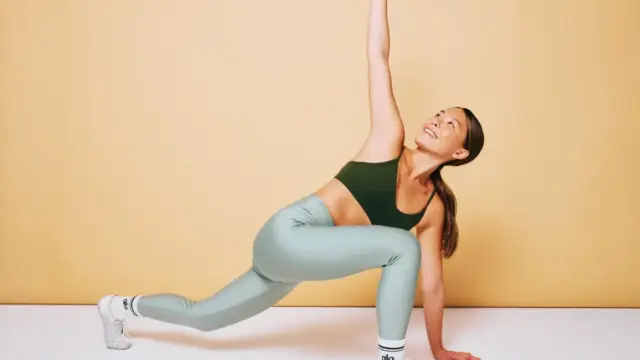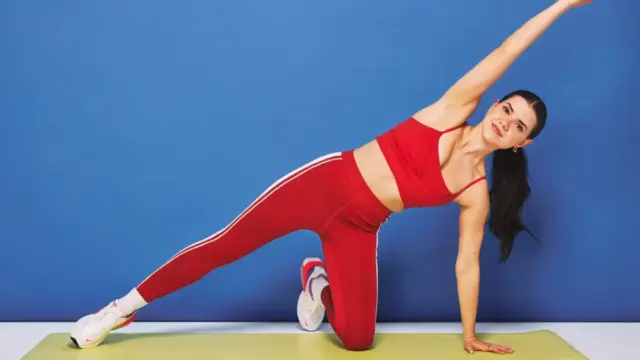
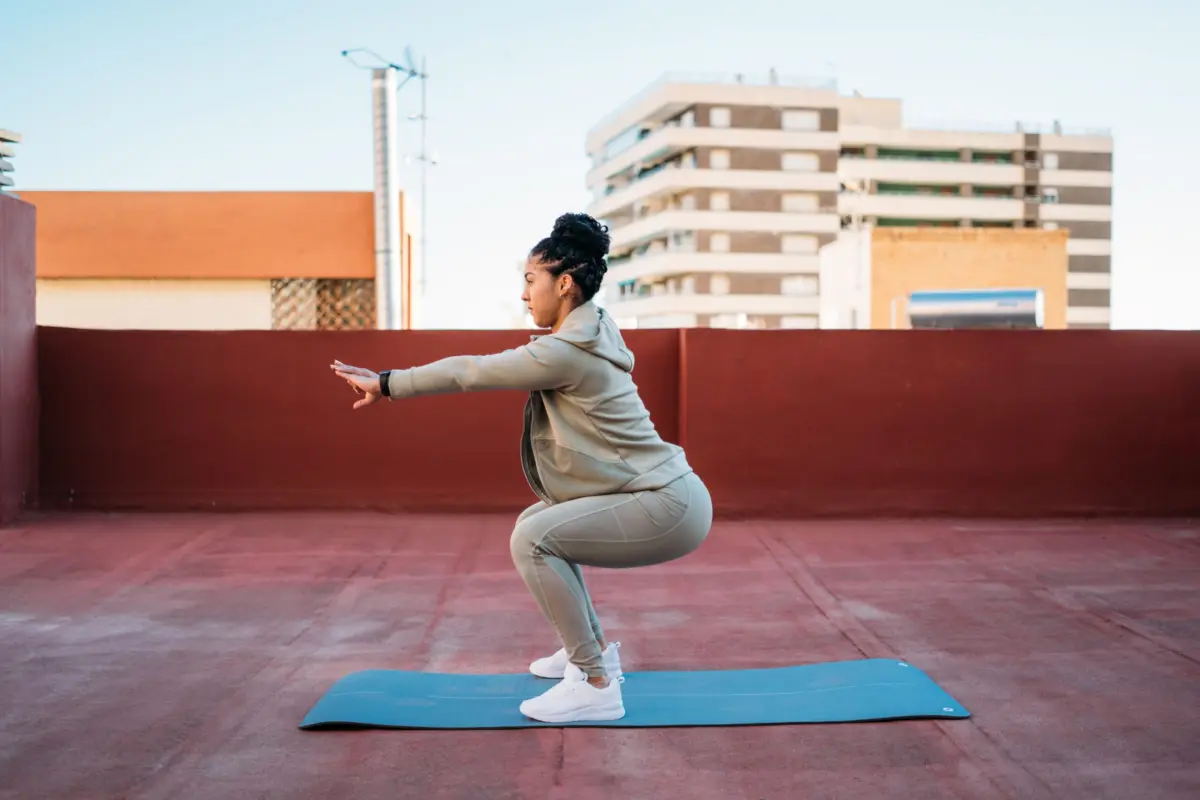
Officially known as bodyweight exercises or calisthenics, this type of workout can offer legitimate physical benefits. For starters, it is exceptionally accessible. Bodyweight training is a great, free option that can be performed virtually anywhere, according to Kristie Larson, a certified strength and conditioning specialist and founder of Tension, a strength training studio for women in Brooklyn. Whether it is storming outside or you are traveling away from your home gym, you can easily crank out a few push-ups or lunges without needing any specialized equipment or even a significant amount of space.
However, a fundamental question remains for many people looking to start or alter their fitness routines: can you truly grow muscle and get stronger on bodyweight workouts alone? According to fitness experts, the answer depends entirely on several physiological factors, your current fitness baseline, and how you approach the movements.
Bodyweight Load Can Vary Widely
Not all bodyweight exercises are created equal. Depending on which specific muscles an exercise is targeting and which part of the body is acting as the resistance load, the overall difficulty can range from totally manageable to brutally hard.
Consider how different muscle groups respond to unweighted movements. As Meredith Witte, a master of science, certified strength and conditioning specialist, and founder of the functional strength training platform The Playground, points out, individuals will not see significant benefits from doing bodyweight biceps curls. Because the only thing a person would be moving up and down during a standard arm curl without weights is their own forearm and hand, there is virtually no mechanical stress put on the biceps muscle to stimulate growth.
Conversely, performing a standard push-up requires an individual to support up to 75% of their total body mass, according to a study published in the Journal of Strength and Conditioning Research. For a person weighing 150 pounds, that translates to moving roughly 112.5 pounds of resistance with every single repetition. This high percentage of load helps explain why push-ups can feel intensely challenging, even without stacking any external weight plates onto a person’s back.
Then there are foundational lower-body movements like lunges and squats, which also utilize the majority of the body as the primary load. But because these exercises involve some of the largest muscle groups in the human body—such as the glutes and quadriceps—it takes a remarkably significant challenge to create the microscopic tears in muscle tissue that subsequently rebuild stronger, ultimately leading to noticeable physical gains. For the average person, standard bodyweight squats are simply not going to be enough to spark major hypertrophy over the long term, Witte explains. Human legs are naturally very strong, and while they might initially feel challenged by bodyweight movements, it is still generally insufficient to sufficiently build muscle unless the individual truly has never worked out before or is an older adult who has been largely inactive.
Yes, Bodyweight Can Build Muscle—If You Reach Failure
In order to trigger hypertrophy, which is the scientific term for muscle growth, Stuart Phillips, a kinesiology professor at McMaster University in Ontario, explains that a person needs to get close to the point where the target muscle reaches failure. This means exercising until it feels like you simply cannot possibly perform another repetition, a concept supported by recent research conducted by his academic team. According to Phillips, it ultimately does not matter whether an individual is lifting heavy free weights, light weights, or no weights at all, provided they generate enough cumulative tension in the muscles and push themselves close to that threshold of muscular failure.
Understanding what that threshold feels like is key to the process. Witte describes the sensation of muscular failure during high-intensity calisthenics as feeling like you are trudging through thick mud, where your final repetitions feel nearly impossible to complete with proper form.
Almost any dedicated individual can reach that point with an extra-hard bodyweight exercise, such as a handstand push-up or a pistol squat. Phillips points to competitive gymnasts as prime examples of athletes who build an extraordinary amount of physical strength and muscle mass primarily through highly challenging bodyweight movements. However, the people who stand to benefit the most from simple bodyweight exercises—such as basic arm circles or glute bridges—are beginners or individuals who have not maintained a consistent workout routine in a while. The biggest improvements in strength and muscle are consistently going to happen in people who start out relatively inactive, Phillips notes.
This is because if an individual is not exceptionally fit, or if they are carefully rehabbing following a physical injury or surgical procedure, even lower-intensity bodyweight exercises will provide enough stimulus to make their muscles quake. Simultaneously, these foundational moves work to strengthen the crucial brain-body connection. Larson explains that bodyweight training allows individuals to teach their brains to recruit muscle fibers that they may not normally utilize during daily sedentary activities.
To Keep Getting Stronger, You Must Increase the Challenge
As any experienced personal trainer will readily emphasize, the core key to continually getting stronger is the systematic application of progressive overload. This fundamental training strategy traditionally involves picking up progressively heavier free weights over time to steadily increase the difficulty of an exercise. However, Phillips notes that adding external weight is not the only way to achieve this; anything that places an increased level of stress on the working muscles can effectively accomplish the same goal.
For bodyweight training enthusiasts, this could mean transitioning to a trickier exercise variation, such as moving from a standard double-leg squat to a demanding single-leg pistol squat, according to Witte. Alternatively, individuals can switch up their movement tempo by performing repetitions significantly faster or slower, provided the change genuinely increases the difficulty. Witte also emphasizes that cleaning up exercise form is an exceptionally effective way to progress. Utilizing proper technique ensures that individuals do not rely on momentum to complete a movement or allow stronger muscle groups to subconsciously take over for the specific muscles they are actually trying to target.
Naturally, practitioners can also increase the challenge by adding more repetitions and sets to their routines, though this approach has a practical ceiling. Once an individual can comfortably complete 30 or more consecutive repetitions of an exercise without significant fatigue, it is officially time to up the game. At that point, that style of training is no longer really resistance training in a muscle-building sense; it is much closer to muscular endurance training, Phillips notes.
Skipping Weights Will Eventually Limit Progress
This leads to the ultimate question: what happens if someone decides to never pick up a free weight or resistance band at all? Eventually, that practitioner is going to hit a physiological plateau. Bodyweight exercises simply cannot provide enough mechanical stimulus for the average person to continue growing indefinitely, Witte explains. Pretty quickly, a conditioned human body is simply going to need more resistance to continue building new muscle tissue.
That being said, not every person engaged in fitness is looking to continuously get stronger and build larger muscles. If an individual’s primary health and wellness goal is simply to stay healthy, active, and mobile throughout their life, standard bodyweight exercises are more than enough to get them there. If someone wants to simply maintain their current muscle mass and functional capacity, then a purely bodyweight routine could be appropriate indefinitely, Larson points out. While such individuals may not win any local bench-press competitions, they will still reap all of the valuable bone-building, balance-boosting, and mobility-improving benefits that consistent physical activity provides.