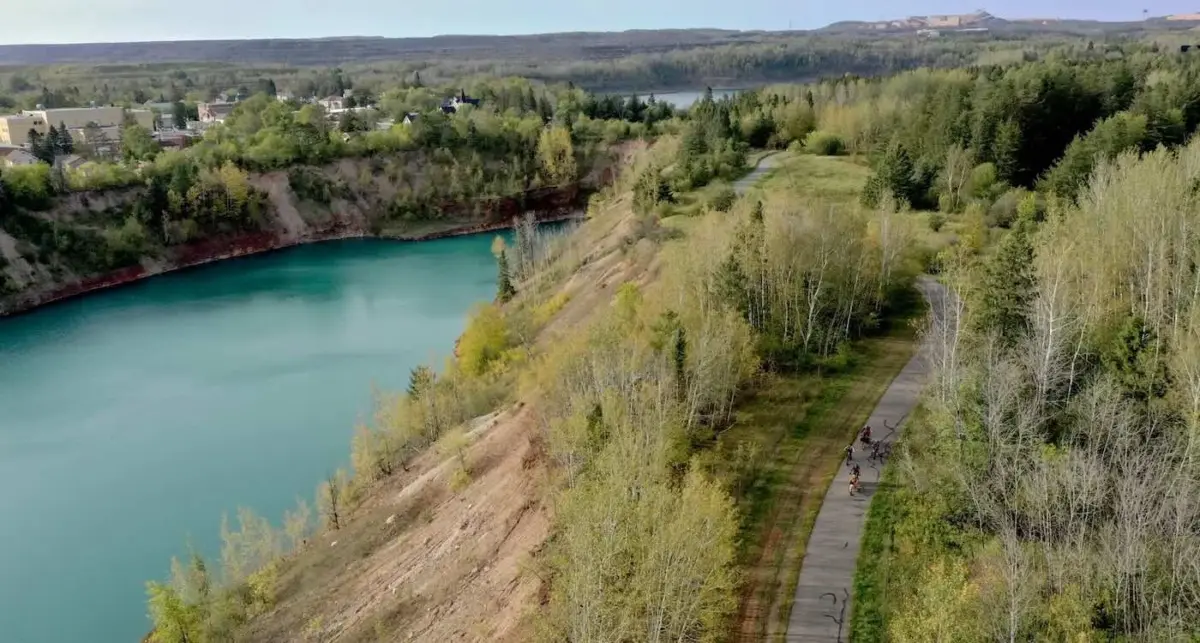
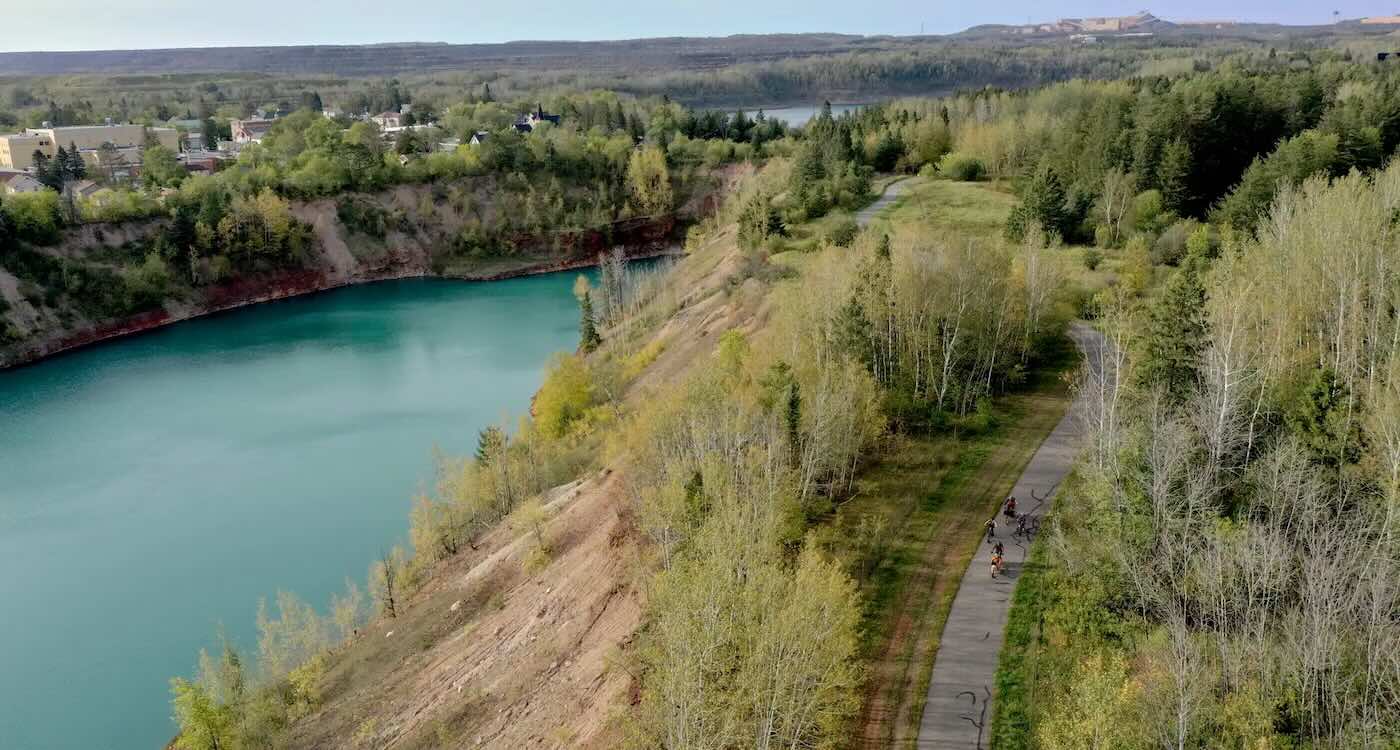
Stretching from the banks of the Mississippi River to the rugged, pristine wilderness of the Boundary Waters, the Mesabi Trail winds its way through some of the most scenic and historically rich regions of the state. It follows the path of the famed Iron Range, home to the historic iron ore mines that famously fueled the United States during World War II and provided the vital raw materials for the American steel industry. The trail is proudly named after the Mesabi Range itself, honoring the hard work and industrial legacy that shaped generations of local communities.
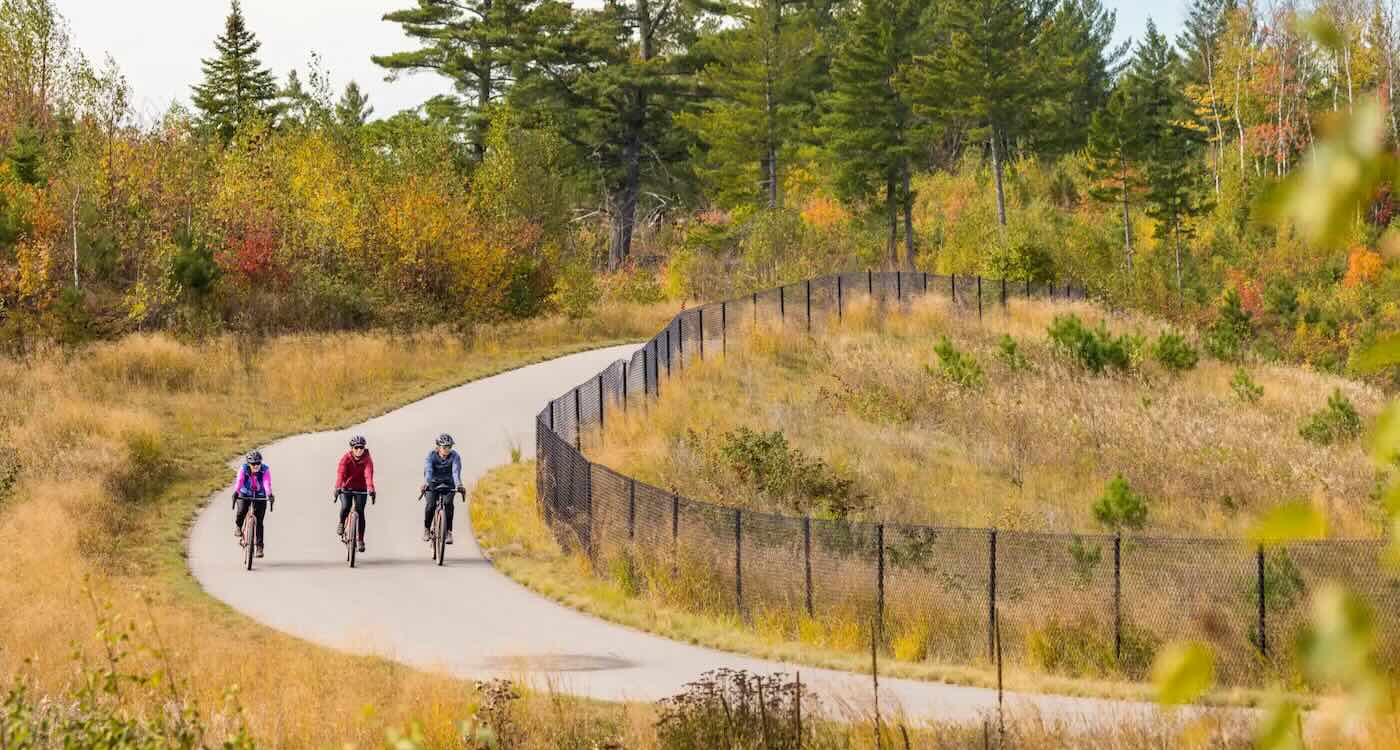
Spanning both hilly and flat terrain, the well-mapped and well-maintained trail connects 28 distinct communities, running continuously from Grand Rapids to Ely. Along this sprawling pathway, travelers encounter a landscape profoundly shaped by industrial history. Many of the shady woods and rolling hills flanking the trail were created decades ago when massive heaps of earth and rock were excavated from the mines. Over time, these man-made mountains have regenerated, transforming into lush, thriving forests that now line the edges of the cycling path.
As they travel along the route, visitors have the unique opportunity to explore historic buildings, authentic mining artifacts, relics of early industry, and a rich tapestry of ethnic and cultural history that defines the region. The cultural heritage of the Iron Range is woven directly into the outdoor experience, offering cyclists and hikers a tangible connection to the past as they pedal through the modern recreation corridor.
Financing a project of this magnitude required a broad coalition of resources and a unique state funding structure. A specialized state agency, the Department of Iron Range Resources and Rehabilitation (IRRR), played a pivotal role in funding the trail. The agency utilizes revenue generated from mining operations to reinvest in the local community, turning industrial profits into enduring public assets. However, realizing the grand vision of a 165-mile continuous trail required partnering with entities across the board, bringing together regional authorities, local governments, and community stakeholders.
No single organization, funding source, or individual could have built what is visible on the ground today, according to IRRR Commissioner Ida Rukavina. Joining a dozen state and local officials at a ribbon-cutting ceremony held on a Tuesday to mark the final completion of the route, Rukavina emphasized the collaborative nature of the achievement. This trail, she noted, stands as the direct product of three decades of steadfast partnership and collective persistence.
While the route has reached its monumental milestone of full completion, the journey of maintaining and enjoying the trail continues. The official Mesabi Trail website serves as a primary resource for travelers looking to plan a trip, offering comprehensive mapping and logistical details. Additionally, the platform provides information on how community members and visitors can become volunteer caretakers, helping to preserve the integrity of the multi-use pathway for future generations.
The completion of the Mesabi Trail arrives at a time when long-distance recreational routes are gaining unprecedented popularity across the United States. Similar ambitious initiatives, such as the cross-state xTx Trail in Texas spanning 1,500 miles for hikers, cyclists, and horse riders, highlight a growing national movement toward connecting vast landscapes through dedicated non-motorized pathways.
Although the Mesabi Trail is exceptionally popular for summer activities, including cycling, inline skating, and hiking, its utility extends far beyond the warm-weather months. During the winter, the corridor transitions to accommodate cold-weather recreation, offering cross-country skiing and snowshoeing, while certain designated portions of the trail provide access for snowmobiles. This year-round accessibility has made the route a vital recreational and economic anchor for the region.
Numerous campgrounds, state and local parks, and municipal amenities are easily accessible directly from the trail, as well as from intersecting highways and nearby towns. Food, lodging, shopping, golfing, swimming, canoeing, and fishing are all available in close proximity to various segments of the trail, ensuring that communities and essential services remain accessible near all major entry points.
Tens of thousands of people have already been utilizing the trail each year, with visitors regularly awarding the route five-star reviews for its maintenance, scenery, and accessibility. With the final segments now officially open and integrated into the broader network, the Mesabi Trail stands fully realized, offering a seamless journey through the heart of Minnesota’s natural beauty and industrial heritage.