
Much like Barcelona, Madrid operates on a slower, distinct daily rhythm. It is a city tailored for night owls, where traditional evening meals commence late into the evening and social gatherings stretch deep into the night. Travelers who choose to embrace this laid-back pace—savoring unhurried meals and late-night social settings—frequently find a more authentic connection to the local culture and the underlying spirit of the metropolis.
For seasoned travelers and first-time visitors alike, navigating such a sprawling metropolis can initially feel overwhelming. Determining where to begin exploring and deciding which sites to prioritize requires careful planning. To help visitors bypass the confusion, a structured five-day itinerary provides a balanced approach, ensuring that tourists not only encounter the capital’s iconic landmarks but also venture off the beaten path to understand why Madrid commands such widespread popularity, all while remaining mindful of budget constraints.
Day 1: Immersion in the Art Walk
The initial day of exploration centers on a prestigious district designated as a UNESCO World Heritage site in 2021. Encompassing more than 40 monuments and over 40 distinct architectural structures, this area represents one of the most picturesque and historically significant zones within the municipality.
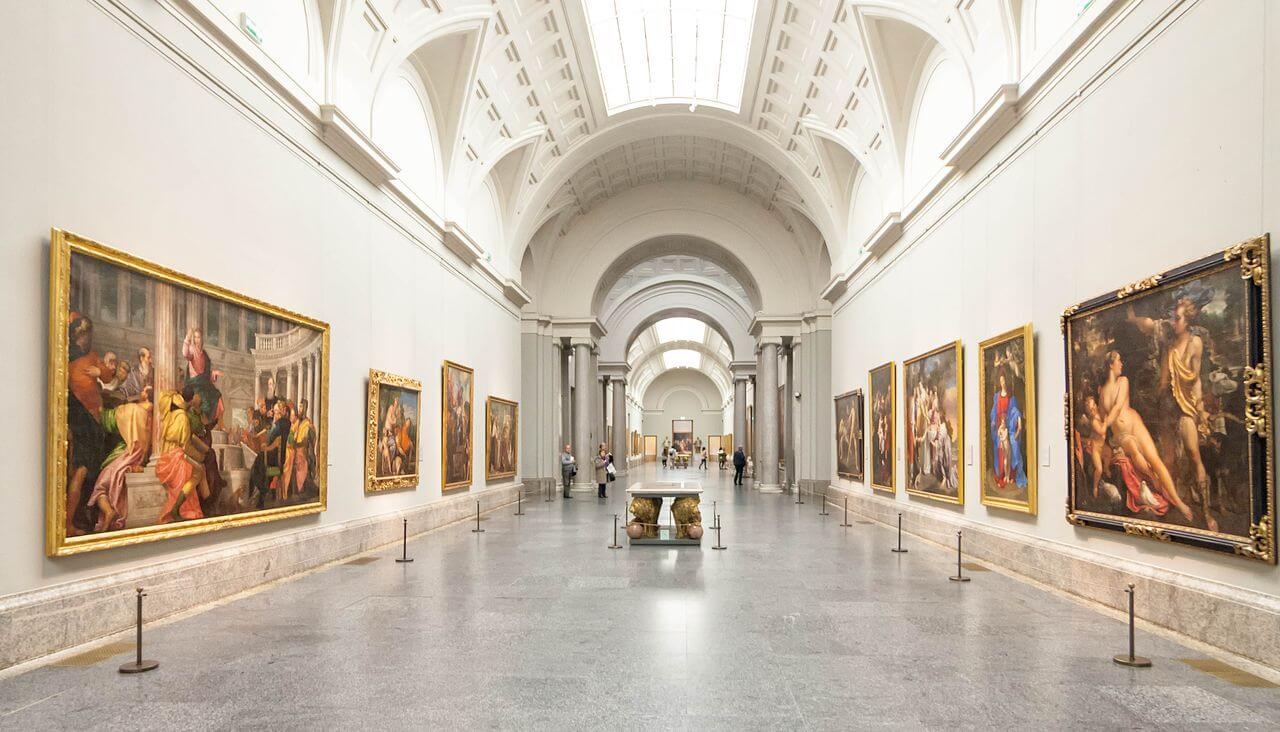
The itinerary commences at the Prado Museum, widely regarded as one of the preeminent fine arts institutions globally. The museum houses an extensive collection featuring masterpieces by El Greco, Velázquez, and Goya, alongside works by international luminaries such as Rubens, Botticelli, and Caravaggio. As one of the largest museum facilities in the world, the Prado warrants a commitment of at least several hours to properly navigate its vast galleries.
A brief ten-minute walk along the Paseo del Prado leads travelers to the Thyssen-Bornemisza Museum, which showcases a comprehensive private collection spanning the Renaissance era through to Pop Art. The day’s museum circuit culminates at the Reina Sofía National Art Center, an institution dedicated to contemporary works. The Reina Sofía features prominent pieces by artists including Picasso, Miró, Kandinsky, Dalí, and Francis Bacon. Its central attraction remains Pablo Picasso’s celebrated 1937 oil painting, Guernica, which is widely acknowledged as one of the most profound anti-war artistic statements ever created.
Following the morning’s museum visits, visitors typically transition to Madrid’s renowned culinary scene. Options range from the rustic atmosphere of Taberna La Fragua de Vulcano, ideal for sampling traditional cocido madrileño, to the vibrant garden terrace at Arzábal near the Reina Sofía, which is celebrated for serving some of the finest croquetas in the city. Alternatively, diners can experience a unique subterranean setting at Bodega de los Secretos, where meals are served within restored 17th-century wine caves located near the Prado.
The afternoon offers an opportunity to explore Madrid’s distinctive house museums. These former private palaces preserve the intimate domestic environments of their original occupants. Among them, the Sorolla Museum—the sun-drenched former residence of the artist known as "the painter of light"—reopens its doors following a significant architectural renovation, offering renewed access to its tranquil gardens and Mediterranean canvases. Other notable alternatives include the Museum of Romanticism, featuring a secluded garden café, and the Lázaro Galdiano Foundation Museum, which houses an extensive private collection of works by Goya, Murillo, Velázquez, El Greco, and Bosch within a neo-Renaissance mansion.
Day 2: The Grandeur of the Historic Center
The second day shifts focus toward the medieval and Renaissance architecture of the city center, an area historically referred to as Habsburg Madrid, or Madrid de los Austrias. The geographical and symbolic hub of this district is Puerta del Sol, where visitors routinely gather at Kilometer Zero—the official starting point for the country’s national highway and railway networks—and photograph the famous Bear and the Strawberry Tree statue, El Oso y el Madroño, which serves as a central emblem on the city’s official coat of arms.
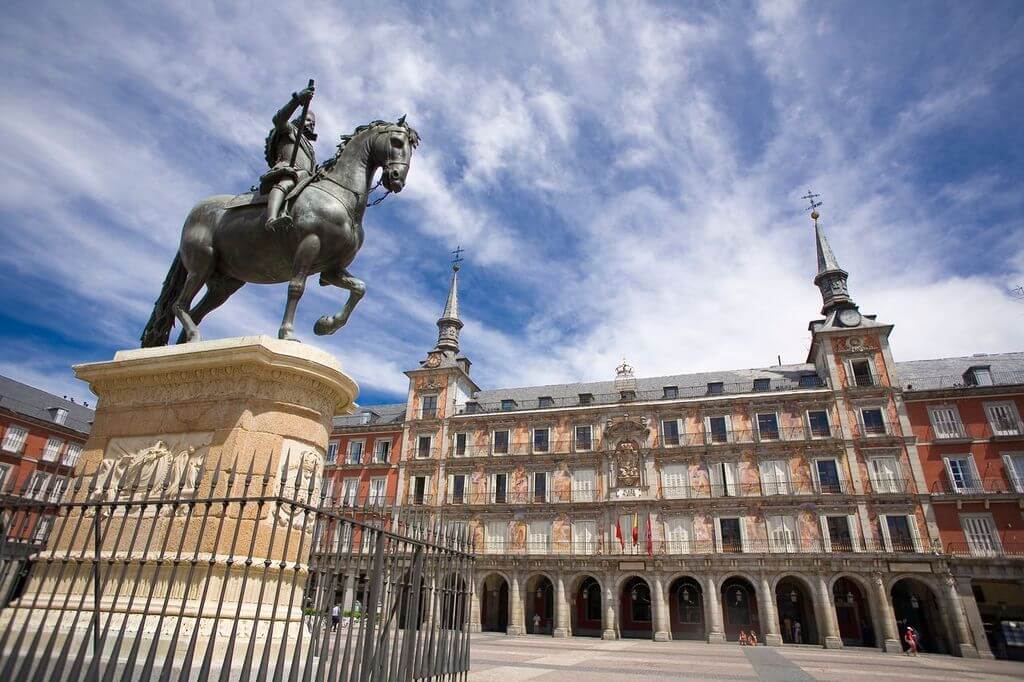
From Puerta del Sol, the route continues toward the iconic Plaza Mayor. Characterized by its uniform porticoed architecture and the historic Casa de la Panadería, the square has historically served as a venue for public events, ranging from traditional markets and theatrical performances to bullfights and historical ceremonies. Today, the expansive plaza is lined with open-air cafés, restaurants, and shops, functioning as a primary gathering place for public observation and civic events. In the surrounding alleys, visitors frequently stop to sample traditional calamari sandwiches.
Following a relaxed midday meal, the itinerary proceeds to the Royal Palace of Madrid. Constructed in the 18th century upon the foundations of a former ninth-century Muslim fortress, the Baroque structure stands as the largest royal palace in Western Europe. Encompassing more than 3,400 elaborately decorated rooms, the palace functions primarily as a museum and venue for official state ceremonies, as the Spanish royal family no longer resides there. Public tours guide visitors through the grand staircase, lavish staterooms, and the Royal Armory, which displays an extensive collection of medieval armor and weaponry.
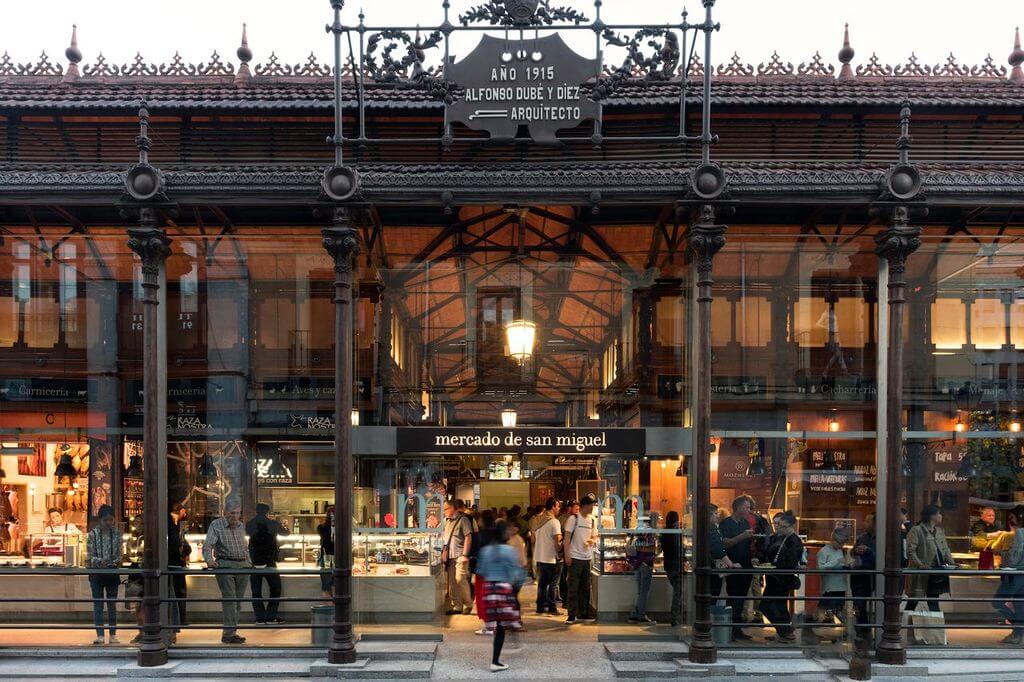
The day concludes at the Almudena Cathedral. Construction on the cathedral spanned from the late 19th century until its eventual completion in 1993, when it was consecrated by Pope John Paul II. While the exterior exhibits a neoclassical design intended to harmonize with the neighboring royal palace, the interior features a neo-Romanesque crypt supported by over 400 distinct columns. Visitors can also ascend to the cathedral’s dome for panoramic views stretching across the urban landscape.
Day 3: Culinary Discovery
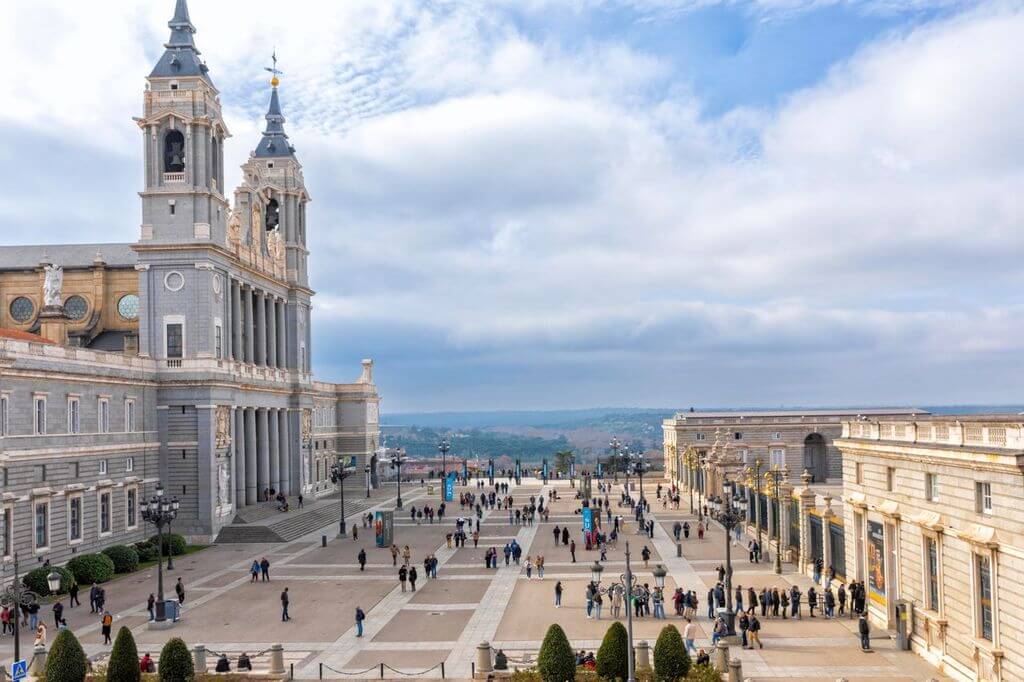
Recognized widely as a culinary capital, Madrid offers an expansive array of dining experiences centered around traditional markets, historic taverns, and contemporary venues. The exploration often begins at the city’s gastronomic hubs, such as the glass-walled Mercado de San Miguel near Plaza Mayor, which attracts both locals and visitors seeking gourmet tapas. Additional neighborhood markets, including Mercado de San Antón in Chueca and Mercado de Vallehermoso, provide further insight into regional food culture and local ingredients.
For evening dining, visitors frequently seek out Sobrino de Botín, documented by Guinness World Records as the oldest continuously operating restaurant in the world and historically favored by literary figures such as Ernest Hemingway. Alternatively, travelers can engage in traditional tapas crawling through the historic quarters of La Latina or the Barrio de las Letras.
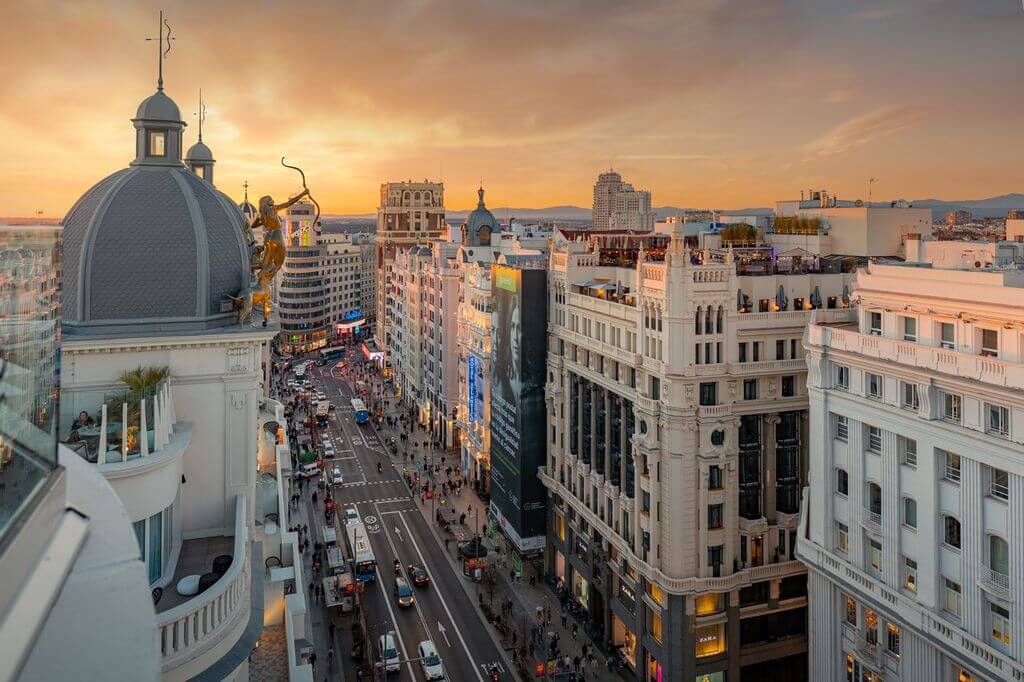
As daylight fades, attention turns to the capital’s established rooftop culture along the Gran Vía. Venues such as The Roof at Picalagartos and the RIU 360º Sky Bar offer signature beverages and dining options complemented by expansive panoramic views of the city skyline. Additionally, Madrid has developed a prominent reputation for plant-based dining, with neighborhoods like Malasaña hosting a diverse selection of vegetarian and vegan establishments that offer modern interpretations of traditional Spanish dishes.
Day 4: UNESCO World Heritage Wonders
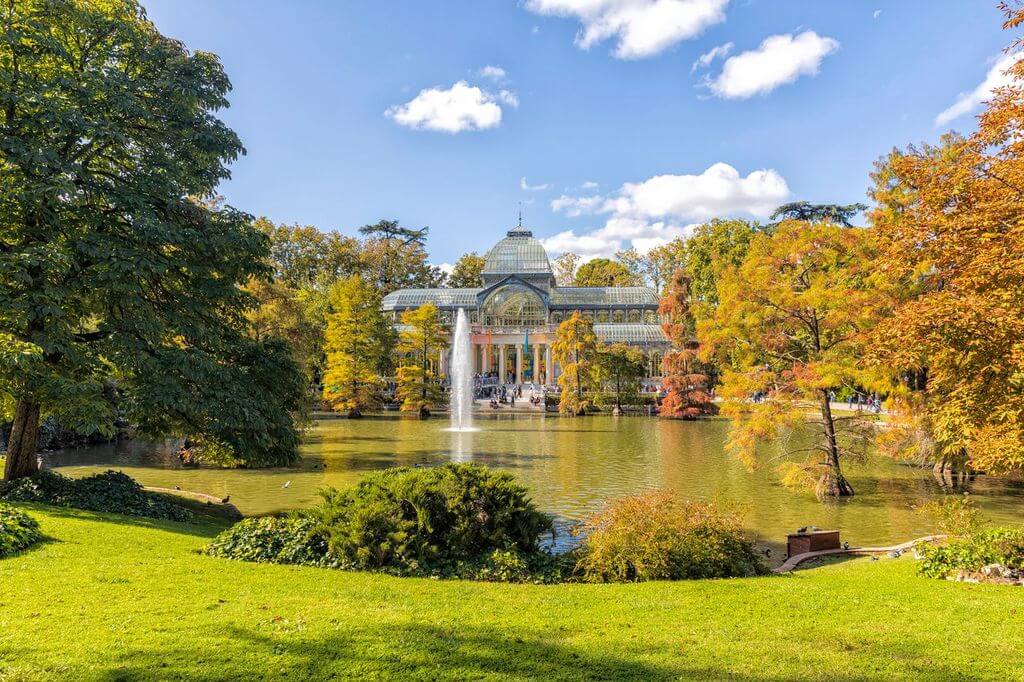
Madrid serves as the only European capital where nature, science, and royal history intersect within an urban landscape recognized by UNESCO as the Paisaje de la Luz, or Landscape of Light, which encompasses El Retiro Park and the Paseo del Prado. Beyond these city limits, the surrounding region offers several significant UNESCO World Heritage sites accessible via day trips.
Located approximately an hour from the capital by car, the Monastery of San Lorenzo de El Escorial stands as a massive imperial complex commissioned in the 16th century by King Philip II. Built primarily from gray granite with a rigorous symmetrical layout, the structure houses a functioning monastery, a royal palace, a basilica, a historic library, and the traditional burial vaults for numerous Spanish monarchs.
A second day-trip alternative is the Royal Palace and Gardens of Aranjuez, situated an hour south of the city. Originally established as a royal hunting lodge in the 16th century, the site combines Renaissance and Baroque architectural elements within a cultural landscape celebrated for its extensive gardens, fountains, and interiors decorated with fine tapestries and porcelain.
Additionally, the historic university city of Alcalá de Henares, located 45 minutes from Madrid, offers a preserved glimpse into the Spanish Golden Age and holds recognition as the birthplace of Miguel de Cervantes, author of Don Quixote.
Day 5: Off-the-Beaten-Path Treasures
The final day of the itinerary directs attention toward lesser-known historical sites within the capital. This includes visits to the Monastery of Las Descalzas Reales, a convent founded in 1559 by Joanna of Austria. Originally inhabited by nuns of the Order of Saint Clare who lived in relative austerity, the convent frequently sheltered aristocratic women who brought valuable artworks and treasures with them, gradually transforming the interior into an extensive repository of religious art.
Nearby stands the Royal Monastery of La Encarnación, established in 1611 under the patronage of Queen Margaret of Austria. While the exterior presents an austere Baroque facade, the interior features decorative chapels, colorful frescoes, and numerous religious sculptures alongside historical relics. As an active religious community, certain sections of the monastery remain closed to the public, preserving its cloistered environment.
The itinerary concludes at Casa de Campo, the largest public park in the capital. Established in 1931 and encompassing 17 square kilometers, the park features an artificial lake, walking paths, and recreational facilities. Waterfront terraces along the lake provide unobstructed views of the Royal Palace and the Almudena Cathedral across the skyline, offering a quiet setting to conclude an extended visit to Spain’s historic capital.