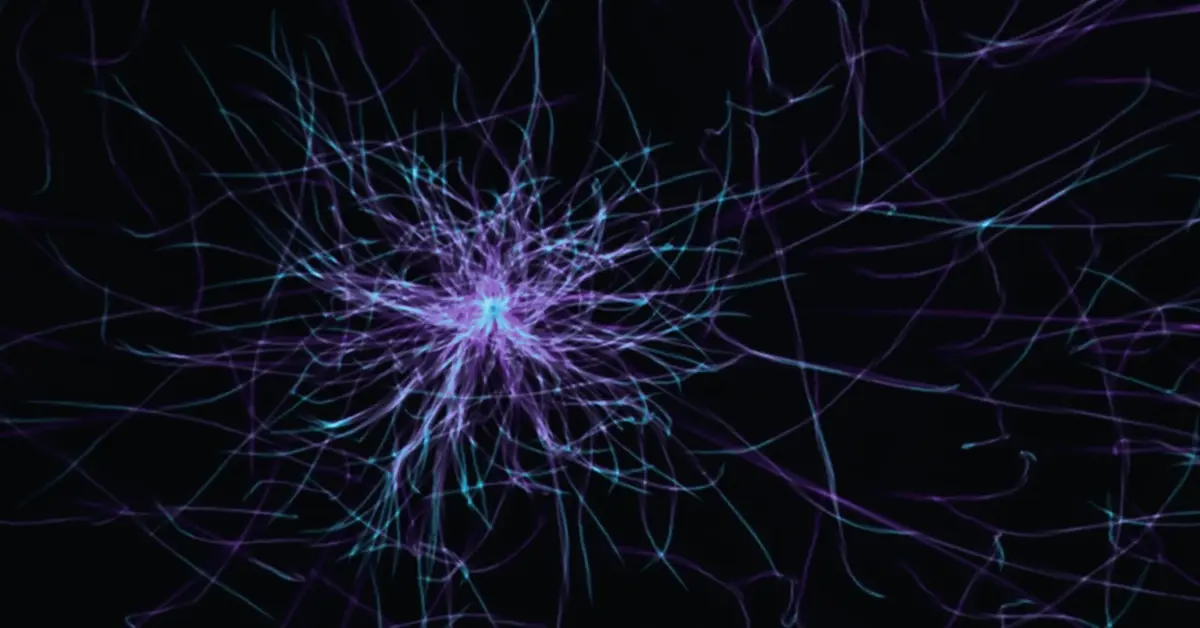
This deeply personal experience opens a window into a fascinating and complex phenomenon of the human brain: the mechanics of mirror neurons. These specialized nerve cells fire not only when an individual performs a specific motor act, but also when they merely observe someone else carrying out that exact same action. Beyond simple movement, mirror neurons are also activated when we experience fundamental emotions, such as love or disgust, and when we observe those very same emotions expressed by another living being.
The formal discovery of mirror neurons dates back to 1992, when a distinct class of cells in the monkey brain was observed discharging both when the animal performed a goal-directed action, such as grabbing a morsel of food, and when the animal simply watched an experimenter or another monkey perform that identical action.
Mirror Neurons and the Science of Empathy
Just as it is practically impossible not to yawn when witnessing another person yawn, our mirror neurons are wired into a deep, involuntary resonance with the brains of those around us.
Neuroscientists widely believe that mirror neurons provide the biological foundation for empathy—the distinct human capacity to understand another person’s emotional state, to metaphorically step into their visceral shoes, and to mirror their experiences of happiness or pain.
A compelling example of the intricate nature of human empathy can be found in cultural touchstones like Dolly Parton’s classic song "Jolene." Rather than indulging in unbridled vengefulness alongside her honest jealousy toward the beautiful bank teller who flirted with her husband, Parton transformed the track into a vulnerable, universal admission of personal insecurity. The song resonates deeply because it underscores a fundamental truth: regardless of an individual’s self-confidence, physical beauty, intellect, or worldly success, human beings remain universally vulnerable to self-doubt and uncertainty.
Much like bodily movements, emotional states are directly observable by our neural architecture. When an emotion is viewed in another person, it triggers subjective arousal and specific feelings within the observer. This neural arousal can either support and amplify the observed emotional state or, conversely, act as a counterweight to regulate it. A classic example occurs when a parent confronts a child who is visibly agitated or angry. By consciously decreasing their own internal arousal, the parent effectively defuses the highly charged affective state, helping to calm the child through a process of emotional co-regulation.
The foundational human ability to register and reproduce facial expressions begins virtually at birth. Any parent of a newborn can attest to how readily an infant will break into a smile in response to a close, grinning face hovering right above them.
Social Behavior and Mirror Neurons Before Birth
Remarkably, scientific research suggests that this profound capacity for human interaction begins even before birth, during fetal development. A specialized twin pregnancy study investigated the kinematic movement profiles in five pairs of twin fetuses. The researchers discovered that by the 14th week of gestation, these fetuses displayed distinct movements specifically directed toward their co-twin. By the 18th week of pregnancy, these social, directed movements accounted for an impressive 29 percent of all observed movements.
It is remarkable to consider that human beings exhibit social behavior and direct actions toward a peer even before entering the outside world, with these targeted movements exceeding both self-directed and random motions in frequency. At this remarkably early developmental stage, we catch a glimpse of the almost telepathic intuition that twins and close siblings often share regarding each other’s emotional states. This innate intuition, which appears to take root in the womb, persists through childhood and well into adult life.
While the evidence is compelling, neuroscientists still debate the exact ontogenetic origin of mirror neurons—specifically, whether these nerve cells are entirely innate or if they are developed and refined through learning experiences over time. The prenatal twin studies strongly point toward an innate biological foundation, yet the definitive answer remains a subject of ongoing scientific inquiry.
Mirror Neurons in Animals Beyond Humans
Monkeys and humans are not the only creatures equipped with these intriguing mirror networks. The brains of songbirds, for instance, contain an anatomical area homologous to primate cortico-striatal cells that facilitate song learning through imitation, providing a clear evolutionary advantage.
Many pet owners and animal behaviorists firmly believe that domestic animals also possess a robust capacity for imitative rapport and empathy. Anyone who has spent an afternoon browsing the popular "Guilty Dog" collections on social media platforms like TikTok has likely witnessed firsthand how animals can appear to reflect human expectations, emotions, and social dynamics.
This interspecies connection is not merely digital entertainment; it plays out in real life during moments of vulnerability. Following a minor injury sustained while waterskiing this past summer—resulting in an awkwardly pulled hamstring—the author’s dog, Chief, remained faithfully by his bedside for two full days until he could manage to limp around again. In moments like these, it is difficult not to wonder if Chief’s own mirror neurons were firing in active harmony with his human companion’s pain and recovery. It is a quiet, powerful reminder of the invisible threads that connect minds across species lines.